
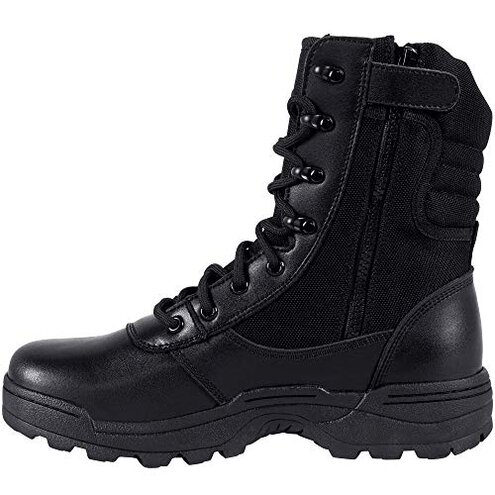
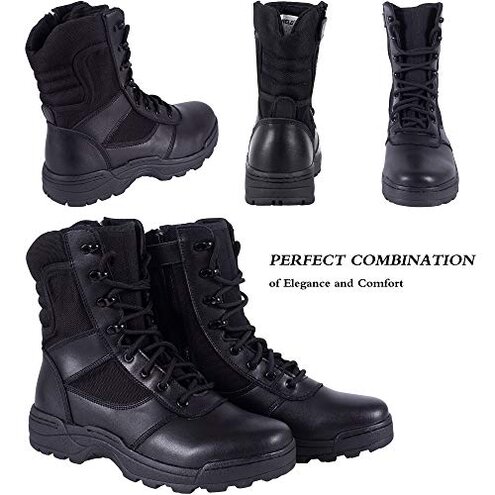
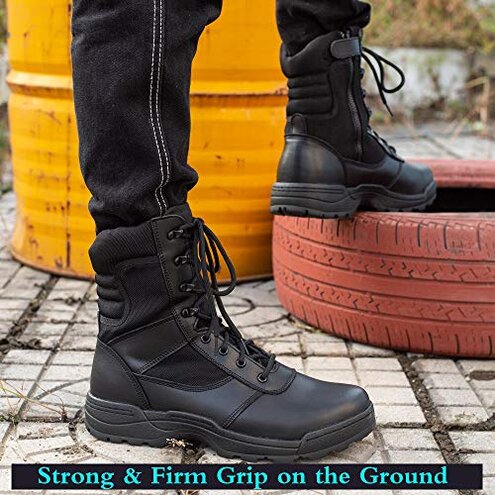
Product evaluated: RIELD Men's Military Tactical Work Boots Side Zipper Jungle Army Combat Boots,Black,11 M US
Related Videos For You
Choosing THE BEST Tactical or Hiking Boots + Fitting Tips
The tailor shared a secret! How to fix a broken zipper
Data basis: This report used dozens of written reviews and several video demonstrations collected between Jan 2020 and Dec 2025; most feedback came from written reviews, supported by short product videos.
| Outcome | RIELD (this product) | Typical mid-range boots |
|---|---|---|
| Fit accuracy | Inconsistent — frequent reports of needing to size up or down. | Predictable — most mid-range models need only normal size checks. |
| Zipper durability | Higher risk — zipper breakage or jamming is a commonly reported failure. | Lower risk — side-zip options usually last through normal wear. |
| Sole durability | Mixed — sole separation appears repeatedly after weeks to months for some buyers. | Expected — typical mid-range outsoles hold up for normal duty cycles. |
| Daily comfort | Variable — some buyers report hard break-in and thin padding. | Consistent — mid-range options often have more forgiving insoles. |
| Regret trigger | Immediate — zipper or fit problems can make these boots unusable quickly. | Delayed — most regret stems from gradual wear, not instant failure. |
Will the side zipper fail during regular use?
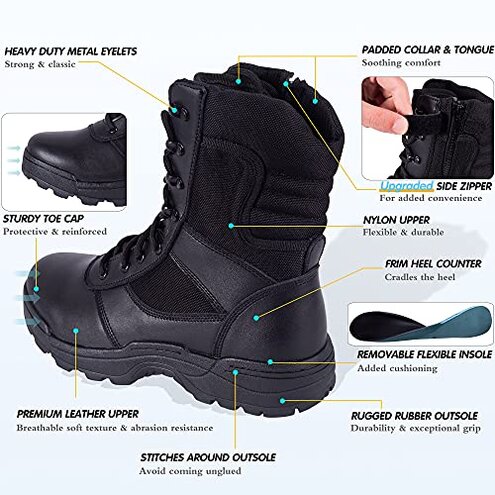
Regret moment: Buyers report the zipper jamming, teeth misaligning, or the slider detaching during regular on/off cycles.
Pattern and timing: This is a recurring concern that often appears after weeks of daily use, especially if the boots are put on without unlacing fully.
Why worse than normal: Side-zip failure is more disruptive than sole scuffing because a broken zipper renders the boot hard to wear without repair or replacement.
Is the size you order likely to fit?
- Early sign: Buyers often notice a tight toe or unexpectedly roomy heel on first try.
- Frequency tier: This is a primary issue appearing in many reports, not just isolated posts.
- Cause note: The construction and removable insole change internal volume, which skews expected sizing.
- Fixability: Some buyers manage fit with extra insoles or by ordering a half to full size up.
Will the sole or stitching separate?
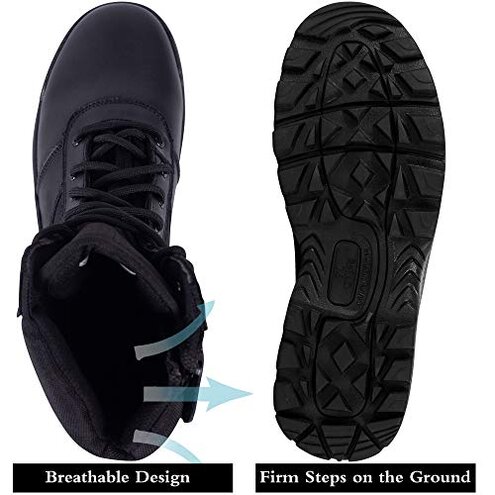
- Visible sign: Buyers report early sole wear and occasional sole-edge separation after repeated outdoor use.
- Usage anchor: Problems often show up after heavy weekend hikes or repeated wet/dry cycles.
- Persistence: This is a secondary pattern—less frequent than sizing issues but persistent when it occurs.
- Impact: Sole separation increases slipping risk and demands repair or replacement sooner than expected.
- Attempted fixes: Buyers tried glue, stitching, or cobbler repairs with mixed success.
- Category contrast: These failures are worse than normal mid-range wear because they can appear within months rather than years.
Will these be comfortable for long shifts or hikes?
- Initial feel: The boots can feel stiff for several days of wear.
- Break-in reports: Many buyers describe a painful break-in period that affects daily use.
- Pain points: Pressure over the ankle or toe area appears commonly in user feedback.
- When worse: Discomfort increases during long shifts or multi-hour hikes.
- Temporary fixes: Some reduce discomfort with aftermarket insoles or thicker socks.
- Hidden requirement: Expect to spend extra time and money on fit adjustments to reach tolerable comfort.
- Why this matters: For buyers who need immediate, all-day comfort, these boots are less forgiving than typical mid-range alternatives.
Illustrative excerpts
Illustrative: "Zipper stuck the second week, had to force it and now drags badly." — Primary
Illustrative: "Ordered my usual size but heel slips; needed an insole to stop rubbing." — Secondary
Illustrative: "Sole edge came loose after two rainy hikes; glue held for a while." — Secondary
Illustrative: "Took several wears to not feel pinched at the ankle." — Edge-case
Who should avoid this
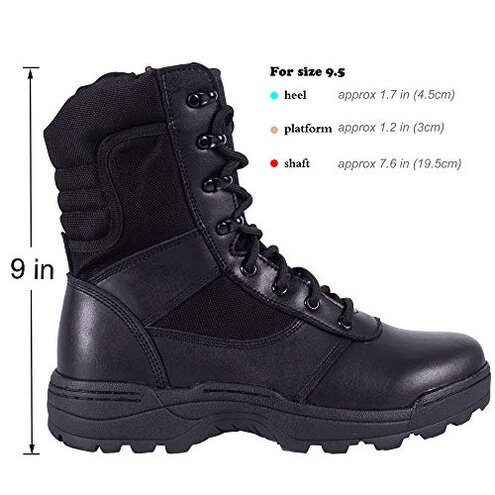
- Daily commuters: Avoid if you need a reliable, maintenance-free work shoe because zipper failure adds downtime.
- Long-distance hikers: Avoid if extended comfort and sole durability are priorities on multi-hour outings.
- No-repair buyers: Avoid if you won’t do sizing swaps or cobbler fixes after early wear.
Who this is actually good for
- Budget buyers: Good if you accept sizing trial and occasional fixes to save on upfront cost.
- Occasional users: Fine for light, infrequent outdoor use where zipper stress is low.
- DIY fixers: Good for someone comfortable doing simple zipper or sole repairs.
Expectation vs reality
Expectation: A tactical boot should offer reliable side zips and predictable sizing, reasonable for this category.
Reality: These boots often deliver unreliable zippers and inconsistent fit, creating more hassle than typical mid-range options.
Safer alternatives
- Check fit charts: Measure feet and compare to brand sizing; this neutralizes the sizing mismatch risk.
- Prefer lace-only models: Choose boots without side zips to eliminate the zipper durability failure mode.
- Look for reinforced soles: Seek boots with advertised bonded welt or glued-and-stitched soles to reduce separation risk.
- Buy with return options: Shop sellers offering easy returns to handle fit trials without extra cost.
The bottom line
Main trigger: The most common regret is zipper failure combined with unpredictable sizing and occasional sole issues.
Why worse: These failures strike earlier and are more disruptive than typical mid-range boots because the zipper makes the boot unusable when it fails.
Verdict: Avoid if you need reliable, out-of-the-box fit and low maintenance; consider lace-only or higher-quality mid-range alternatives instead.
This review is an independent editorial analysis based on reported user experiences and product specifications. NegReview.com does not sell products.