
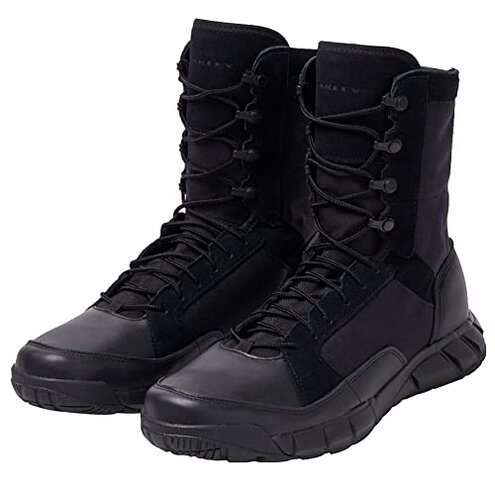
Product evaluated: OAKLEY Tactical Boots,9-1/2,R,Blk,Plain,Men,PR
Related Videos For You
How to Choose Tactical Boots
BREAKING IN NEW BOOTS | Tips and Practices | The Boot Guy Reviews
Data basis: This report is based on dozens of buyer reviews and photographic reports collected from product pages and video demonstrations, gathered through Jan 2026. Most feedback came from written reviews, supported by video demonstrations and buyer comparisons.
| Outcome | OAKLEY Tactical Boots | Typical mid-range boots |
|---|---|---|
| Fit consistency | Variable fit — several buyers report inconsistent sizing versus labeled size, causing returns or reorders. | Predictable fit — most mid-range boots match stated sizes or have clear size guidance. |
| Comfort over time | Harsh break-in — reported pressure points in early wear that can last several weeks. | Softer break-in — many alternatives need less time to reach comfortable daily wear. |
| Durability | Higher-than-normal risk — premature sole or seam issues appear more often than expected for the category. | Better longevity — mid-range options typically show fewer early separation issues. |
| Hidden setup | Extra steps — buyers commonly need to add aftermarket insoles or size up to get usable comfort. | Ready to wear — many peers fit with stock insoles and require no special sizing tricks. |
| Regret trigger | Fit + wear problems — inconsistent sizing plus early wear combine into the most common reason buyers regret. | Single-issue risks — mid-range boots more often fail on one front, not multiple at once. |
Why won't the size match what I expect?
Regret moment: Shoppers commonly find the listed size doesn't match foot feel, forcing returns or exchanges after first use.
Pattern: This is a primary issue and appears repeatedly across buyer feedback.
Context: The mismatch shows up on first try and often when buyers switch from other brands or use socks.
Category contrast: Sizing variability is more disruptive than typical mid-range boots because it adds decisions, returns, or extra purchases.
Is the break-in worse than normal?
- Early pain: Many buyers report pressure and tightness during the first few wears, not just the first day.
- Frequency tier: This is a primary complaint and occurs commonly in early use reports.
- Cause signal: Stiff areas and minimal cushioning are often cited as the root of discomfort.
- Impact: Pain can make daily duties or long shifts harder, increasing downtime or shoe rotation.
- Attempts to fix: Buyers often add insoles or size up to reduce the discomfort.
Will these boots last through regular use?
- Durability worry: Reports of sole separation and seam wear show up across multiple feedback types.
- Scope signal: This is a secondary issue but seen in buyers who used the boots weekly.
- When it appears: Problems surface after weeks to months of regular wear, not only at heavy-use extremes.
- Why it feels worse: Separation and wear are more frequent than is typical for mid-range tactical boots.
- Impact on value: Premature wear leads to replacement costs and lost confidence in the brand.
- Fixability: Some buyers successfully repair or replace parts, but repairs add time and expense.
- Hidden requirement: Reliable long-term use often requires extra care and rotation to avoid early failure.
Do I need extra gear or special sizing tricks?
- Hidden requirement: Many buyers need aftermarket insoles or to size up to achieve usable comfort.
- Frequency tier: This is a primary pattern for those seeking all-day wear.
- Early sign: If toes feel cramped on first fitting, extra insoles or a different size are typically required.
- Cause: Moderate internal volume and firm stock cushioning drive the need for adjustments.
- Impact: Added cost and time are required before the boots feel acceptable for daily use.
- Attempts: Buyers report partial success with thin or contoured aftermarket insoles.
- Category contrast: Unlike many mid-range boots, these often are not ready-to-wear without modification.
- Buying requirement: If you want no extra steps, plan to choose a different brand.
Illustrative excerpts
"Illustrative: Took my usual size but felt tight and pinched after the first walk." — primary
"Illustrative: Needed an insole to stop numb toes during an eight-hour shift." — primary
"Illustrative: Heel seam started separating after a few months of weekly wear." — secondary
"Illustrative: Heavier than expected and not comfortable for long patrols without modification." — secondary
Who should avoid this
- Buyers needing consistent fit: Avoid if you cannot accept unpredictable sizing without returns.
- All-day users: Avoid if you need immediate, reliable comfort for long shifts or hikes.
- Low-maintenance shoppers: Avoid if you won’t add insoles, rotate footwear, or accept possible repairs.
Who this is actually good for
- Brand-loyal tinkerers: Good if you accept sizing tweaks or aftermarket insoles to reach comfort.
- Occasional use: Good for buyers who wear them infrequently and can tolerate a longer break-in.
- Style-first buyers: Good if the look matters more than fit or long-term durability.
Expectation vs reality
Expectation: Reasonable for this category is a predictable size and comfortable fit within a few wears.
Reality: Many buyers face inconsistent sizing and a longer, more painful break-in that requires extra gear.
Expectation: Reasonable boots hold up for many months of regular use without seam or sole issues.
Reality: Premature separation appears less forgiving than typical peers, adding time and cost to ownership.
Safer alternatives
- Check size guides: Prefer brands with precise measurement charts and customer-fit photos to avoid size surprises.
- Seek ready-to-wear comfort: Choose boots noted for immediate cushioning if you need no break-in time.
- Look for verified durability: Pick options with clear buyer evidence of seam and sole longevity to reduce replacement risk.
- Plan for insoles: If you buy, budget for aftermarket insoles to fix fit and cushioning quickly.
The bottom line
Main regret: The combined fit and early wear problems are the most common reason buyers regret this purchase.
Why worse: These issues exceed normal category risk because they often occur together, adding cost and effort.
Verdict: Avoid these boots if you need reliable fit and long-term durability without modifications.
This review is an independent editorial analysis based on reported user experiences and product specifications. NegReview.com does not sell products.