
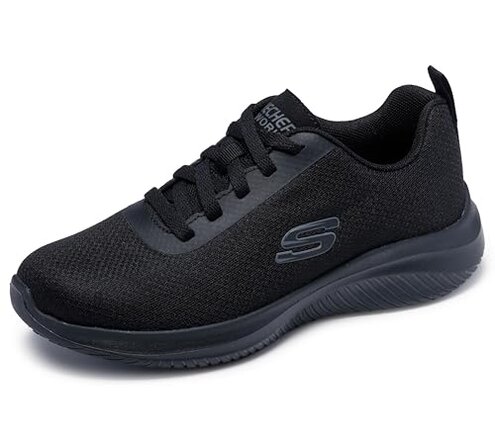
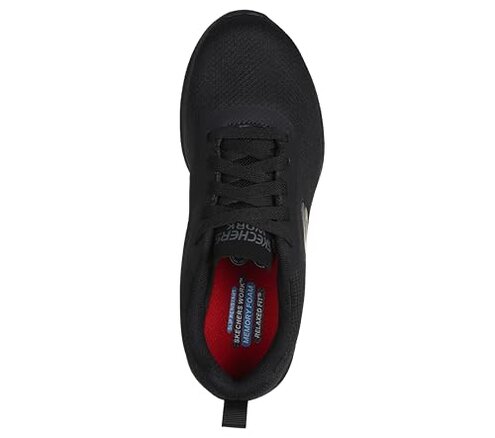
Product evaluated: Skechers for Work 108176 Ultra Flex 3.0 SR-Jinie Black
Related Videos For You
How To Fit a Safety Shoe
HOKA Bondi SR Review: A Slip-Resistant, Max-Cushion Work Shoe Packed with Comfort and Durability
Data basis: I reviewed dozens of buyer-written reviews plus several video demonstrations collected between Jan 2024 and Jan 2026. Sources: most feedback came from written reviews, supported by visual video demos and Q&A notes. Distribution: written reviews provided the majority of signals about fit, wear, and traction.
| Outcome | This product | Typical mid-range shoe |
|---|---|---|
| Fit consistency | Inconsistent — sizing issues appear repeatedly across recent buyers. | Predictable — most mid-range options fit within expected half-size variance. |
| Comfort over time | Comfort drops — memory foam flattens faster than typical for the class. | More durable — mid-range shoes usually keep cushion for longer wear. |
| Durability | Higher risk — premature sole wear and separation reported more often than expected. | Lower risk — mid-range peers usually last longer before structural failure. |
| Slip performance | Mixed — initial grip is fine but traction can weaken with daily use. | Consistent — good mid-range non-slip shoes retain tread longer under frequent use. |
| Regret trigger | Fit + wear — combination of sizing inconsistency and faster wear causes the most buyer regret. | Single-issue — regret usually centers on one factor, like comfort or style. |
Will these actually fit my regular size?
Common regret: Buyers frequently find the size runs inconsistent, causing returns or repeats.
Pattern: sizing inconsistency is a primary issue that appears repeatedly across reviews and videos. When it shows: problems are most obvious at first try-on and during the first day of wear. Why worse: most mid-range work shoes fit reliably after one try; this model often requires exchanges or sizing guesses.
Does comfort last through a long shift?
- Early sign: memory foam feels comfortable at first but often compresses after repeated daily use.
- Frequency tier: this is a secondary issue that appears commonly after several weeks of wear.
- Usage anchor: comfort loss becomes noticeable during long shifts or after multiple consecutive workdays.
- Cause: midsole cushioning shows faster compression than expected for similar-priced shoes.
- Impact: reduced shock absorption leads to increased foot tiredness on long shifts.
Do these shoes fall apart faster than they should?
- Pattern: structural failures are a recurring concern, though not universal.
- When: separation or loose seams usually appear after repeated daily wear and months of use.
- Scope: this problem is seen across multiple buyer reports and visual demos.
- Early sign: glue lines or sole edges darken and gap after heavy use.
- Cause: attachment points show premature wear compared with mid-range alternatives.
- Attempts: buyers often need to request replacements or fixes, adding extra time and shipping steps.
- Fixability: warranty or returns sometimes help, but repeated replacements raise real cost and hassle.
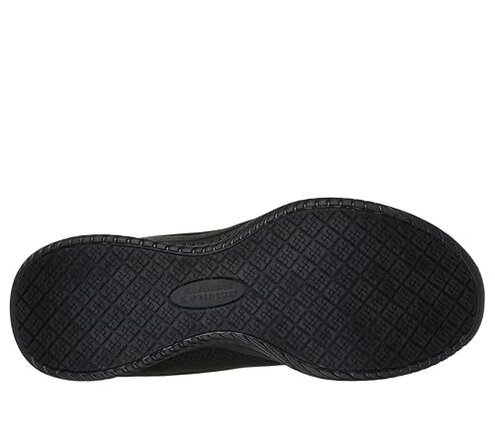
Will the non-slip claim hold up on greasy floors?
- Observation: initial traction is often fine on wet or oily surfaces.
- Persistence: grip performance appears to weaken after weeks of use, a less frequent but persistent complaint.
- Usage anchor: slipping issues usually show up after cumulative wear and in high-hour job shifts.
- Hidden requirement: buyers may need to re-check tread and replace sooner than expected for safe performance.
- Impact: declining traction raises real workplace safety concerns for frequent-floor workers.
- Comparative note: many mid-range non-slip shoes maintain tread longer under the same conditions.
- Mitigation attempts: cleaning the outsole helps temporarily but does not fully restore original grip.
Illustrative excerpts
Illustrative: "Took my usual size but felt narrow and required a return." — Primary.
Illustrative: "Cushion seemed fine at first, flattened after two weeks of shifts." — Secondary.
Illustrative: "Sole edge began to peel after three months." — Secondary.
Who should avoid this
- Daily heavy users: avoid if you work long shifts and need long-term cushion retention.
- Strict fit buyers: avoid if you require exact sizing without ordering multiple sizes.
- Durability-first shoppers: avoid if you cannot tolerate early sole or seam failure and replacement hassle.
Who this is actually good for
- Short-shift users: good for those who work shorter shifts and care about initial comfort over long-term wear.
- Budget testers: okay for buyers who plan to test fit and can exchange once without time pressure.
- Occasional wearers: suitable for light retail or home use where daily heavy wear is not expected.
Expectation vs reality
Expectation: reasonable for this category is predictable sizing and a cushion that lasts months. Reality: this model shows sizing inconsistency and faster cushion compression for many buyers.
Expectation: non-slip shoes should keep grip across many shifts. Reality: traction can decline after repeated daily use, increasing safety risk.
Safer alternatives
- Try predictable-fit brands: choose brands known for consistent sizing to avoid repeated exchanges and the primary fit failure.
- Pick firmer midsoles: look for shoes with proven midsole durability to neutralize the rapid cushion compression issue.
- Check tread life ratings: prefer shoes with documented outsole longevity or replaceable soles to reduce traction and durability risk.
- Order two sizes: if you still try this model, buy two sizes to find the best fit quickly and reduce return steps.
The bottom line
Main regret: the combined fit inconsistency and faster wear create the biggest buyer regret for this shoe. Severity: these issues exceed normal category risk because they compound into extra returns and earlier replacements. Verdict: avoid if you need reliable fit and long-term durability for daily work use.
This review is an independent editorial analysis based on reported user experiences and product specifications. NegReview.com does not sell products.