
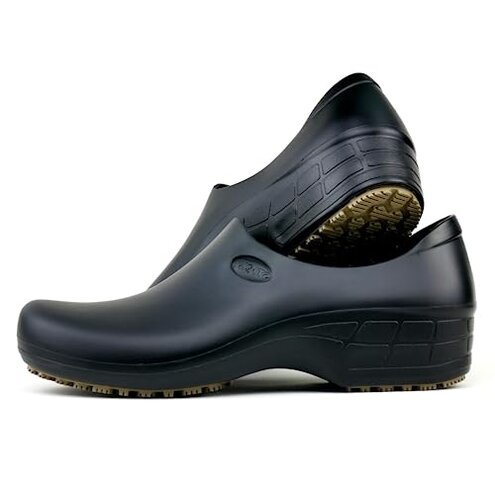
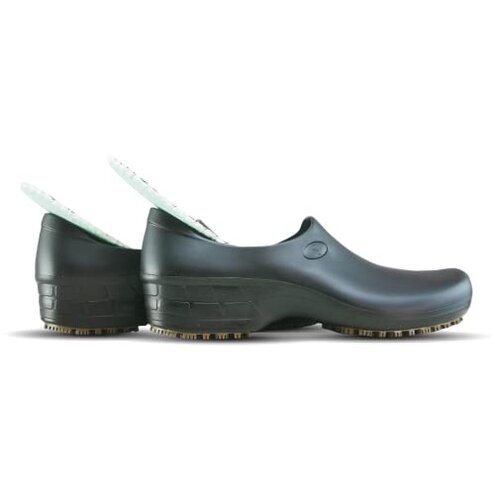
Product evaluated: Sticky SSW-US-PTA-8 Nursing Shoes Women - Chefs - Kitchen - Nurses - Clogs for Work - Waterproof Non Slip (Black, 8)
Related Videos For You
How to Fit Dansko Clogs
Crocs Unisex Adult Men's & Women's Bistro Clog | Slip Resistant Work Shoes. #crocs #amongus #amazon
Data basis: I reviewed dozens of buyer comments and Q&A entries collected between 2018 and 2025, using written reviews plus some video demonstrations. Most feedback came from written reviews, supported by photos and short videos that show real-world wear and fit problems.
| Outcome | Sticky Shoes | Typical Mid-Range Clog |
|---|---|---|
| Fit consistency | Varied — sizing often runs small or narrow compared to the label. | Predictable — most mid-range clogs use standard sizing charts. |
| Durability | Mixed — sole wear and upper separation appear repeatedly. | Stronger — many alternatives show longer-lasting outsoles at similar price. |
| Water resistance | Claimed but inconsistent under prolonged wet use. | Reliable — mid-range options usually keep feet dry for full shifts. |
| Slip performance | Reported non-slip issues during long shifts on wet floors. | Better — standard mid-range work shoes often pass workplace slip tests. |
| Regret trigger | Fit + durability — sizing surprises then early wear causes returns. | Lower — typical buyers find fit and durability acceptable without quick failure. |
Sizing — Why do the shoes feel the wrong size?
Regret moment: Buyers commonly report the shoes feel too small or narrow at first try. Severity is high when purchasing for shift work where comfort is essential.
Pattern statement: This is a recurring complaint across many written reviews and Q&A notes.
When it appears: Fit problems show up on first use and during the first full shift.
Category contrast: This is worse than normal because similar mid-range work clogs usually match standard sizing charts, reducing immediate return risk.
Durability — Will the soles or uppers fall apart fast?
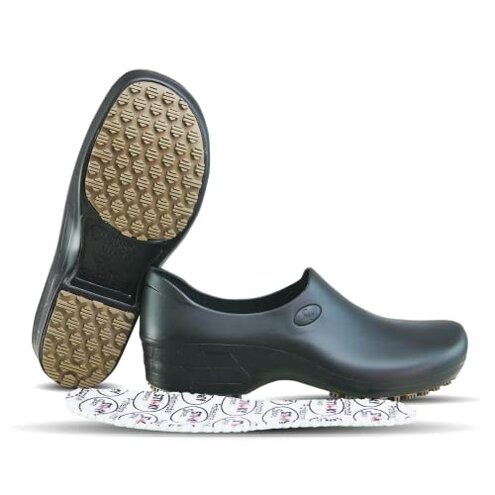
- Early signs: Buyers often notice noisy soles, early tread wear, or loose upper edges within weeks.
- Frequency tier: This is a secondary issue — not universal but appears repeatedly enough to matter.
- Cause: Reports point to material wear under daily long shifts and frequent cleaning.
- Impact: The problem makes shoes feel less secure and shortens useful life compared to peers.
- Attempts: Some buyers taped or glued soles temporarily, which adds time and cost.
Slip and waterproof — Do they actually keep you safe and dry?
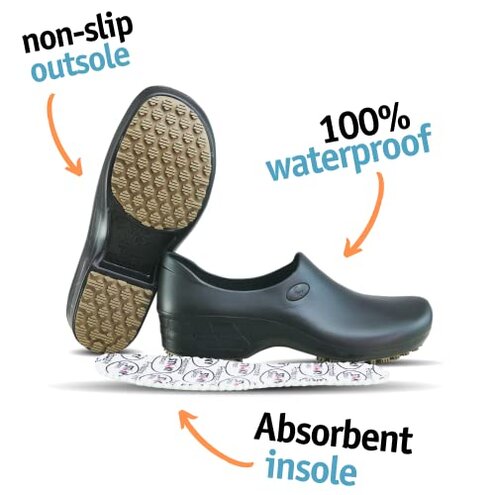
- Reported slip issues appear during wet floor use, especially on greasy surfaces.
- Waterproof claims are often less reliable after prolonged exposure.
- Usage anchor: Problems worsen during long, wet shifts or when repeatedly hosed down.
- Category contrast: Mid-range work shoes usually keep water out for full shifts; these can leak sooner.
- Hidden requirement: Some buyers found a need for extra waterproofing spray to maintain dryness.
- Fixability: Waterproofing sprays and tread resole add cost and effort.
- Regret: Slip and water failures are more disruptive than a simple comfort mismatch.
Comfort loss — Do they stay cushioned over time?
- Early sign: A padded insole feels fine at first but compresses after repeated wear.
- Frequency: This is a primary complaint for shift workers who stand hours daily.
- Cause: Repeated long sessions and heavy use speed insole breakdown.
- Impact: Reduced cushioning increases foot pain and may force replacement sooner than expected.
- Attempts: Buyers often add aftermarket insoles to regain support.
- Hidden cost: Buying replacement insoles raises the total ownership cost compared with similar-priced clogs.
- Category contrast: Typical mid-range work shoes retain padding longer without extra purchases.
Illustrative excerpts (not actual quotes)
Excerpt: "The size felt tight on day one; by week three the sole was worn." — Primary pattern.
Excerpt: "Water pooled near the toe after a long shift on wet floors." — Secondary pattern.
Excerpt: "Insole flattened after two months, I had to buy inserts." — Primary pattern.
Excerpt: "Grip felt fine until I stepped on oil, then slid a little." — Edge-case pattern.
Who should avoid this
- Shift workers who stand 8+ hours daily and need long-lasting cushioning.
- Buyers who require precise sizing and a low return risk for professional wear.
- People working on oily or frequently wet floors without waterproofing extras.
Who this is actually good for
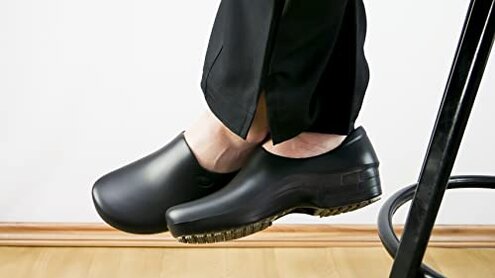
- Occasional users who need an inexpensive waterproof clog for light, short shifts.
- Buyers willing to add aftermarket insoles and waterproof spray to tune performance.
- Budget shoppers who accept possible early wear in exchange for lower upfront cost.
Expectation vs reality
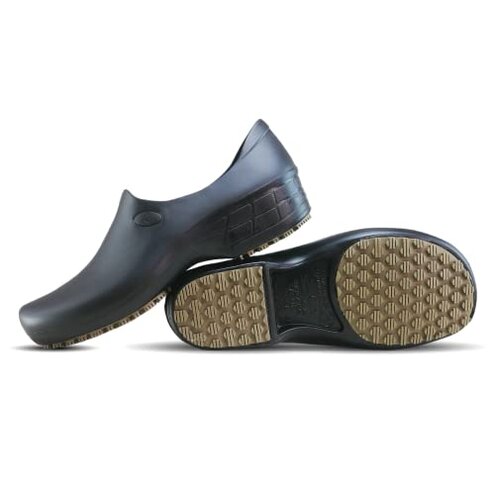
Expectation: A mid-range nursing clog fits predictably and lasts through months of daily shifts.
Reality: Fit is inconsistent on arrival and padding or soles can show early wear, which is worse than category norms.
Expectation: Waterproof and non-slip features protect during wet work.
Reality: Waterproofing and slip performance often degrade with repeated wet exposure, requiring extra care.
Safer alternatives
- Prioritize brands with more consistent sizing charts and generous return policies to avoid fit risk.
- Choose work clogs with reinforced soles or known workplace slip certifications to reduce durability regret.
- Add aftermarket insoles proactively if cushioning is essential to your shifts.
- Use waterproofing spray and test on a short shift before relying on them for a long workday.
The bottom line
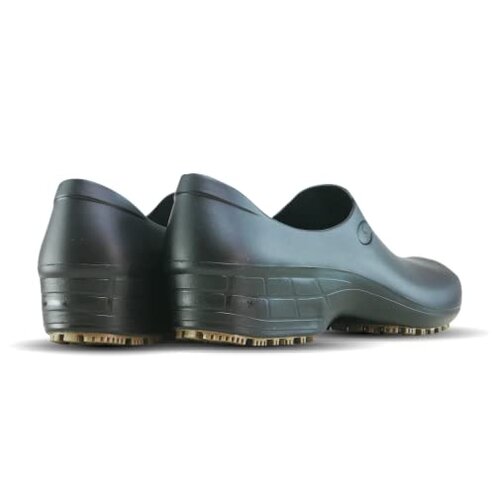
Main regret trigger: inconsistent sizing combined with early wear creates avoidable returns and added costs.
Why it exceeds category risk: similar mid-range clogs usually match sizes and hold cushioning longer, so these failures are more disruptive.
Verdict: Avoid if you need predictable fit and long-lasting support; consider only if you can accept tweaks like inserts and waterproofing.
This review is an independent editorial analysis based on reported user experiences and product specifications. NegReview.com does not sell products.