
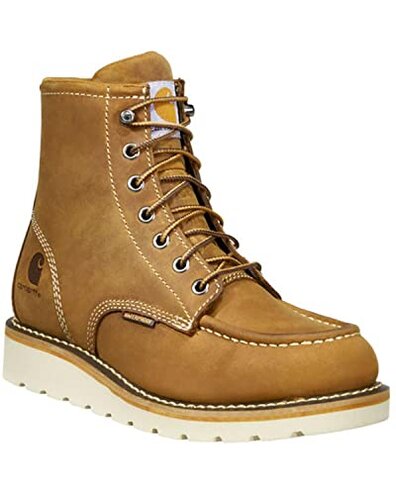
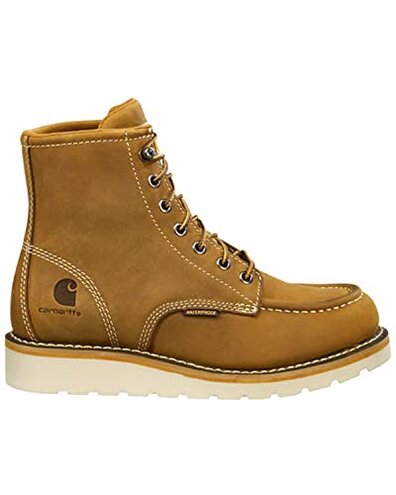
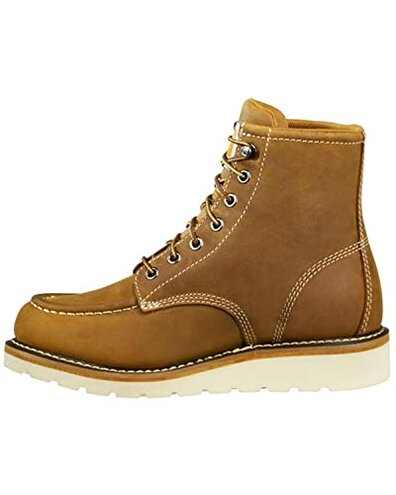
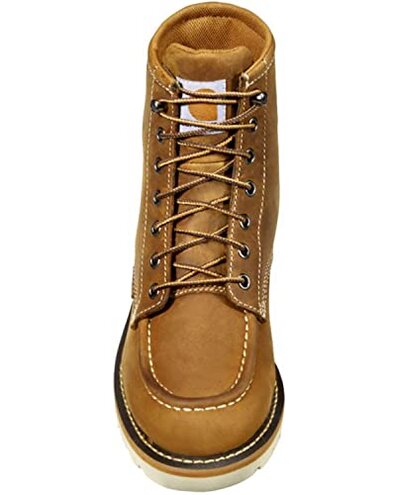
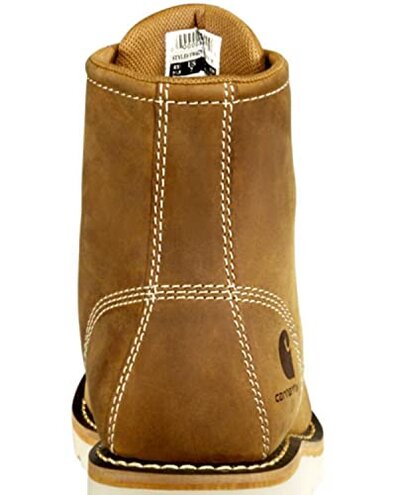
Product evaluated: Carhartt Women's Wedge 6" Waterproof Soft Toe Ankle Boot, Light Brown - 7.5 M
Related Videos For You
Athlefit Women's Lace up Ankle Boots Work Waterproof Low Heel Combat Booties Reviews
7 Mistakes Only Boot Noobs Make
Data basis: This report analyzes dozens of buyer reviews and several video demonstrations collected between 2020 and 2024, with most feedback from written reviews and supporting footage, to map recurring fit, comfort, and waterproofing problems.
| Outcome | This boot | Typical mid-range boot |
|---|---|---|
| Fit consistency | Unreliable — sizes reported both tight and loose, creating more returns than normal. | Predictable — most mid-range boots require one clear size choice. |
| Day-long comfort | Mixed — some buyers report arch fatigue during long shifts. | Usually tolerable — typical mid-range boots offer steady comfort after break-in. |
| Water resistance | Variable — waterproofing holds initially but can fail under heavy wet use. | Consistent — comparable boots often manage wet conditions longer. |
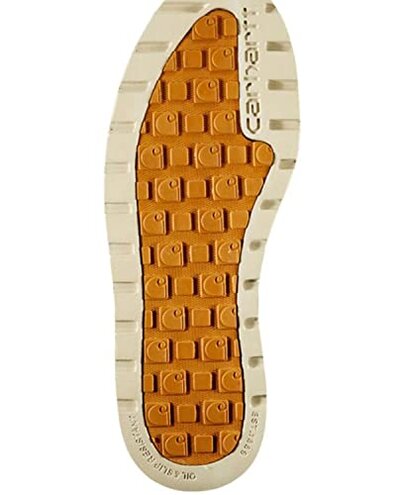
| Outsole durability | Higher wear risk — reports of early sole scuffing and separation. | Standard life — mid-range soles usually last normal seasonal wear. |
| Regret trigger | Fit + comfort mismatch — wrong size plus firm break-in causes noticeable regret. | Single-factor — other boots usually have one fixable issue, not combined problems. |
Top failures
Do these boots fit the size you expect?
Regret moment: You order your normal size and the boot feels wrong at first wear, forcing a return or exchange.
Pattern: Fit inconsistency is a primary complaint and appears repeatedly across written feedback.
Usage anchor: Problems show up on first use and during short walks, worsening on long shifts.
Category contrast: This is worse than typical mid-range boots because buyers expect predictable sizing and simple one-size adjustments.
Will you be comfortable walking a full day?
- Early sign: Firm heel and wedge feel tight on first hours of wear, hinting at longer-term soreness.
- Frequency tier: This is a secondary pattern reported commonly by people with long workdays.
- Root cause: The footbed feels rebound-heavy but lacks targeted arch support for prolonged standing.
- Impact: Arch fatigue and heel pain often appear after several hours on concrete or hard floors.
- Fix attempts: Buyers frequently add aftermarket insoles to reduce discomfort.
Does the waterproofing hold up in real wet use?
- Initial performance: Waterproof features perform well during light rain or splashes at first.
- Worsening context: Seams and tongue area leaks develop after heavy rain or repeated wet exposure.
- Pattern statement: This is a persistent but not universal problem that appears with repeated wet use.
- Category contrast: Failure under prolonged wet conditions is worse than average mid-range waterproof boots.
- Hidden requirement: Buyers may need regular waterproof treatment and seam care to maintain performance.
- Fixability: Reproofing helps short-term but does not always stop seam seepage.
- When it matters: The issue is most disruptive during long outdoor shifts or weekend wet work.
Will these last or fall apart quickly?
- Wear sign: Early scuffs and sole wear appear after weeks of heavy use.
- Separation risk: Some buyers report midsole or outsole starting to delaminate with regular wear.
- Frequency tier: This is a secondary to edge-case problem that appears with daily heavy use.
- Cause: High heels and wedge stress concentrate wear on the outsole edges over time.
- User impact: Durability loss forces earlier replacement than expected for similar-priced boots.
- Attempted fixes: Shoe repair or resoling is possible but adds cost and downtime.
- Why worse: Buyers expect mid-range boots to last a season of daily wear without repair.
- Hidden cost: Repairs and added insoles increase total ownership expense beyond the sale price.
Illustrative excerpts
Illustrative: "Felt too narrow at toe and rubbed my heel after two hours." — primary pattern.
Illustrative: "Kept out light rain but leaked after a weekend working outside." — secondary pattern.
Illustrative: "Sole started separating after three months of daily wear." — edge-case pattern.
Who should avoid this
- Busy workers: If you need a reliable all-day work boot, the combined fit and comfort issues exceed normal tolerance.
- Wet-duty users: If you work long hours in heavy rain, the waterproofing risk is higher than typical.
- Minimal maintenance buyers: If you won’t reproof or add insoles, this boot may become uncomfortable or fail sooner than expected.
Who this is actually good for
- Short-shift users: If you wear boots for short outings or light chores, initial waterproofing and cushion can be fine.
- Style-first buyers: If you accept break-in and occasional maintenance for the wedge look, trade-offs may be acceptable.
- DIY fixers: If you plan to add custom insoles or reproof regularly, you can neutralize the main comfort and waterproof issues.
Expectation vs reality
Expectation: A waterproof wedge boot should fit predictably like other mid-range boots.
Reality: Fit inconsistency and firm break-in often make the boot less comfortable and more troublesome than reasonable for the category.
Expectation: Mid-range waterproof boots resist wet work for months without reproofing.
Reality: This boot commonly needs reproofing and care sooner to avoid seam leakage.
Safer alternatives
- Prioritize fit-tested brands: Choose brands with consistent sizing or try in-store fitting before buying online to avoid returns.
- Look for removable insoles: Pick boots with confirmed replaceable footbeds to fix arch or comfort problems quickly.
- Choose full-grain waterproof models: Opt for boots with taped seams or guaranteed wet-duty liners to reduce leakage risk.
- Check outsole warranty: Prefer boots with better sole warranties to avoid early wear and repair costs.
The bottom line
Main regret: The most common trigger is unpredictable fit combined with firm break-in that leads to discomfort and returns.
Why it matters: Those combined issues create a higher-than-normal ownership cost and inconvenience for daily wearers.
Verdict: Avoid this boot if you need predictable fit and long wet-duty reliability without aftermarket fixes.
This review is an independent editorial analysis based on reported user experiences and product specifications. NegReview.com does not sell products.