
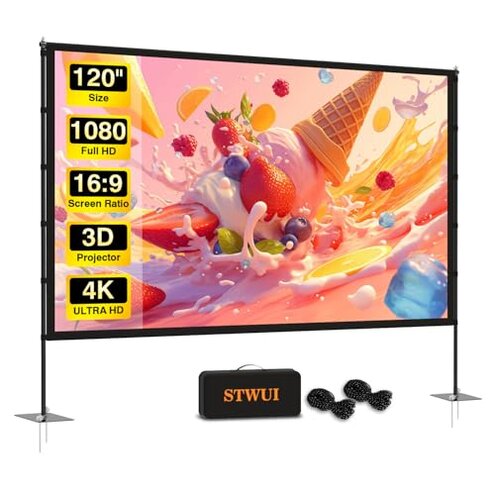
Product evaluated: Outdoor-Projector-Screen-with-Stand - 120 inch Portable Projector Screen Indoor Outdoor Projector Screens 16:9 4K HD Lightweight Movie Screen with Carry Bag for Backyard Movie Night
Related Videos For You
Magic portable folding projector screen, easy to install no wrinkles. Backyard outdoor movie screen
CNET How To - Make a giant projection screen
Data basis This report summarizes dozens of buyer comments gathered from product-page feedback and short-form demonstration clips collected between 2024 and 2026. Most feedback came from written reviews, with added context from photo and video posts that showed setup, outdoor use, and storage behavior.
| Buyer outcome | STWUI 120-inch | Typical mid-range alternative |
|---|---|---|
| Setup confidence | Less forgiving if parts are not tensioned carefully | More predictable with fewer adjustment retries |
| Outdoor stability | Higher risk of movement in breezy conditions | Usually steadier with wider feet or stronger anchoring |
| Screen flatness | Mixed results depending on how tightly it is mounted | More consistent image surface after setup |
| Portable use | Light to carry but can add setup caution | Slightly bulkier but often easier to secure |
| Regret trigger | Movie starts and the frame shifts or needs rework | Lower chance of interruption once assembled |
Do you want a screen you can trust outside without babysitting it?
Stability is the primary issue and among the most common complaints for portable screens in this size. The regret moment usually shows up after setup, when a light breeze or small bump makes the frame move more than expected.
Pattern appears repeatedly rather than universally, which matters because outdoor buyers usually choose this category for easy backyard use. Compared with a typical mid-range stand screen, this feels less forgiving because portable weight savings also reduce confidence once the movie starts.
Hidden requirement is that buyers may need extra anchoring effort even though the product is sold as quick and portable. That adds steps, especially on grass, uneven ground, or spaces where floor stakes are not practical.
Illustrative excerpt: “It looked fine until the wind picked up, then I kept adjusting it.” Primary pattern
Will the picture stay smooth, or will you keep noticing the screen surface?
- Surface consistency is a secondary issue that appears repeatedly after first assembly and during tighter or looser mounting attempts.
- Early sign is a picture that looks fine from far away but shows uneven tension when bright scenes hit the screen.
- Context matters more outdoors, where angle changes and ambient light make ripples or slack easier to notice.
- Category baseline for a foldable portable screen is not perfect flatness, but buyers reasonably expect fewer distractions than this can create.
- Impact is more frustrating than expected for movie nights because visible surface issues pull attention away from subtitles and faces.
- Fix attempts often involve remounting, pulling corners again, or repositioning the frame, which adds time before viewing.
- Fixability is partial rather than reliable, so some users can improve it while others still notice the same problem.
- Illustrative excerpt: “The image was clear, but the screen never looked fully tight.” Secondary pattern
Are you buying this because you want a truly fast, low-stress setup?
- Setup friction is a primary complaint because the advertised fast assembly can turn into retries during first use.
- When it hits is usually right out of the box, especially if you expect a simple snap-together process with no careful balancing.
- Recurring pattern is not that assembly is impossible, but that it can take more attention than buyers expect from a casual portable screen.
- Real-world effect is lost time before guests arrive, which is more disruptive than expected for this category.
- Cause seems tied to getting the frame aligned and the screen tensioned at the same time.
- Comparison to a normal mid-range option is important because many alternatives trade a little more weight for easier first-time setup.
- Buyer regret tends to be stronger for occasional users, since infrequent setup means relearning the process each time.
- Illustrative excerpt: “Portable, yes, but not as quick as I thought for a casual night.” Primary pattern
Do you need something that feels durable after repeated pack-up and travel?
- Portability trade-off is an edge-case issue, but it becomes more frustrating with repeated transport and frequent reassembly.
- Usage moment is after several pack-and-go cycles, when light parts can feel less confidence-inspiring than they did on day one.
- Pattern strength is less frequent than stability complaints, but more frustrating when it occurs because it undermines the product’s main portable promise.
- Category contrast is that lightweight travel screens normally feel somewhat delicate, yet buyers still expect enough sturdiness for regular backyard use.
- Impact is caution during handling, not necessarily outright failure, which still reduces convenience.
- Who notices most are campers, event hosts, and anyone setting it up often instead of leaving it in one place.
- Illustrative excerpt: “I started handling it very carefully after a couple of uses.” Edge-case pattern
Who should avoid this
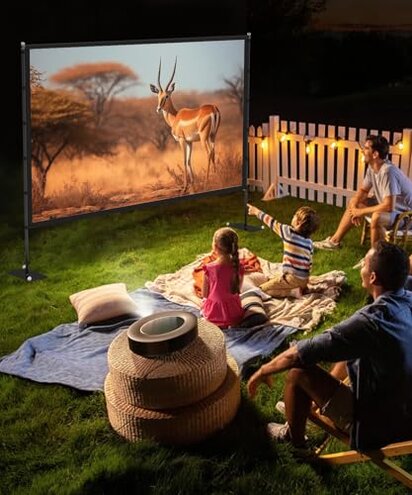
- Avoid it if your yard gets regular breeze, because stability concerns appear repeatedly and feel worse than normal for a 120-inch portable screen.
- Avoid it if you want one-shot setup before guests arrive, since alignment and tension can add retries during first use.
- Avoid it if you are picky about a perfectly smooth image surface, because mixed flatness results can stay visible in bright scenes.
- Avoid it if you plan frequent travel use, since lightweight portability can come with more careful handling than expected.
Who this is actually good for
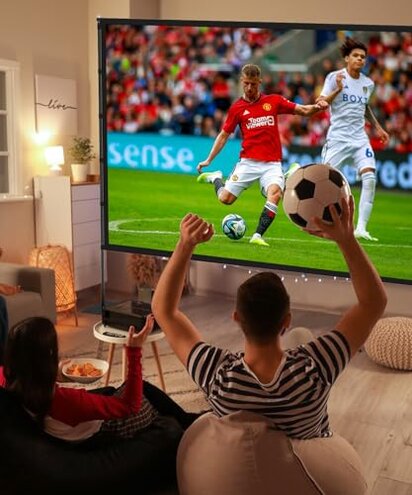
- Good fit for indoor users who can control airflow and do not need maximum stand stability.
- Good fit for occasional backyard users willing to add anchors or extra setup steps for a lighter carry bag.
- Good fit for budget-focused buyers who accept some tension tuning in exchange for a large 120-inch screen at this price level.
- Good fit for users who set it up once and leave it in a sheltered spot instead of packing it away often.
Expectation vs reality
Expectation: A portable screen should be light and still feel stable enough for normal backyard movie use.
Reality: Lightweight here can mean more movement sensitivity than a reasonable buyer expects in outdoor conditions.
Expectation: A foldable screen may need minor adjustment, but the picture should look smooth once mounted.
Reality: Tension can need more rework, and results may still look mixed depending on setup and viewing conditions.
Expectation: Fast setup is reasonable for this category, even if not truly three minutes for every user.
Reality: First-use setup can be slower and more fiddly than typical mid-range alternatives that prioritize steadier frames.
Safer alternatives
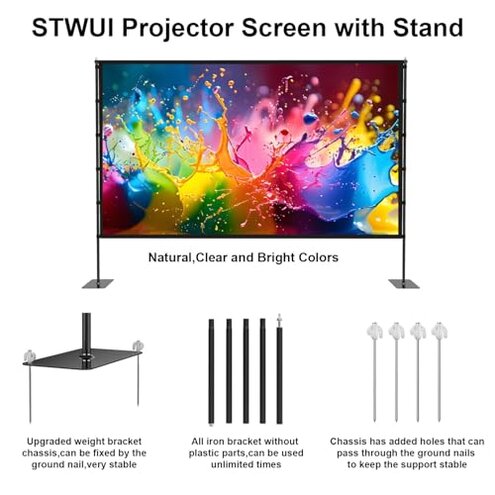
- Choose a model with wider feet or included ground support if your main risk is outdoor wobble.
- Look for a tensioned frame design if visible surface unevenness would bother you during movies or sports.
- Prefer slightly heavier mid-range stands if you want easier first-time setup with fewer balance adjustments.
- Buy a smaller screen size if your space is exposed, because large portable screens are less forgiving in wind.
- Check for real-world setup videos before buying, especially if portability matters more than leaving it assembled at home.
The bottom line
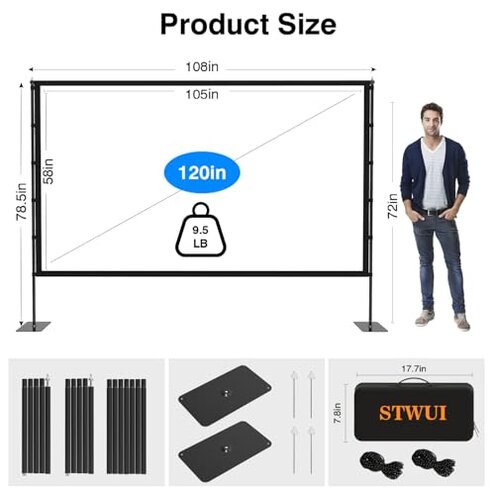
Main regret usually starts when the large screen feels less stable and less hassle-free than buyers expect during actual movie setup. That exceeds normal category risk because portability is supposed to save effort, not create extra anchoring and adjustment work. Verdict: skip it if you want dependable outdoor ease; consider it only if you can tolerate setup tuning and sheltered use.
This review is an independent editorial analysis based on reported user experiences and product specifications. NegReview.com does not sell products.