
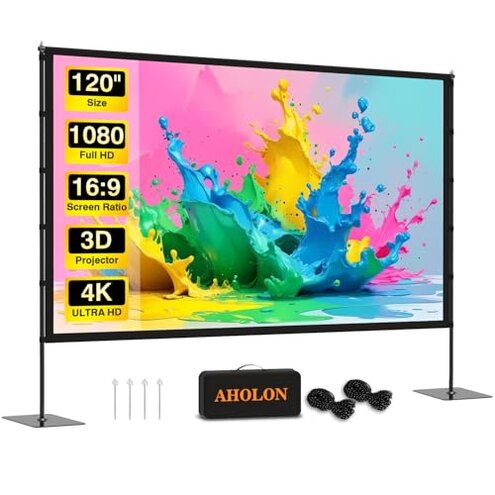
Product evaluated: Outdoor Projector Screen with Stand - 120 inch Portable Projector Screens Indoor Outdoor Projector Screen 16:9 4K HD Outdoor Movie Screen with Carry Bag,Enioy Home Theater Projection Screen.
Related Videos For You
Magic portable folding projector screen, easy to install no wrinkles. Backyard outdoor movie screen
CNET How To - Make a giant projection screen
Data basis: This report summarizes dozens of feedback points gathered from product listing comments, written buyer notes, and short video-style demonstrations collected across recent months. Most input came from written reviews, with supporting signals from photo and setup-focused feedback that helped confirm where problems show up during real use.
| Buyer outcome | AHOLON screen | Typical mid-range alternative |
|---|---|---|
| Setup stress | Higher risk of extra fiddling to get the frame standing straight | Moderate setup effort is more typical |
| Outdoor stability | Higher-than-normal chance of movement in breeze unless anchored well | Usually steadier with less dependence on add-ons |
| Portability trade-off | Very portable, but that light build can feel less confidence-inspiring | Less compact, but often more planted once assembled |
| Picture neatness | Mixed results depending on how tightly the screen is stretched | More forgiving in everyday backyard use |
| Regret trigger | Movie night interruptions from wobble, re-tightening, or repositioning after setup | Lower chance of needing mid-session adjustments |
Do you want a quick setup that stays put once the movie starts?
Primary issue: The most disruptive complaint pattern is stability. The regret moment usually comes after setup, when the screen looks fine at first but becomes shaky in outdoor use.
Recurring pattern: This appears repeatedly in feedback tied to backyards, camping, and open spaces. Compared with a typical mid-range portable screen, it seems less forgiving when wind or uneven ground enters the picture.
- When it hits: The problem usually shows up after setup, once the screen is fully raised and exposed to light movement or bumps.
- Frequency tier: This is a primary complaint, and it is more common than cosmetic concerns.
- What buyers notice: The stand can look wobbly, which makes the whole setup feel less secure than expected.
- Why it stings: Portable screens already need some care, but this one appears more sensitive than the category baseline.
- Hidden requirement: Some buyers may need extra anchoring or a very calm location to get a relaxed viewing session.
- Impact: Instead of pressing play, you may spend extra time checking the legs, base, and placement.
- Fixability: It can improve with better ground and added securing, but that adds extra steps many buyers did not expect.
Illustrative: “It went up fast, then started shifting once we actually used it outside.”
Pattern: This reflects a primary complaint.
Are you expecting a smooth, low-fuss backyard screen for casual use?
- Secondary issue: A repeated frustration is tension and alignment, especially during first assembly.
- Usage moment: This tends to appear during setup when buyers try to get the screen evenly stretched.
- What happens: The screen may need more adjusting than expected to look neat across the full viewing area.
- Why it feels worse: In this category, some tweaking is normal, but this setup appears to demand more fiddling than many shoppers expect from a casual-use screen.
- User cost: That means extra minutes of redoing steps before the picture looks right.
- Persistence: This issue is not universal, but it shows up often enough to matter for less patient buyers.
- Regret point: If your goal is fast family use, repeated small corrections can make the product feel more annoying than its compact design suggests.
Illustrative: “We kept adjusting corners because the screen never looked quite even.”
Pattern: This reflects a secondary complaint.
Do you need something durable for repeated travel and frequent reassembly?
Trade-off problem: The light, travel-friendly design helps with storage, but it also creates a confidence gap for buyers who plan to use it often. This shows up most after repeated handling, packing, and setup cycles.
Persistent pattern: This is less frequent than stability complaints, but it becomes more frustrating for people who bought it for regular outdoor use. A typical mid-range alternative is often bulkier, yet feels sturdier over time.
- First sign: Parts can feel lightweight compared with what some buyers expect at this size.
- Where it matters: The concern grows during travel use, especially with repeated packing and unpacking.
- Buyer impact: Even before anything fails, the setup can feel like it needs careful handling every time.
- Why that matters: For camping or events, buyers usually want a product that tolerates rushed setup better than this.
- Workaround: Gentle handling helps, but that undercuts the promise of easy grab-and-go convenience.
Illustrative: “Nice size, but I was nervous about moving it around too often.”
Pattern: This reflects a secondary complaint.
Are you buying mainly for windy evenings or open outdoor spaces?
- Edge risk: Wind sensitivity is an edge-case issue indoors, but a serious one outdoors.
- When it worsens: This becomes much more noticeable during evening outdoor sessions in yards, parks, or campsites.
- Why it stands out: Outdoor screens always dislike wind, but the regret here is the higher dependence on ideal conditions.
- Real effect: Picture enjoyment drops when the frame moves or the screen surface does not stay settled.
- Not universal: Buyers in calm spaces may be fine, so this is not a guaranteed problem for every use case.
- Decision point: If your area gets frequent breeze, this risk is more disruptive than expected for the category.
Illustrative: “It worked better indoors than in the backyard where we wanted it.”
Pattern: This reflects an edge-case complaint that becomes major in the wrong setting.
Who should avoid this
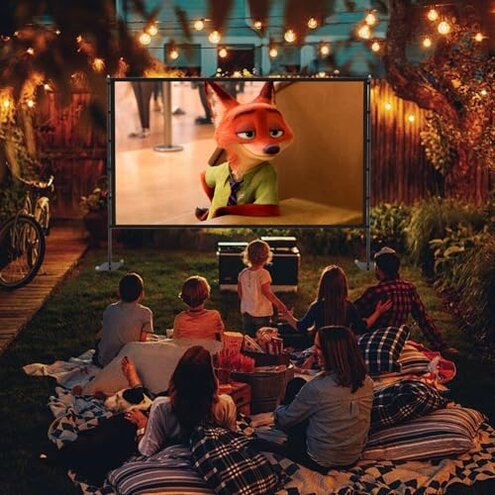
- Avoid it if you want a screen that feels planted with minimal anchoring, because stability looks like the biggest regret trigger.
- Skip it if you plan frequent camping or event use, since repeated setup can feel less sturdy than a normal mid-range option.
- Pass if you get impatient with alignment tweaks, because casual buyers may find the setup fussier than expected.
- Look elsewhere if your main use is breezy outdoor movie nights, where this category risk appears higher than normal.
Who this is actually good for
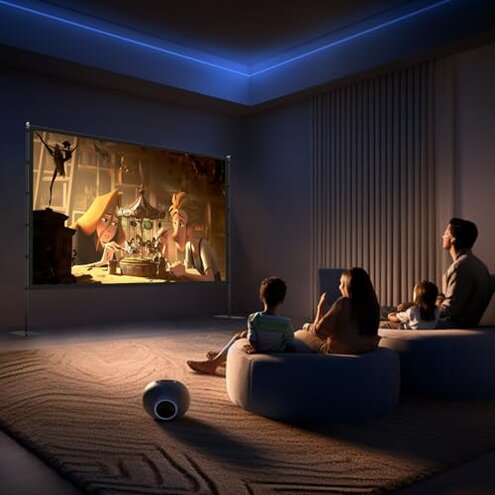
- Better fit: Buyers using it mostly indoors may tolerate the stability limits because wind is removed from the equation.
- Good match: People who prioritize compact storage over maximum sturdiness may accept the lighter feel.
- Works for: Occasional users with a calm patio and time for setup adjustments may find the trade-off acceptable.
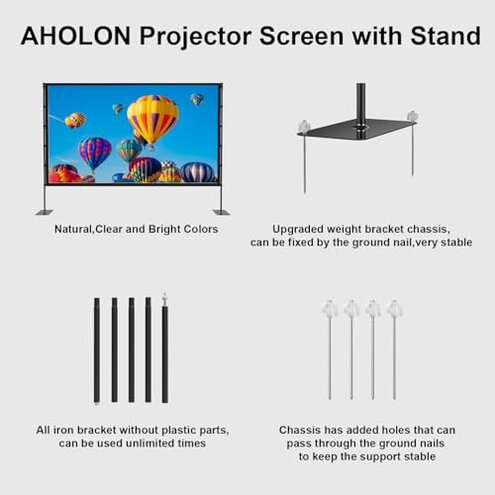
- Suitable: Shoppers who already expect to use stakes, weights, or careful positioning can reduce the main complaint path.
Expectation vs reality
Expectation: A portable screen should set up fast and stay reasonably steady in normal backyard use.
Reality: Fast setup may be possible, but steady viewing can still require extra securing, which feels worse than a reasonable category baseline.
- Expectation: Lightweight should mean easy travel without much downside.
- Reality: The same light build can also mean more movement and less confidence during actual use.
- Expectation: A 120-inch screen should feel like a simple upgrade for movie night.
- Reality: The larger size can make small stability and tension issues feel more obvious.
Safer alternatives
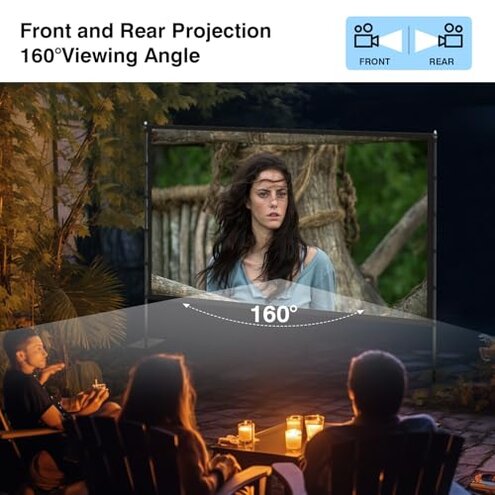
- Choose a portable screen with a visibly wider or heavier base if your main worry is outdoor wobble.
- Look for bundle options that clearly include stakes, weights, or tie-down support to reduce the hidden anchoring requirement.
- Prefer models described as easier to tension if you want fewer setup corrections before guests arrive.
- Consider a slightly less portable screen if you will use it often, because extra bulk usually buys better stability.
The bottom line
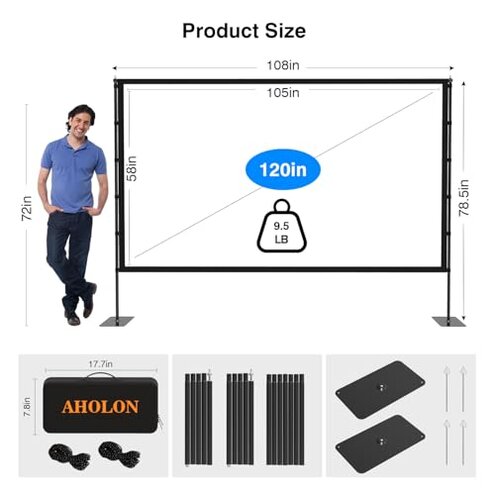
Main risk: The biggest regret trigger is that the screen can feel too dependent on perfect setup conditions, especially outdoors. That exceeds normal category tolerance because buyers expect some portability trade-off, but not this much extra attention to stability and positioning.
Verdict: If you need a calm-space, occasional-use screen, it may be workable. If you want dependable backyard performance with less fuss, this is one to approach carefully.
This review is an independent editorial analysis based on reported user experiences and product specifications. NegReview.com does not sell products.