
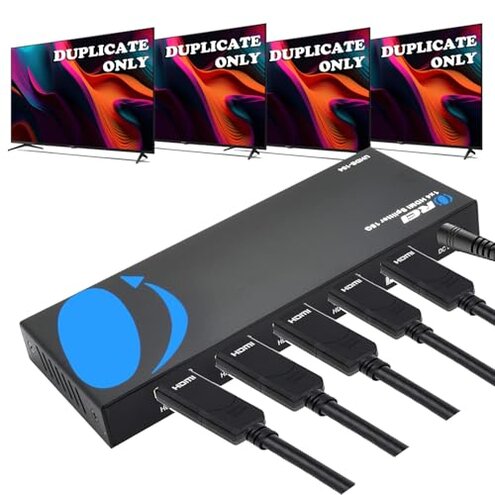
Product evaluated: OREI UltraHD 4K @ 60 Hz 1 X 4 HDMI Splitter 1 in 4 Out 4 Port 4: 8-Bit - HDMI 2.0, HDCP 2.0, 18 Gbps, EDID, Duplicate / Mirror 4K Screens - UHDS-104
Related Videos For You
Doing it right: How to split one HDMI output to TWO TV inputs.
HDMI splitter with EDID management, audio output and scaling #HDMISplitter #EDID
Data basis This report is based on dozens of buyer comments gathered from written feedback and video-style product demonstrations collected from 2018 to 2026. Most feedback came from written experiences, with supporting setup clips and troubleshooting impressions that helped confirm where frustration shows up during first install and daily use.
| Buyer outcome | OREI 1x4 splitter | Typical mid-range alternative |
|---|---|---|
| Setup clarity | Higher risk of confusion because it only mirrors one screen and does not extend displays. | Usually clearer labeling about mirror-only behavior in everyday use. |
| Cable tolerance | Less forgiving when cable runs get long or cable quality is uneven. | Moderate tolerance for ordinary home setups in this price range. |
| Mixed display use | More friction when TVs and monitors have different resolution needs after setup. | Typically easier with mixed screens, though still not perfect. |
| Daily reliability | Secondary risk of dropouts or handshake hassles during ongoing use. | Usually steadier once installed and left alone. |
| Regret trigger | Biggest regret is buying it expecting four independent screens instead of four copies. | Lower regret when category limits are explained more plainly before purchase. |
Thought this would give you extra desktop space?
This is the primary failure because the disappointment happens on first setup, before buyers even test picture quality. The trade-off is simple: it duplicates one source to four screens, but it does not create separate work areas.
This pattern appears repeatedly in buyer feedback, and it is more disruptive than expected because people often shop this category to connect multiple displays for work. Compared with a typical mid-range splitter, the category limit itself is normal, but the regret feels worse when the mirror-only behavior is missed until install day.
Illustrative: “I needed four screens for work, but every display showed the same thing.” Primary pattern.
Illustrative: “It works, just not for extending my laptop across several monitors.” Primary pattern.
Need it to work with longer HDMI runs?
- Primary issue is signal trouble when setup uses longer cable paths, especially after everything is finally wired into a room.
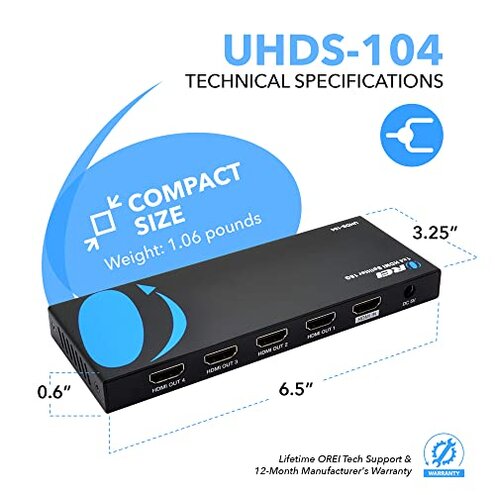
- Hidden requirement is right in the product details: it is recommended with HDMI cables no longer than 30 feet.
- Recurring pattern is that cable quality matters more than many buyers expect for a basic splitter job.
- Usage moment is common in wall-mounted TVs, projectors, or multi-room routing where cable distance adds effort and cost.
- Category contrast is that many mid-range splitters are still sensitive, but this one seems less forgiving than typical when the run is not ideal.
- Buyer impact is extra troubleshooting time, cable swapping, and uncertainty about whether the box or the wiring is the real problem.
Using different TVs or monitors at once?
- Secondary issue is compatibility friction when connected screens do not all handle the same resolution or refresh settings well.
- Pattern signal appears repeatedly after setup, not always at first plug-in, when buyers start mixing older displays with newer 4K screens.
- Real-world trigger is one display forcing the system into a setting that is safer for all screens but less ideal for the best screen.
- What you notice is one screen looking fine while another refuses the signal or falls back to a lower-quality picture.
- Why it stings is that this model advertises up to 4K/60Hz, so buyers may expect mixed-screen setups to be simpler than they are.
- Category baseline says some negotiation issues are normal for splitters, but the inconvenience here can be more frequent than expected in shared old-and-new display setups.
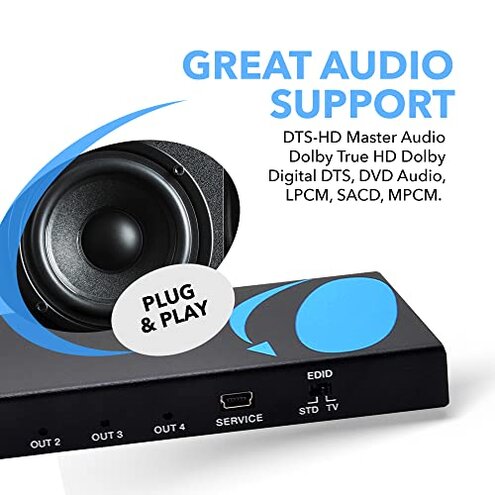
- Fixability can improve with EDID changes and better matched screens, but that adds steps many casual buyers did not plan for.
Illustrative: “One TV worked, but the older monitor kept losing the picture.” Secondary pattern.
Want a plug-it-in-and-forget-it setup?
- Secondary frustration is day-to-day handshake trouble, where the connection can need reseating or restarting after gear changes.
- Persistent pattern is not universal, but it shows up often enough during repeated use to matter for always-on setups.
- When it happens is after switching sources, power cycling displays, or rearranging the HDMI chain.
- What buyers feel is that setup becomes less “plug and play” than expected once real household habits enter the picture.
- Category contrast is that mid-range splitters usually need some initial tweaking, but they should settle down better once left in place.
- Time cost is small each time, yet more frustrating than expected because it interrupts simple viewing or presentation use.
- Best-case fix is keeping the setup stable and avoiding frequent changes, which limits flexibility that buyers thought they were paying for.
- Edge-case note is that some users with short, high-quality cables and matching displays seem to avoid most of this friction.
Illustrative: “It was fine until I changed inputs, then I had to reboot things.” Secondary pattern.
Illustrative: “Once I replaced cables and stopped moving gear, it behaved better.” Edge-case pattern.
Who should avoid this
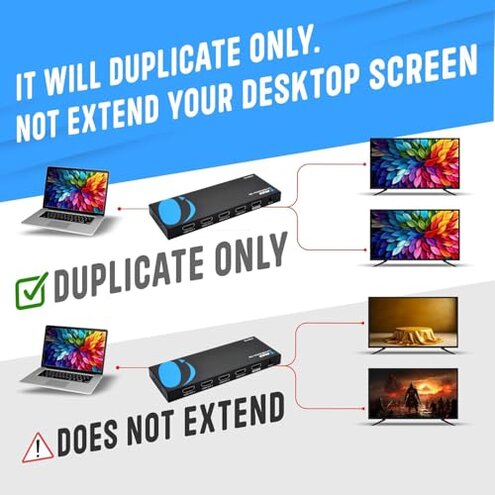
- Avoid it if you want to extend a laptop across several monitors for work, because this unit mirrors only and that regret starts at first use.
- Avoid it if your setup needs long HDMI runs, since the product guidance recommends cables under 30 feet and that is stricter than many casual buyers expect.
- Avoid it if you mix older monitors with newer 4K TVs, because display matching friction is a repeated complaint after setup.
- Avoid it if you frequently switch sources or reconfigure gear, because handshake interruptions are less tolerable than with steadier alternatives.
Who this is actually good for
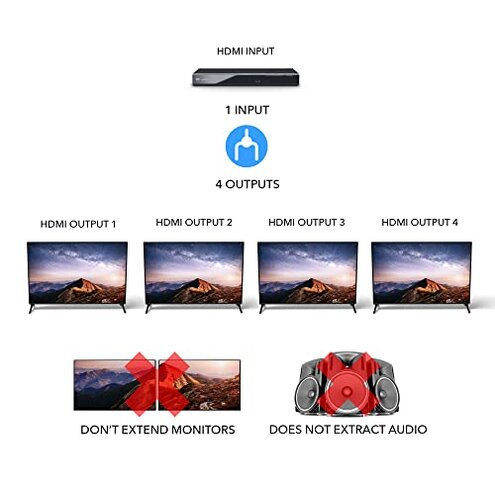
- Good fit for someone who clearly wants four identical screens from one source and already understands that no extended desktop is possible.
- Good fit for short-cable installs where all displays are similar, because that reduces the cable sensitivity and mixed-screen issues above.
- Good fit for fixed signage or repeat content in one room, where buyers can tolerate some setup care in exchange for simple mirroring.
- Good fit for users comfortable adjusting settings like EDID, since they are more likely to work around compatibility friction.
Expectation vs reality
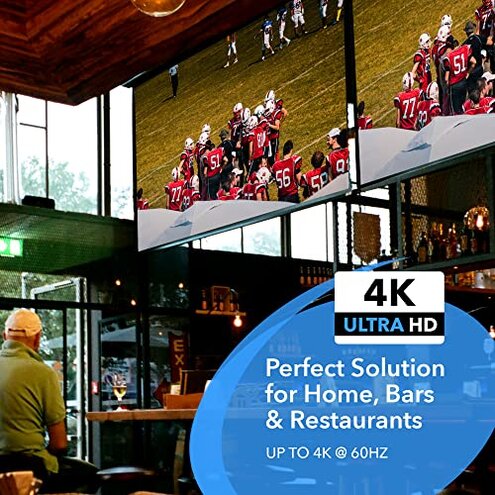
Expectation: one source to four screens should feel simple for ordinary home use.
Reality: setup gets picky faster than expected when cables are long, displays differ, or the HDMI chain changes often.
Expectation: reasonable for this category is that a splitter mirrors the same picture.
Reality: buyer regret is higher than normal because many shoppers still discover the mirror-only limit only after they start installing it.
Expectation: 4K support means modern displays will cooperate smoothly.
Reality: real-world use can still involve fallback settings, display mismatches, and extra troubleshooting.
Safer alternatives
- Choose a switcher or dock instead if your goal is separate workspaces, because that directly avoids the mirror-only mistake.
- Pick a splitter rated for longer runs if your screens are across rooms or behind walls, which reduces the hidden cable-distance problem.
- Match your displays as closely as possible in resolution and refresh support, which lowers mixed-screen negotiation failures.
- Favor models known for stable handshakes if you change sources often, because that targets the repeated reconnect annoyance.
- Look for clearer setup guidance if you are not comfortable with EDID or troubleshooting steps, since this category gets frustrating fast when instructions are thin.
The bottom line
Main regret is buying this for the wrong job, then running into extra setup friction with cables or mismatched displays. That exceeds normal risk because a basic splitter should be easy to understand and reasonably forgiving in everyday home setups. Skip it if you need extended monitors, long cable runs, or frequent reconfiguration. Consider it only for short, stable, mirror-only setups with matched screens.
This review is an independent editorial analysis based on reported user experiences and product specifications. NegReview.com does not sell products.