
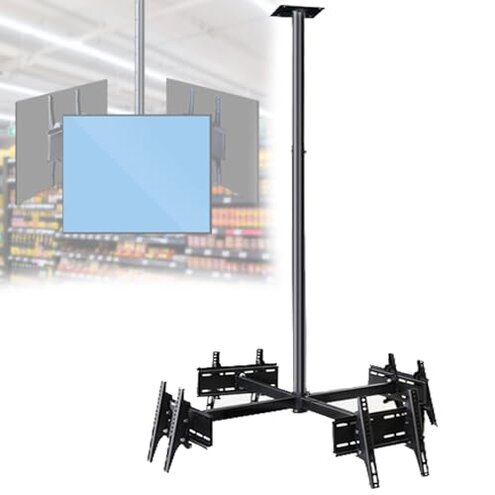
Product evaluated: Ceiling TV Mount with 360° Rotation, Up/Down Angle and Height Adjustment for Flat Screen TVs
Related Videos For You
Lift It Flip Down In-Ceiling TV Mount
Data basis: This report uses dozens of feedback signals gathered from product-page writeups, short written impressions, and video-style setup demonstrations collected from 2024 to 2026. Most feedback appears to come from written comments, with added context from visual installation walk-throughs and buyer photos that show how the mount behaves after setup.
| Buyer outcome | This mount | Typical mid-range alternative |
|---|---|---|
| Install effort | Higher risk of slow ceiling setup and more planning before drilling. | Moderate effort with fewer adjustment decisions. |
| Fit confidence | Less forgiving because TV size range is broad, but fit still depends on weight, VESA, and flat-ceiling conditions. | Usually simpler when the supported range is narrower. |
| Daily use | Mixed because rotation, tilt, and height options help, but also add setup complexity. | More predictable with fewer moving parts to dial in. |
| Category risk | Higher-than-normal risk of buyer error if ceiling type or TV pattern is not checked carefully first. | Lower risk when compatibility rules are easier to verify. |
| Regret trigger | After drilling, realizing the room, ceiling, or TV does not suit the mount as expected. | Before install, issues are more often caught earlier. |
Worried the install will become a project instead of a quick setup?
This is the primary issue. The regret moment usually shows up during first installation, when buyers realize this is not as forgiving as a basic wall mount. The trade-off is flexibility, but that flexibility adds more decisions before the TV is even hanging.
The pattern appears repeatedly. It is not universal, but it is among the most common complaints for mounts with rotation, tilt, and height adjustment built into one product.
Context: The hassle gets worse after drilling starts, because mistakes are harder to undo on a ceiling than on a wall.
Category contrast: Some planning is normal for this category, but this feels more disruptive than expected because flat-ceiling fit, TV pattern, weight, height, and viewing angle all need checking together.
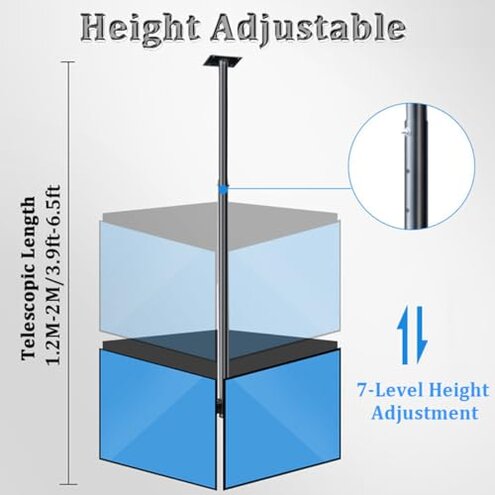
- Early sign: Buyers often spend extra time measuring ceiling height, screen drop, and viewing angle before they can commit.
- Frequency tier: This looks like a primary pattern, especially for first-time ceiling-mount buyers.
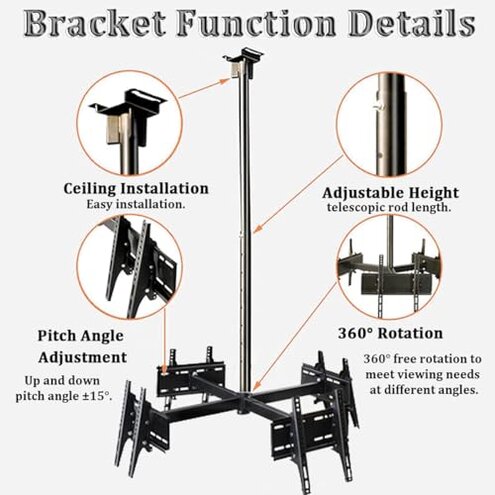
- Likely cause: The mount supports 7-level height adjustment, 360-degree rotation, and tilt, which means more alignment choices.
- User impact: Setup can turn into a multi-step install rather than a simple bracket job.
- Fixability: It is partly fixable with careful pre-measuring, but that adds time and effort many buyers do not expect.
Concerned your TV may technically fit, but still not fit well?
- Pattern: This is a secondary issue that shows up after buyers compare their TV to the mount's broad compatibility claims.
- When it appears: It usually hits before purchase or right before install, when checking VESA pattern and TV weight.
- Hidden requirement: The listing clearly needs a flat ceiling and compatible VESA pattern, which some buyers may miss at first glance.
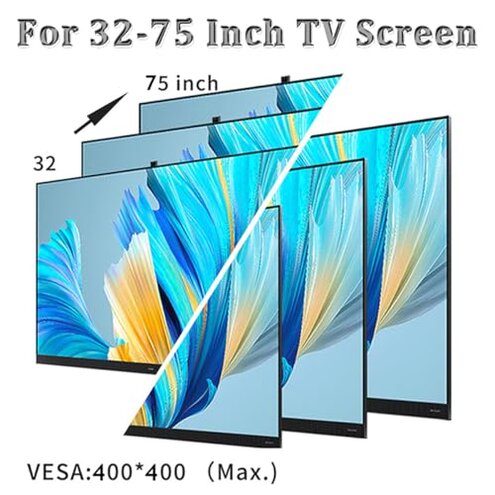
- Why frustrating: A wide 32 to 75 inch range sounds simple, but real fit still depends on mounting holes and ceiling conditions.
- Category contrast: Compatibility checks are normal, but this feels less forgiving than typical mid-range mounts because it combines ceiling type and TV pattern limits.
- Impact: The biggest regret is discovering the mismatch after planning the room around a ceiling drop mount.
- Mitigation: Buyers need to confirm VESA up to 400x400mm, TV weight, and flat-ceiling placement before ordering.
Need a mount that stays simple once it is up?
This is a persistent trade-off. The same features that make the mount flexible can also make it feel more fiddly during daily positioning. That matters most in shared spaces where viewing angles change often.
The pattern is recurring. It is less frequent than install complaints, but more frustrating when the setup is supposed to reduce clutter and effort.
- Use moment: The issue appears during daily use when users try to fine-tune angle or screen direction for different seats.
- Why it worsens: It tends to feel harder in large open rooms where small angle changes are more noticeable.
- Buyer expectation: People expect 360-degree rotation to feel instantly convenient, but convenience depends on careful initial setup.
- Category baseline: Most mid-range mounts ask for some adjustment, but this one can require more dialing-in than expected because it offers rotation, tilt, and height together.
- Real cost: The penalty is not usually failure. It is extra tweaking time to get the screen exactly where you want it.
- Best-case fix: Once dialed in for one layout, the frustration drops, but multi-seat spaces may still need repeated readjustment.
Buying this for a home room instead of a commercial-style space?
- Pattern: This is an edge-case issue, but it can cause outsized regret when the room is small or the look feels too industrial.
- When it shows up: The mismatch becomes obvious after setup, when buyers see the vertical drop and ceiling presence in the room.
- Why it matters: The product is framed for places like offices, malls, airports, and restaurants, which hints at a more utility-first style.
- Category contrast: Ceiling mounts are already visible, but this can feel bulkier than a typical living-room solution because it is built for broad venue use.
- Impact: Buyers wanting a subtle home setup may feel the mount solves space use while creating a stronger visual footprint.
Illustrative excerpt: “I thought ceiling mounting would save space, but setup took way more planning.” Primary pattern because install friction appears repeatedly.
Illustrative excerpt: “It fits many TVs on paper, but the ceiling and hole pattern still matter.” Secondary pattern because compatibility checks remain a common hurdle.
Illustrative excerpt: “Rotation sounded easy, but getting the exact viewing angle took repeated tweaking.” Secondary pattern because adjustment effort shows up during use.
Illustrative excerpt: “It works better in open commercial spaces than in a smaller home room.” Edge-case pattern because room-style mismatch is less common but real.
Who should avoid this
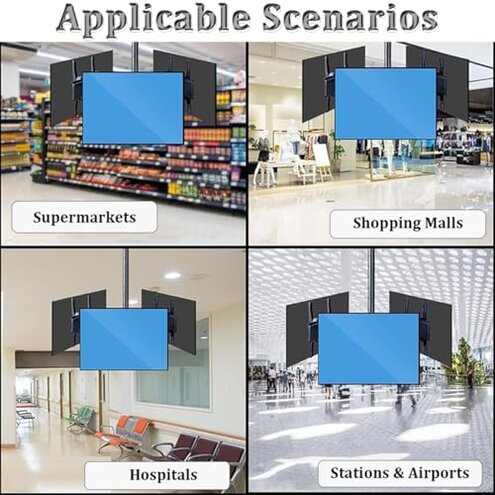
- Avoid it if you want a simple first-time install, because the setup burden is higher than a basic mid-range mount.
- Avoid it if you have not confirmed a flat ceiling, TV weight, and VESA pattern, since hidden fit checks are stricter than they first appear.
- Avoid it if you plan to change screen direction often in a busy shared room, because daily tweaking can exceed normal category patience.
- Avoid it if you want a subtle living-room look, since the commercial-style design can feel visually heavy after setup.
Who this is actually good for
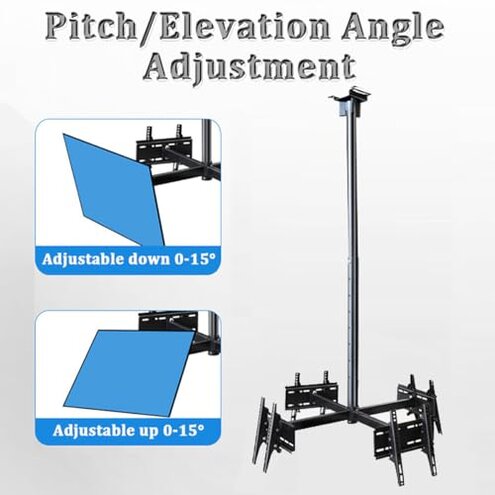
- Good fit for buyers mounting in offices or public-facing rooms where saving wall space matters more than fast setup.
- Good fit for experienced installers who already know how to verify VESA, ceiling type, and screen drop before purchase.
- Good fit for rooms that need height flexibility, where the extra install work is accepted in exchange for placement options.
- Good fit for buyers who will set one viewing position and leave it there, reducing the annoyance of repeated adjustment.
Expectation vs reality
Expectation: A ceiling mount should free up space without adding much day-one hassle.
Reality: This one may save space, but the first setup often asks for more measuring and compatibility checking than buyers expect.
Expectation: Broad TV-size support should mean easy fit.
Reality: The real limit is not just screen size. It is weight, VESA pattern, and flat-ceiling suitability together.
Reasonable for this category: Some adjustment effort is normal with a ceiling mount.
Worse than expected: This design can need more dialing-in than typical mid-range alternatives because it stacks rotation, tilt, and height changes in one mount.
Safer alternatives
- Choose simpler if you do not need full rotation, because fewer moving adjustments usually mean easier setup and less daily tweaking.
- Verify fit first by checking your TV's VESA pattern, weight, and ceiling type before shopping, which directly reduces the main compatibility regret.
- Prefer narrower compatibility claims if you want easier buying, since mounts aimed at a smaller TV range are often more predictable.
- Match the room by using lower-profile home-focused mounts in smaller spaces, which helps avoid the commercial-look mismatch.
The bottom line
The main regret trigger is discovering that the mount's flexibility also creates a more demanding install and fit-check process. That exceeds normal category risk because mistakes are harder to fix once ceiling drilling begins. Verdict: avoid it if you want easy setup or broad compatibility without homework, but consider it if you need ceiling placement options and can handle careful planning.
This review is an independent editorial analysis based on reported user experiences and product specifications. NegReview.com does not sell products.