
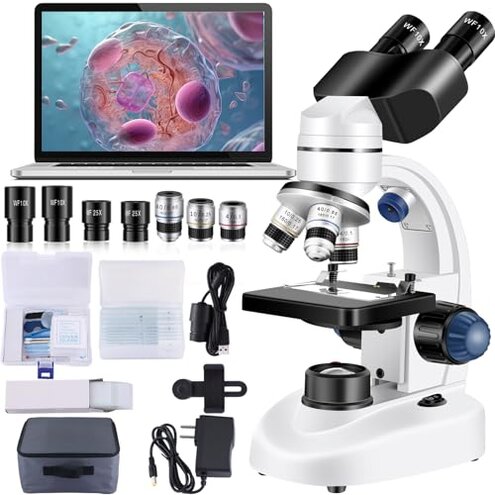
Product evaluated: Woehrsh Microscope for Adults WF10x and WF25x eyepieces, 40X-2000X Magnification USB Camera, Microscope for Adults Suitable for Laboratory School Home Education.
Related Videos For You
BIOLOGY 10 - Basic Microscope Setup and Use
How to Use Plugable's USB Digital Microscope - Windows
Data basis This report draws on dozens of feedback points collected from product listings, written buyer comments, and short video demonstrations between 2023 and 2026. Most feedback came from written reviews, with video-style posts used mainly to confirm setup friction, image quality expectations, and day-to-day ease of use.
| Buyer outcome | This microscope | Typical mid-range alternative |
|---|---|---|
| First-use setup | Higher friction if you expect the USB camera and optics to work smoothly without trial and error. | Moderate friction, but usually more predictable for basic viewing. |
| Image clarity | Mixed results, especially when pushing toward the highest stated magnification. | More consistent at realistic classroom and hobby magnification ranges. |
| PC camera use | Higher-than-normal risk of extra setup time and disappointing capture quality. | Usually simpler if the camera feature is included at all. |
| Learning curve | Steeper during early use, especially for beginners switching between eyepieces and focus adjustments. | More forgiving for casual home and school use. |
| Regret trigger | Buying for 2000X or easy USB imaging, then spending extra time chasing a clear result. | Buying for routine viewing and getting close to what you expected. |
Why does the image look worse right when you try the headline magnification?
This is the primary issue. The biggest regret moment shows up after setup, when buyers try to use the highest stated magnification and expect a dramatic jump in detail. That gap feels more disruptive than expected for this category because the listed top-end number creates a stronger promise than typical classroom-style microscopes can usually deliver cleanly.
The pattern appears repeatedly. It is not universal, but it comes up often enough that cautious buyers should treat the top magnification as a best-case claim, not an everyday result. It worsens when lighting, slide quality, and focus skill are only average, which is exactly how many home users start.
Illustrative excerpt: “I can see something, but not the crisp detail I expected at max zoom.”
Pattern: Primary pattern tied to high-magnification disappointment.
Reasonable baseline: Most mid-range microscopes get softer at the top end, but this one feels less forgiving because the spread from 40X to 2000X raises beginner expectations sharply.
Will the USB camera save time, or just add another setup problem?
- Frequency tier: This is a secondary issue, but it is more frustrating when it happens because buyers often chose this model for the camera feature.
- When it hits: The trouble usually starts on first PC connection, when users expect simple photo or video capture.
- Recurring pattern: Feedback commonly reports that the camera feature adds steps instead of feeling plug-and-play.
- Buyer impact: Extra time goes into getting the computer side working before any actual viewing or recording happens.
- Why it feels worse: In this price range, a bundled camera is supposed to reduce hassle, but this setup can feel less polished than many mid-range alternatives.
- Hidden requirement: You may need more PC patience and adjustment time than the listing suggests, especially if you expected easy classroom sharing.
- Fixability: Some users can get acceptable results with trial and error, but not everyone wants a microscope that also becomes a small computer project.
Illustrative excerpt: “The microscope works, but the camera side took longer than it should.”
Pattern: Secondary pattern tied to connection and capture friction.
Is it beginner-friendly, or does it fight you during normal focusing?
- Severity: This is another primary issue for new users because image quality depends heavily on careful setup and focus technique.
- Usage moment: The problem shows up during early sessions when users switch eyepieces, change objectives, and try to refocus quickly.
- Pattern signal: Feedback appears repeatedly around a steeper learning curve than expected for home education use.
- Early sign: If you keep making small focus changes without landing on a clear image, frustration builds fast.
- Worsening condition: It gets harder when multiple family members use it, because every change can mean another round of re-adjustment.
- Category contrast: Even budget microscopes require practice, but this model seems less forgiving than a typical mid-range alternative marketed to mixed home-school users.
- Trade-off: The wider magnification range sounds flexible, but that flexibility also increases the chance that beginners spend more time tuning than observing.
- Mitigation: Buyers with prior microscope experience may tolerate this better, but first-timers are more likely to feel slowed down.
Illustrative excerpt: “Every time I changed the view, I had to start over with focus.”
Pattern: Primary pattern tied to beginner frustration during normal use.
Does the value make sense once the first excitement wears off?
- Tier: This is a secondary-to-edge-case regret, depending on why you bought it.
- When it shows up: The concern usually appears after a few sessions, once buyers compare the effort required with the results they actually get.
- Persistent pattern: It is less frequent than blur or setup complaints, but more frustrating for buyers who stretched their budget for the camera and high magnification promise.
- Real-world impact: If you only need routine slide viewing, the extras may not feel useful enough to justify the higher hassle.
- Why above baseline: Mid-range alternatives often win by being simpler, even when they offer less flashy top-end marketing.
- Attempted workaround: Some users lower expectations and stay in the more usable magnification range, but that changes what they thought they were paying for.
Illustrative excerpt: “It’s usable, but I paid for features I do not really enjoy using.”
Pattern: Secondary pattern tied to value regret after setup.
Illustrative excerpt: “Good enough for basics, just not as easy as I expected.”
Pattern: Edge-case pattern showing partial satisfaction with lowered expectations.
Who should avoid this

- Beginners who want a microscope that works smoothly on first use should avoid it, because the focus and magnification learning curve seems steeper than normal.
- Buyers needing easy PC capture should be careful, because the USB camera appears to add extra setup time instead of reducing it.
- Anyone buying mainly for 2000X should skip it, because the top-end viewing disappointment is among the most common complaints.
- Busy parents or teachers may want a simpler model, since repeated re-adjustment can slow down group use more than expected.
Who this is actually good for
- Patient hobby users who accept trial and error may still do fine, especially if they mostly stay in the more practical lower and mid magnification range.
- Users with microscope experience may tolerate the steeper setup better, because they already expect lighting and focus to need careful adjustment.
- Buyers who treat the USB camera as a bonus rather than a core reason to buy may be less disappointed by the computer-side friction.
- Home learners on basic slide work may get acceptable value if they do not expect premium image sharpness at the highest setting.
Expectation vs reality

Expectation: A stated 2000X range should give obviously impressive close-up detail.
Reality: The recurring issue is that the highest range appears more usable on paper than in normal home viewing.
Expectation: A bundled USB camera should make sharing and saving images easy.
Reality: For a noticeable group of buyers, it adds setup friction and feels less polished than expected.
Expectation: It is reasonable for this category to need some focusing practice.
Reality: The learning curve seems worse than expected because switching views and regaining clarity can take more effort than typical mid-range alternatives.
Safer alternatives

- Prioritize realistic magnification over the highest advertised number, because that directly reduces the main blur-related regret trigger.
- Choose a microscope with stronger setup guidance if you need classroom or family use, which helps avoid the beginner focus frustration described above.
- Treat built-in cameras cautiously unless the product has a strong history of easy PC use, which neutralizes the extra-step camera problem.
- Look for consistency over feature count if your goal is routine slide viewing, because simpler mid-range models often feel easier in daily use.
The bottom line
The main regret trigger is buying this for its top magnification and USB camera, then discovering that clarity and setup can demand more effort than expected. That exceeds normal category risk because the marketed flexibility raises expectations more than the everyday user experience seems to support. If you want low-friction viewing, this is a product to approach carefully or skip in favor of a simpler mid-range microscope.
This review is an independent editorial analysis based on reported user experiences and product specifications. NegReview.com does not sell products.