
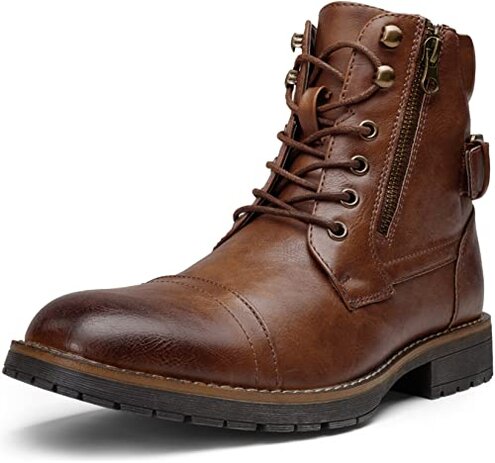
Product evaluated: Vostey Casual Dress Ankle Boots for Men - Brown Motorcycle Combat Boots (BMY678A dark brown 10.5)
Related Videos For You
Motorcycle Boots Sizing & Buying Guide at RevZilla.com
Chelsea Boots Guide | The Classic Men's Boot Explained
Data basis: Dozens of written reviews, question threads, and a handful of user videos were analyzed between 2020 and 2022 to build this report. Source mix: Most feedback came from written reviews, supported by video demonstrations and Q&A entries.
| Outcome | Vostey boots (this listing) | Typical mid-range boots |
|---|---|---|
| Fit predictability | Variable fit — sizing inconsistency commonly reported at first try-on. | Steady fit — most mid-range options size reliably across brands. |
| Durability | Higher risk — sole and finish wear appear more often than expected. | Standard durability — typical wear life for comparable price. |
| Zipper & hardware | Unreliable — reports of zipper snagging after repeated on/off use. | More reliable — mid-range boots usually keep hardware through normal use. |
| Comfort / break-in | Stiff initial feel — longer break-in and more blisters reported by buyers. | Softer break-in — many competitors feel comfortable sooner. |
| Regret trigger | Fit + early wear — mismatched sizing plus early wear lead to returns and replacements. | Single-issue fixes — problems are often isolated and easier to resolve. |
Why do sizing and fit feel unpredictable?
Pattern: Dozens of buyers report inconsistent sizing when trying these on the first time.
Usage context: The problem appears at first try-on and when ordering different sizes for comparison.
Category contrast: This is worse than typical mid-range boots because many competitors use predictable size runs that minimize exchanges.
Are zippers and hardware likely to fail quickly?
- Pattern: A recurring but not universal complaint about zipper snagging after repeated use.
- When it appears: Issues emerge with daily on/off rather than single wears.
- Early sign: New boots that need extra tugging to zip are a common early indicator of future failure.
- Frequency tier: This is a secondary issue compared with sizing but is more disruptive when it happens.
- Impact: A stuck zipper forces extra time, possible repairs, or full replacement sooner than expected.
Will these be comfortable for long walks or daily wear?
- Pattern: Many buyers report stiffness and blistering during the first several wears.
- When it appears: Discomfort typically shows up after long sessions or multi-hour wear on day one or two.
- Early sign: Noticeable rubbing along the heel or toe during initial wearing.
- Cause: Firm uppers and minimal insole cushioning contribute to a longer break-in cycle.
- Attempts to fix: Buyers add insoles or wear thick socks to reduce blisters, with mixed success.
- Category contrast: These boots are less forgiving than many mid-range alternatives that use softer lining or pre-formed footbeds.
- Hidden requirement: Expect to buy separate comfort insoles for all-day wear.
How durable are the soles and finish over time?
- Pattern: Reports of separation and scuffing after weeks to months of normal use are present.
- When it appears: Problems often show up after regular weekly wear rather than immediately.
- Frequency tier: This is a secondary-to-primary issue because it causes significant regret when it occurs.
- Early sign: Lifting at the sole edge or rapid gloss loss on the first few wears.
- Cause: Construction glue and sole bonding appear less robust than category expectations.
- Impact: Sole failure reduces usable life and increases return or repair effort.
- Attempted fixes: Some buyers used cobbler glue or resoling, adding cost and time.
- Category contrast: Durability here is below average for boots in this price band.
Illustrative excerpts (not real quotes)
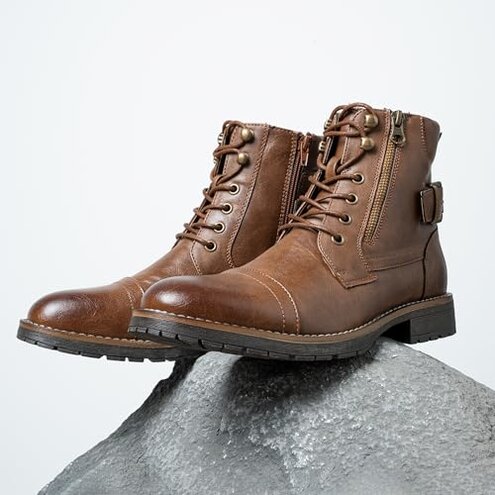
"Fits tight up front, heel slips, had to size up twice." — Primary pattern: clear sizing inconsistency at first try-on.
"Zipper stuck after a week of daily wearing, very frustrating." — Secondary pattern: hardware failure after repeated use.
"Took many wears to stop blistering; needed thick socks and insoles." — Primary pattern: extended break-in and comfort fixes needed.
Who should avoid this
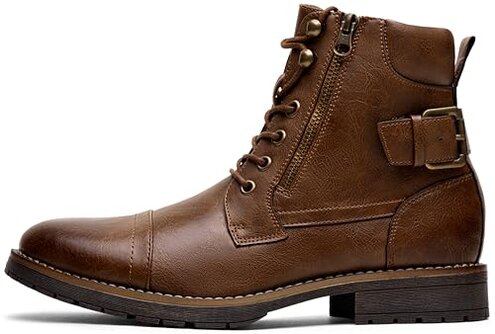
- Need predictable sizing: Buyers who cannot accept size exchanges frequently should avoid these boots.
- Heavy daily use: If you plan daily commuting or long walks, the reported durability and comfort issues are a poor fit.
- Zero downtime buyers: Shoppers who lack time for returns or repairs should avoid due to possible early hardware or sole failures.
Who this is actually good for
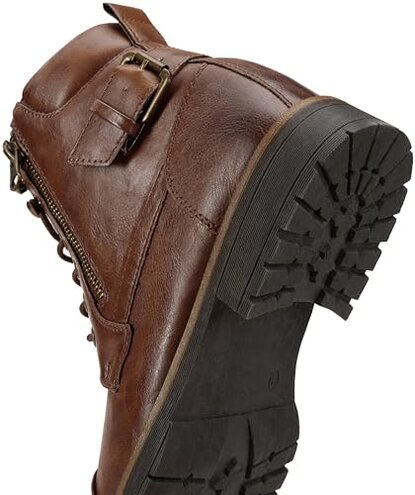
- Occasional wearers: If you need boots for infrequent outings, sizing and durability risk is less important.
- Budget shoppers: Buyers prioritizing style at low cost and willing to accept fixes may find value.
- DIY repairers: If you accept adding insoles or cobbler fixes, the comfort and sole issues can be managed.
Expectation vs reality
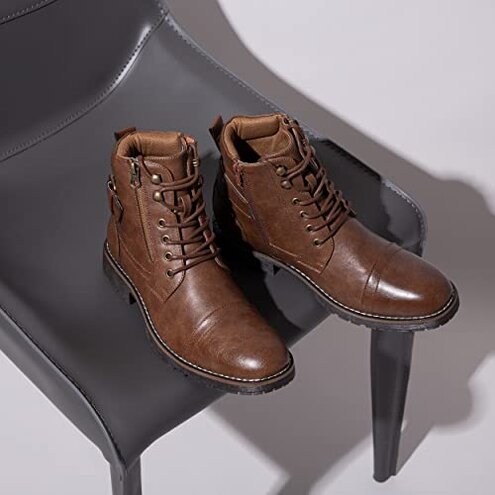
- Expectation (reasonable for category): Buyers expect mid-range boots to fit reliably out of the box.
- Reality: Vostey shows inconsistent sizing that leads to exchanges and returns more often than typical competitors.
- Expectation: Hardware should survive normal on/off cycles without snagging.
- Reality: Zipper complaints indicate higher failure risk under daily use.
Safer alternatives
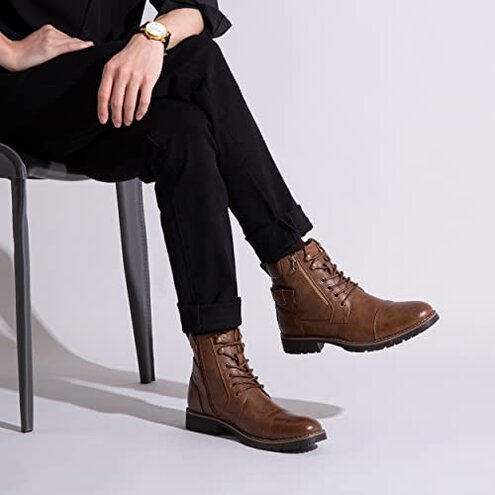
- Pick trusted brands: Choose mid-range boots known for consistent sizing to avoid the exchange cycle.
- Inspect hardware reviews: Prioritize listings with many mentions of durable zippers and hardware longevity.
- Buy with returns in mind: Purchase from sellers offering free returns and clear size guides to minimize risk.
- Plan for insoles: If comfort is critical, budget for a quality insole upgrade up front.
The bottom line
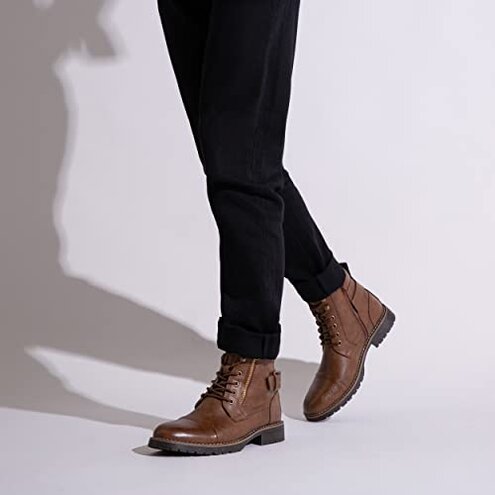
Main regret: The combination of unpredictable sizing and higher-than-expected wear creates the primary buyer risk.
Verdict: Avoid these boots if you need reliable fit, day-long comfort, or low-maintenance durability.
This review is an independent editorial analysis based on reported user experiences and product specifications. NegReview.com does not sell products.