
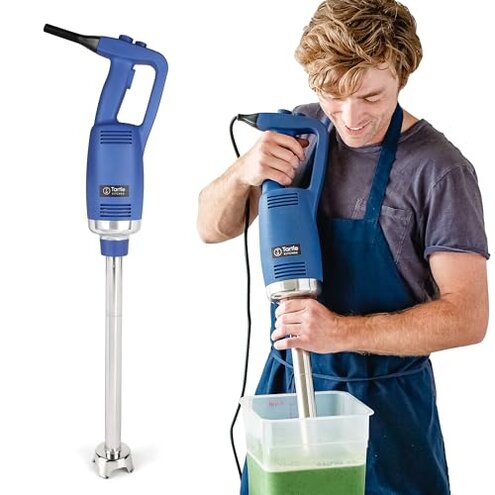
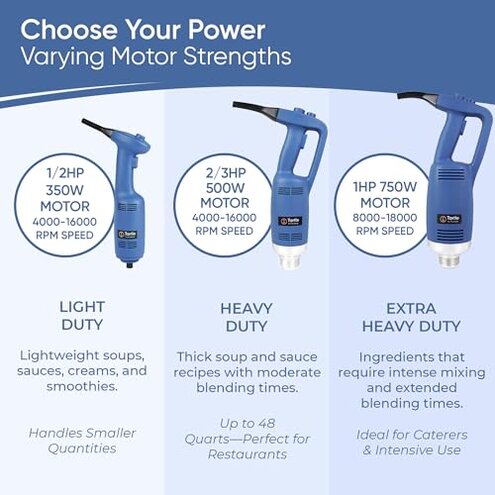
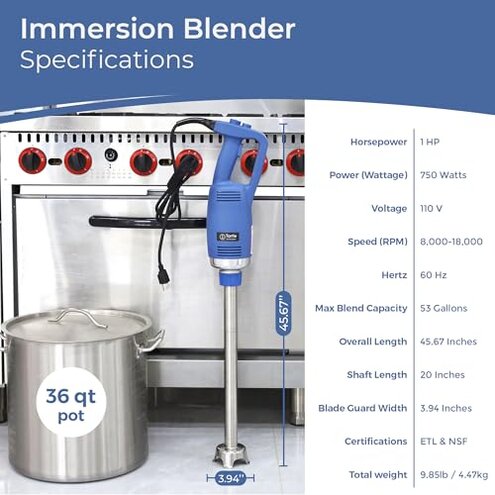
Product evaluated: TK Commercial Immersion Blender, 750 Watt/1 HP Variable Speed Motor, 20,000 RPM X-Heavy Duty with Performance Assurance - 20"
Related Videos For You
Cuisinart® | How to use the attachments on your Cuisinart hand blender!
How to REPAIR a STICK BLENDER - WARING QUIK STIK PLUS Commercial Grade Immersion Blender
Dozens of written reviews and several video demonstrations were aggregated between Jan 2024 and Dec 2024 to build this report.
Most feedback came from written reviews, supported by short video demos and buyer Q&A clips.
| Buyer outcome | TK 750W 20" | Typical mid-range |
|---|---|---|
| Ease of handheld use | Heavy in real use; more arm fatigue than expected for an immersion blender. | Lighter and more comfortable for long tasks with balanced grips. |
| Motor reliability | Higher risk of overheating or strain under thick mixtures, appears repeatedly in feedback. | Moderate motor stress but fewer premature-failure reports in similar mid-range models. |
| Durability of cord & handle | Durability concerns reported after repeated daily use or heavy handling. | Reinforced cords and softer handles are common in alternatives. |
| Cleaning & maintenance | Long shaft makes sink-cleaning awkward, though detachable parts exist. | Shorter shafts or better disassembly usually reduce cleanup friction. |
| Regret trigger | Motor failure after heavy or prolonged use; more disruptive than expected for this category. | Less likely to cause outright failure under similar workloads. |
Is this too heavy to use for long tasks?
Weight shows up as the main regret when buyers use the blender for long batches or stirring thick liquids.
Common pattern: this complaint is commonly reported and appears repeatedly across buyer feedback during extended handheld sessions.
Will the motor overheat or fail under heavy loads?
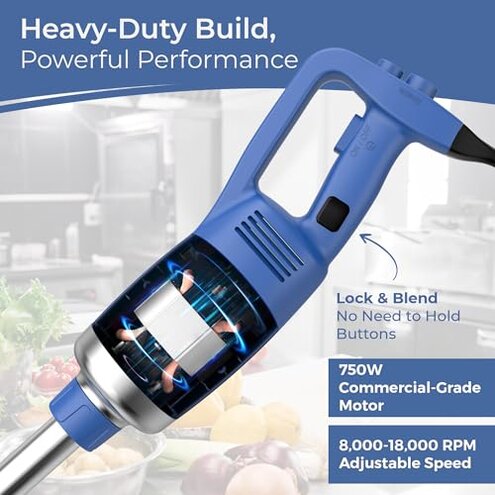
- Primary sign: motor strain or hot-to-touch housing shows up after long blending of thick soups.
- Usage anchor: most reports note the issue during continuous runs over several minutes or when processing dense mixtures.
- Pattern: recurring problem for heavy-duty tasks rather than occasional light use.
- Category contrast: more disruptive than normal because mid-range blenders usually tolerate occasional long runs without stress.
- Impact: can interrupt prep and lead to cooling downtime or premature replacement.
Does the cord and handle wear quickly under daily use?
- Early sign: fraying cord or loose strain points reported after frequent commercial or home use.
- Scope: appears repeatedly across different buyers and usage contexts.
- When it gets worse: daily heavy handling and pulling around crowded kitchens accelerate wear.
- Cause: reinforced cord claim is present but feedback suggests real-world stress still causes failures.
- Repair attempts: buyers often need additional cord protection or professional repair, adding cost and downtime.
- Category contrast: less forgiving than typical models that use thicker sheathing or replaceable cords.
- Hidden need: may require extra cable management or strain relief not obvious at purchase.
Is noise and vibration worse than expected?
- Perception: loud noise and strong vibration are commonly noted during heavy blending.
- When it appears: noise spikes during high-RPM operation and when working near capacity.
- Frequency tier: secondary issue for many, primary for users in small kitchens or near customers.
- Cause: long shaft and high RPMs can amplify vibration if grip or stabilization is poor.
- Impact: increases fatigue and can reduce control over fine textures or emulsions.
- Attempts to fix: buyers try hand braces or mounting blocks to reduce vibration with mixed success.
- Category contrast: more vibration than mid-range units with better dampening or balanced motors.
- Edge-case note: noise is tolerable in loud commercial kitchens but problematic in quiet environments.
Illustrative buyer excerpts (not real quotes)
Illustrative: "Too heavy for long stirring; arms tired after two minutes." — primary pattern
Illustrative: "Motor got hot and stopped during thick chowder batch." — primary pattern
Illustrative: "Cord shows wear after daily catering use." — secondary pattern
Illustrative: "Vibration made emulsions uneven unless I braced it." — edge-case pattern
Who should avoid this
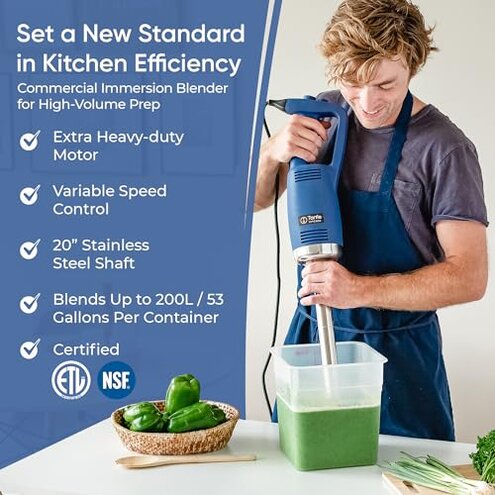
- Home cooks who plan long handheld sessions, because the weight causes arm fatigue and loss of control.
- High-volume pros with continuous multi-hour shifts, because the motor stress risk is higher than typical mid-range models.
- Quiet-service environments like small cafés, because noise and vibration can disturb customers.
Who this is actually good for
- Short-batch commercial use where heavy-duty bursts are needed and operators rotate tasks frequently; the power can be useful if sessions are brief.
- Caterers who prioritize reach and shaft length for deep containers and have staff to handle fatigue; they can tolerate the weight.
- Workshops or teaching kitchens where unit is shared and used intermittently; the performance matters more than continuous runtime.
Expectation vs reality
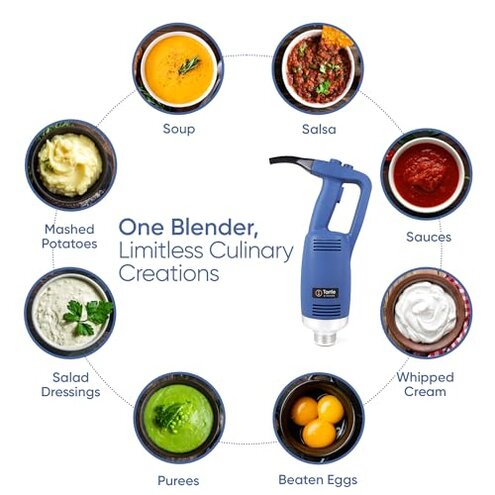
Expectation: a commercial immersion blender should handle heavy sauces without hot motor issues, which is reasonable for this category.
Reality: reviewers report motor strain under prolonged heavy use, which is worse than expected for a 750W unit.
Expectation: detachable shaft means easy cleaning and storage like mid-range options.
Reality: the long shaft adds awkward sink cleaning and storage trade-offs not emphasized in the listing.
Safer alternatives
- Buy lighter mid-range immersion blenders if you need long handheld comfort to neutralize the weight problem.
- Choose reinforced cords or models with replaceable cords to avoid durability headaches.
- Prefer balanced motors and models with vibration dampening if you need fine texture control and low noise.
- Look for longer warranties or commercial support plans to reduce risk of motor failure cost.
The bottom line
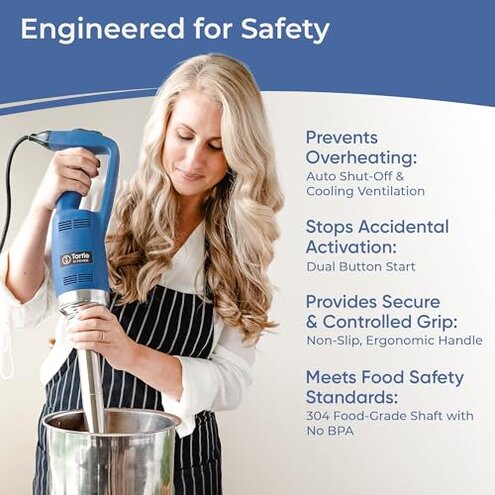
Main regret: buyers most often report the unit's weight and motor strain during prolonged heavy use.
Why worse: these issues are more disruptive than typical mid-range immersion blenders and can lead to downtime or extra costs.
Verdict: avoid this TK model if you need long handheld reliability or continuous heavy-duty runtime; it suits short bursts or shared‑use environments.
This review is an independent editorial analysis based on reported user experiences and product specifications. NegReview.com does not sell products.