
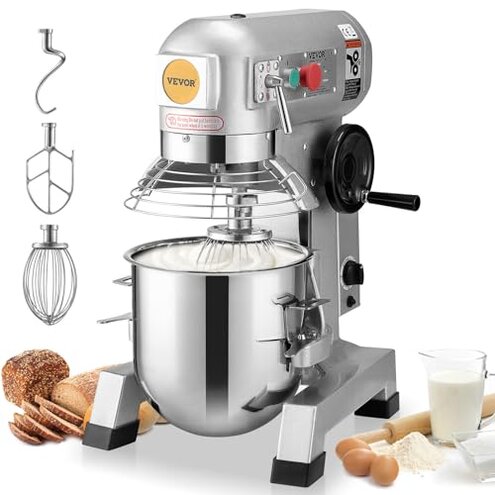
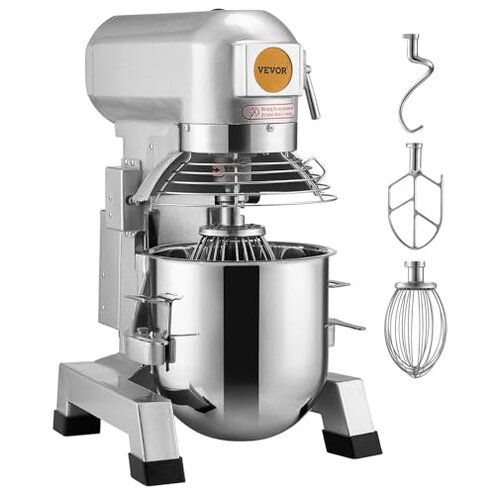
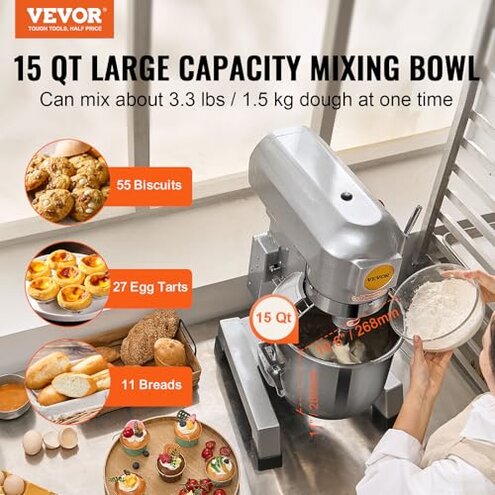
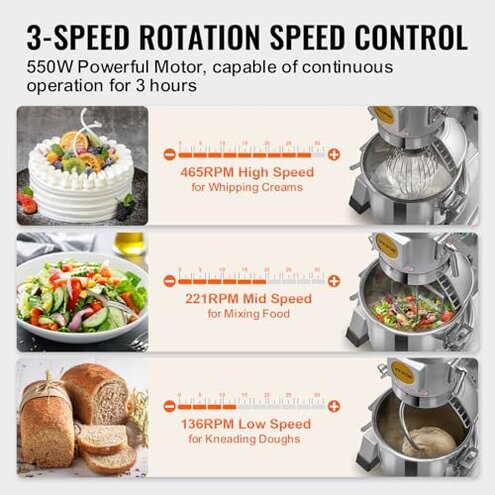
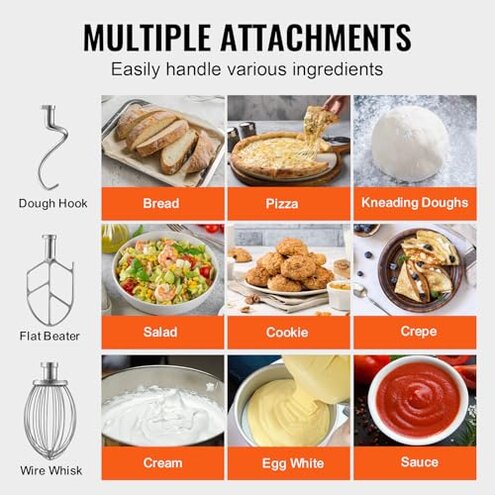
Product evaluated: VEVOR Commercial Food Mixer, 15Qt Capacity with Timer, 500W Stainless Bowl Durable Electric Mixer for Commercial Use, 3 Speed Options 113/184/341 RPM, Includes Dough Hook & Whisk
Related Videos For You
Commercial Vevor Stand Mixer Review
Hobart mixer oil change tutorial DIY changing oil on hobart Windy City Restaurant Parts
Data basis This report aggregates feedback from dozens of written reviews and several video demonstrations collected between Jan 2024 and Jan 2026, with most feedback coming from written reviews and supported by videos.
| Outcome | VEVOR 15Qt | Typical mid-range mixer |
|---|---|---|
| Reliability | Unstable — recurring motor and lift complaints reported by many buyers. | More consistent — fewer early motor or mechanism failures in similar-priced models. |
| Noise & vibration | Louder — appears repeatedly during heavy or long kneading sessions. | Quieter — typical mid-range units manage vibration better under load. |
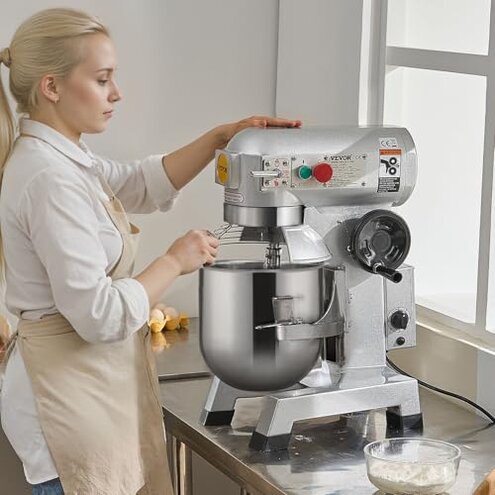
| Space & handling | Very heavy — large weight and footprint create hidden setup needs. | Lighter — easier to move and fit on standard counters. |
| Maintenance / downtime | Higher-than-normal risk — persistent gearbox or motor heat issues increase repair time. | Lower risk — typical alternatives show less frequent unplanned servicing. |
| Regret trigger | Motor + lift failures — cause interrupted kitchen workflows and extra costs. | Minor — user inconveniences do not usually stop production. |
Top failures
Does the mixer overheat or fail during heavy dough batches?
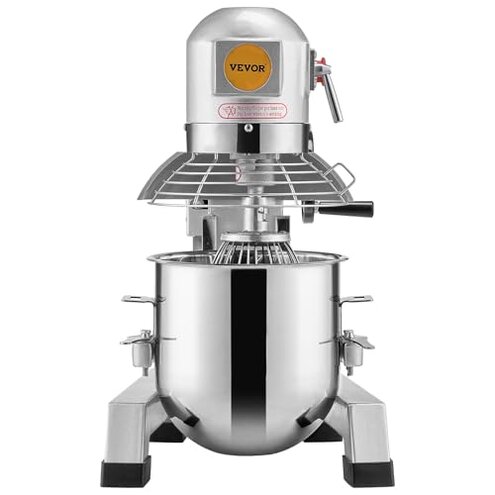
Regret moment The motor can stop or smell hot during long kneading cycles, interrupting a single batch.
Pattern This is a primary issue that appears repeatedly across buyer feedback, especially under continuous use.
Category contrast More disruptive than most mid-range mixers because it often requires cooldown or resets mid-shift.
Why does the bowl-lift or wheel jam or loosen?
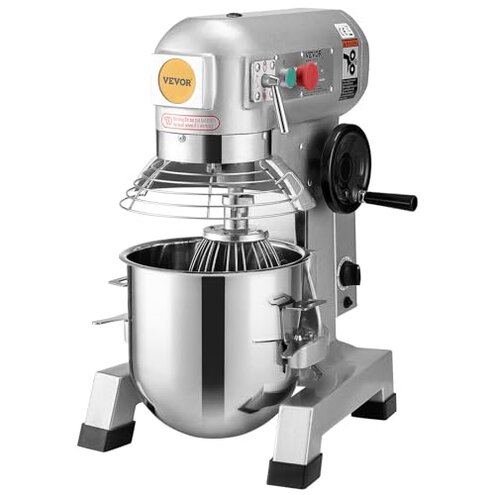
- Early sign — bowl becomes hard to raise or lower during first few uses.
- Frequency tier — secondary but commonly reported across written feedback and videos.
- Likely cause — gear or lift mechanism alignment seems sensitive to load and assembly.
- Impact — lost mixing time and insecure bowl seating that affects mixing consistency.
- Fixability — some buyers manage with frequent tightening or adjustments, but fixes are temporary.
How bad is the noise, vibration, and table movement?
- Loudness — noticeable high noise during medium and high speed whisking.
- Vibration — shaker effect reported when mixing dense doughs.
- Stability — unit may shift on countertops without heavy-duty mounting.
- Usage anchor — worsens during long kneading or when bowl is nearly full.
- Frequency tier — primary complaint for users running extended sessions.
- Why worse — feels more severe than expected for this category because vibration increases wear on mechanical parts.
- Mitigations tried — non-slip mats and bolting to stands reported but add time and cost.
Will this unit fit my kitchen and staffing needs given its size and weight?
- Hidden requirement — very heavy weight and large footprint require a dedicated, sturdy base.
- Handling — needs at least two people to move safely into position.
- Installation — some buyers reported needing to modify shelving or countertops.
- Electrical — runs on a 500W motor that can overheat if used continuously without breaks.
- Frequency tier — common for buyers fitting it into small kitchens or busy shifts.
- Impact — unexpected setup costs and downtime when relocating or servicing unit.
- Why worse — more demanding than typical mid-range mixers because of weight and sustained-use strain.
- Workaround — mounting on commercial stands or limiting batch size reduces issues but reduces capacity.
Illustrative excerpts (not real)
"Motor stopped mid-knead, had to let it cool down" — reflects a primary pattern.
"Bowl lift became loose after a week of use" — reflects a secondary pattern.
"Shakes the counter on high speed" — reflects a primary pattern.
"Hard to move without two people" — reflects an edge-case pattern.
Who should avoid this
- High-volume kitchens — avoid if you need continuous long kneading without downtime due to motor heat risks.
- Small kitchens — avoid if you lack a dedicated heavy-duty counter or two people to install it.
- Quiet-service settings — avoid if noise and vibration will disrupt your workspace.
- Low-maintenance buyers — avoid if you cannot tolerate frequent mechanical adjustments.
Who this is actually good for
- Occasional commercial use — fits buyers wanting a low-cost, occasional heavy bowl capacity who accept cool-down breaks.
- Workshops where noise is OK — acceptable where vibration and noise are tolerated during production.
- Fixed installations — suitable for kitchens that can dedicate a reinforced station and staff for handling.
- Budget-focused buyers — good if you can accept extra maintenance instead of buying higher-priced, robust units.
Expectation vs reality
- Expectation — reasonable for this category to handle multiple dough batches without issues.
- Reality — motor heat and lift wear often interrupt batches and require cooldowns or adjustments.
- Expectation — mid-range mixers should be movable by one person.
- Reality — the unit's large weight creates a hidden moving and installation burden.
Safer alternatives
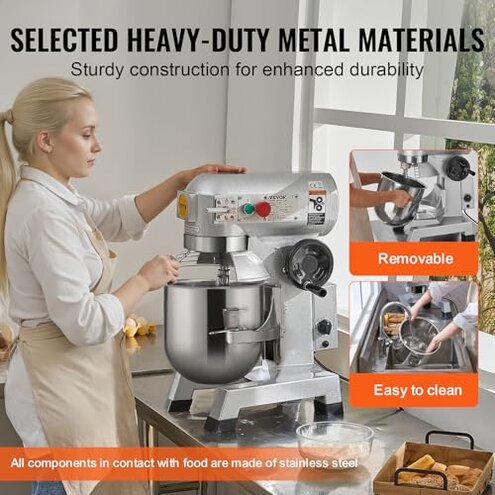
- Choose higher-duty motors — look for units rated for continuous commercial use to avoid overheating.
- Prefer proven lift designs — pick mixers with positive reviews about the bowl-lift mechanism durability.
- Check noise and vibration tests — prioritize models advertised with anti-vibration or quieter operation.
- Plan installation needs — opt for lighter units if you cannot dedicate reinforced counters or two-person installs.
- Warranty and service — prefer sellers with fast replacement parts and clear service policies to reduce downtime.
The bottom line
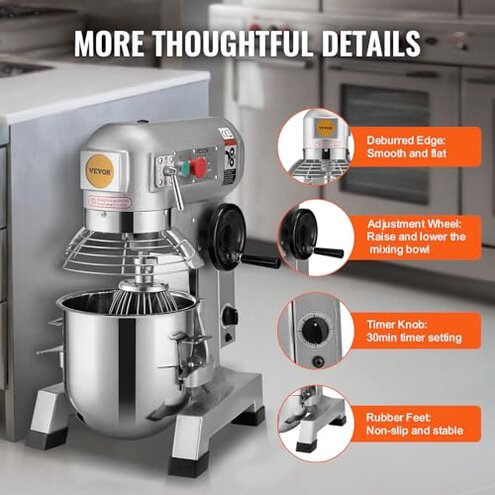
Main regret The most common regret is interrupted production from motor overheating and bowl-lift issues.
Why worse These failures exceed normal category risk because they cause frequent downtime and hidden installation costs.
Verdict Avoid this unit if you need continuous heavy-duty, low-maintenance performance; consider alternatives with stronger motors and proven lifts.
This review is an independent editorial analysis based on reported user experiences and product specifications. NegReview.com does not sell products.