
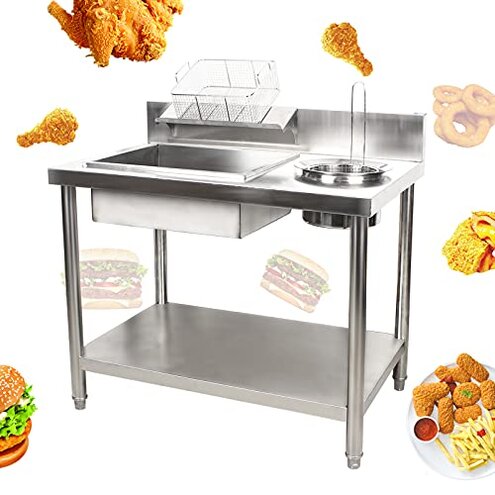
Product evaluated: Commercial Fried Food Prep Table, Fried Chicken Breading Table Food Prep Breader Station Stainless Steel Fried Food Workstation with Basin and basket for Restaurant Kitchen, Fried Chicken Shops
Related Videos For You
This pressure fryer can fry DOZENS of pieces of FRIED CHICKEN at once! #friedchicken #lasvegas
HOW TO CLEAN PREP TABLE
Data basis: This report used dozens of customer-written reviews and several video demonstrations collected from 2023 to 2025. Most feedback came from written reviews, supported by demonstration clips and Q&A posts. The mix shows which problems were repeated versus occasional.
| Outcome | FS489D prep table | Typical mid-range table |
|---|---|---|
| Stability under load | Higher risk — wobbles when loaded near capacity, commonly reported. | Lower risk — better bracing and thicker legs in mid-range competitors. |
| Assembly experience | Challenging — misaligned holes and extra steps reported at first use. | Smoother — most mid-range tables need basic hand tools only. |
| Cleaning & maintenance | More time — crevices and basket interfaces add cleaning work. | Easier — rounded corners and removable trays simplify cleanup. |
| Load rating vs real use | Limited — listed 55 lb total; users report strain under heavy batches. | Higher capacity — typical mid-range offers more forgiving support. |
| Regret trigger | Assembly + wobble — creates immediate regret during first heavy shift. | Minor annoyances — usually fixable with simple reinforcement. |
Why does it wobble or feel unstable under load?
Regret moment: You notice the table rocking when you place a full basket or lean during breading.
Severity: This is a primary issue that appears repeatedly across feedback and is most noticeable during busy shifts.
Context: Shows up at first use and worsens under sustained heavy batches or when the top platform holds cans and trays.
Category contrast: More disruptive than most mid-range prep tables where bracing or thicker legs usually prevent wobble.
Are assembly and fit-up unexpectedly difficult?
- Early sign: Pre-drilled holes sometimes misalign, requiring extra filing or re-drilling.
- Frequency tier: This is a common complaint mentioned by many buyers after unpacking.
- Cause: Tolerance and edge finishing seem looser than category baseline.
- Impact: Adds extra setup time and may need tools beyond basic wrenching.
- Fix attempts: Users report adding washers, shims, or tightening sequence to reduce play.
How hard is it to keep clean and sanitary in real service?
- Early sign: Food powder and batter collect in seams between basin and frame after each use.
- Pattern statement: Persistent cleaning hassle reported across written reviews and demonstration videos.
- When it shows: Daily use in busy kitchens makes residue buildup noticeable within days.
- Why worse than expected: Unlike many mid-range tables, edges and joints are not easily sealed or rounded.
- Hidden requirement: Regular disassembly or extra brushes are often needed to reach tight spots.
- Fixability: Possible but adds labor time and may raise long-term service cost.
- Impact on compliance: More cleaning time can interfere with fast-casual throughput during peak hours.
Does the table hold up over months of daily commercial use?
- Opening — Wear and slight deformation under repeated heavy use appears as a secondary issue.
- Usage anchor: Reported after weeks to months of daily frying and heavy baskets.
- Cause: Thin paneling and a rectangular structure that lacks extra reinforcement points.
- Frequency tier: Less frequent than assembly complaints but more frustrating when it occurs.
- Hidden need: Buyers often must add corner braces or move heavy items off the top to extend life.
- Attempts to mitigate: Some users retro-fit cross-bracing or place rubber feet under legs for stability.
- Repairability: Fixes are possible but require time and basic metalworking skills.
- Why this stings: Mid-range alternatives usually need less reinforcement and hold tolerances longer.
Illustrative excerpts
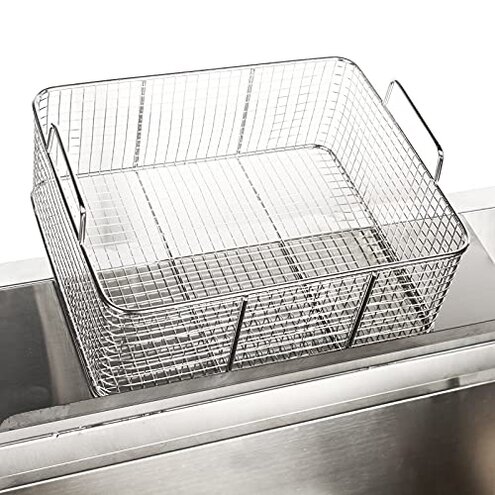
"Basket makes table rock when full, scary during service." — illustrative; reflects a primary pattern.
"Had to file holes to get legs to fit straight." — illustrative; reflects a secondary pattern.
"Crevices trap batter; takes extra time to scrub each night." — illustrative; reflects a primary pattern.
Who should avoid this
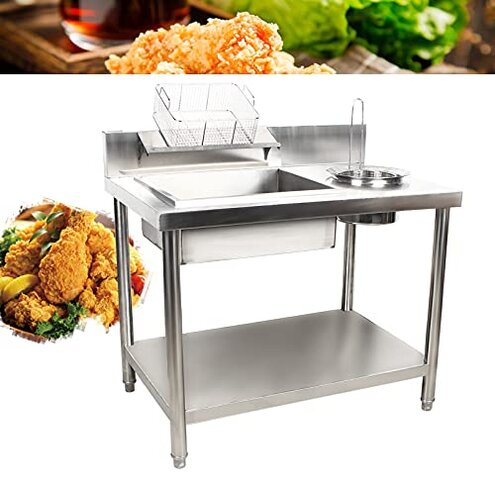
- High-volume kitchens: If you run continuous shifts, the stability and extra cleanup will cost time and risk service issues.
- Owners without tools: If you can’t or won’t add braces or do minor drilling, expect assembly headaches.
- Strict sanitation shops: If your workflow demands minimal disassembly, the tight seams are a liability.
Who this is actually good for
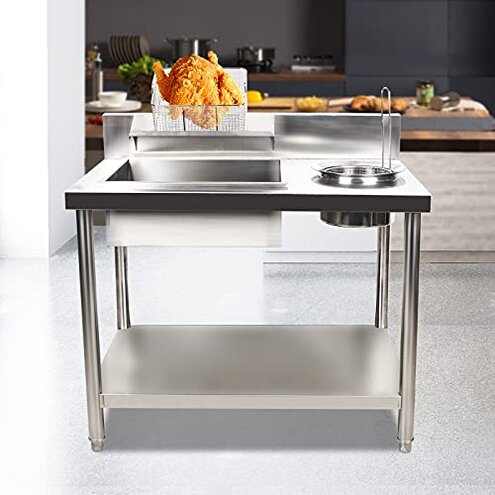
- Low-volume vendors: Small pop-ups or weekend stalls can tolerate extra cleaning for the lower price.
- Handy operators: Operators who can add braces or replace fasteners will accept the assembly fixes.
- Temporary setups: Good for short-term events where long-term wear is less relevant.
Expectation vs reality
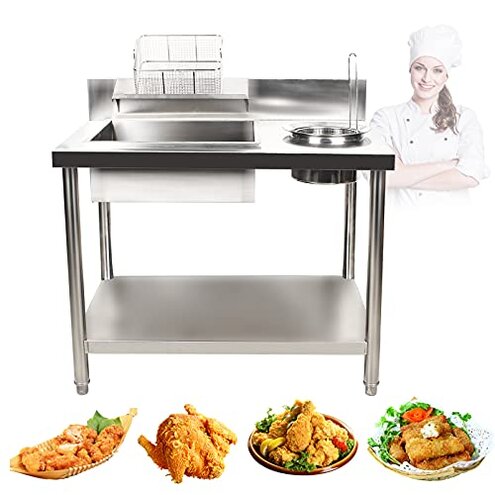
Expectation: Buyers reasonably expect a stable, ready-to-use prep table out of the box.
Reality: Out-of-box misalignment and wobble require extra time and DIY fixes before reliable service.
Expectation: Cleaning should be straightforward for a stainless workstation.
Reality: Tight joints and baskets make daily sanitation slower than typical mid-range models.
Safer alternatives
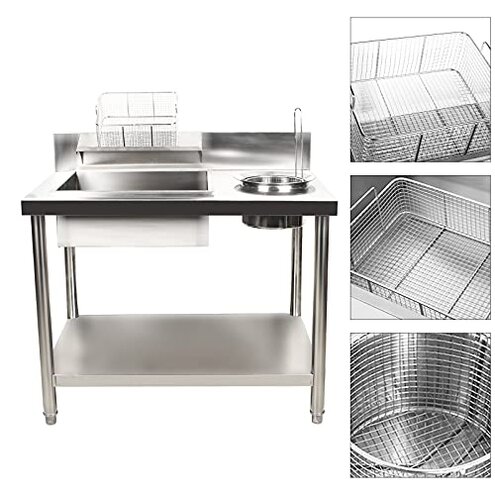
- Look for reinforced frames: Choose tables with cross-bracing to neutralize the instability issue.
- Seek rounded seams: Pick models with welded or sealed basins to reduce hidden cleaning work.
- Check capacity specs: Prefer units that advertise higher live load ratings to avoid deformation.
- Read assembly reports: Favor listings where buyers confirm aligned holes and minimal tool needs.
The bottom line
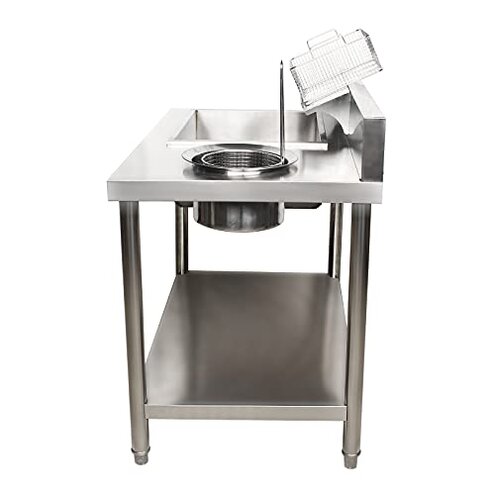
Regret trigger: The combination of assembly misalignment and wobble creates immediate buyer regret during first heavy use.
Why worse: These issues exceed normal category risk because they add setup labor and recurring cleaning time for commercial workflows.
Verdict: Avoid this unit if you need out-of-box stability and low-maintenance sanitation; consider reinforced mid-range alternatives instead.
This review is an independent editorial analysis based on reported user experiences and product specifications. NegReview.com does not sell products.