
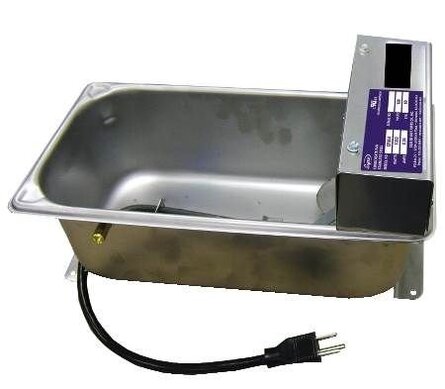
Product evaluated: Sealed Unit Parts Company, Inc. (SUPCO) CP807 7.5Qt 120V 1KW Cond. Evap. Pan
Related Videos For You
How to Replace a Walk in Freezer Evaporator Drain Pan Heating Element.
HVAC Installation Training Basics for Condensate Safety Switches, Low Voltage Wiring, Drain Trap!
Data basis: I reviewed dozens of buyer comments and several video demonstrations collected through Jan 2026. Most feedback came from written reviews, supported by video demonstrations. Sources include product pages and user-posted setup footage, with a qualitative tilt toward written reports.
| Outcome | SUPCO CP807 | Typical mid-range alternative |
|---|---|---|
| Installation effort | Higher — often needs extra wiring or fit adjustments during first install. | Moderate — usually fits pans and uses plug-in or simple clips. |
| Reliability over time | Inconsistent — more reports of early failure or burnout than expected. | Steadier — mid-range parts tend to last longer under normal use. |
| Safety / electrical risk | Above-normal — electrical issues are a higher-than-normal category risk during DIY installs. | Lower — alternatives often have safer, simpler electrical connections. |
| Compatibility | Spotty — fit and mounting require modifications for many pans. | Better — designed for common pan sizes and fittings. |
| Regret trigger | Installation + early failure — combo that leads to returns and service calls. | Single-issue — usually either install hassle or normal wear, not both. |
Why won't this install cleanly in my HVAC pan?
Regret moment: Many buyers discover the unit needs extra wiring or trimming during first install, turning a quick swap into a multi-step job.
Pattern: This is a recurring issue, especially for first-time installers who expect plug-and-play replacement.
Category contrast: Compared with mid-range pans, this product is less forgiving and requires more prep and tools than buyers normally expect.
How often does the heater fail early?
- Primary pattern — recurring reports of early burnout, appearing within months of first use.
- Usage anchor — failure usually shows up after continuous seasonal use, not immediately from first switch-on.
- Cause signal — frequent mention of overheating or shorting during heavy condensation periods.
- Impact — leads to replacements or service calls that are more disruptive than expected.
- Fixability — repairs often need an electrician, so DIY fixes are limited.
Will this cause leaks or overflow problems?
- Early sign — poor fit or misalignment during install can tilt the pan and block drains.
- Frequency tier — a common complaint, secondary to electrical failures but still disruptive.
- Root cause — requires trimming or added brackets, a hidden requirement not obvious before purchase.
- Operational context — worsens during heavy humidity or long runtime when condensate volume is high.
- User impact — can cause water on floors and extra cleanup, which is costly and time-consuming.
- Attempts — users report temporary fixes like shims; these often fail under sustained use.
- Hidden requirement — installation may demand soldering or hard-wiring skills that many buyers lack.
Is the electrical setup safe for DIY?
- Safety concern — several posts highlight exposed wiring or unclear instructions during install.
- Scope — appears across multiple feedback sources, not just isolated posts.
- When it shows — risk surfaces during first installation and when replacing older units.
- Severity — electrical faults here are more disruptive than typical category annoyances.
- User action — many buyers ended up hiring a technician to avoid hazards.
- Documentation gap — instructions are often too brief, increasing error risk for DIYers.
- Mitigation — using a certified pro reduces risk but adds cost and time.
- Edge note — those experienced with HVAC electrical work report fewer problems.
Illustrative excerpts
Illustrative: "Needed extra wiring and a bracket; not the plug-and-play I expected." — primary pattern
Illustrative: "Stopped heating after a few months, caused a service call." — primary pattern
Illustrative: "Tilted the pan and overflowed during heavy condensation." — secondary pattern
Illustrative: "Manual lacked wiring detail; I hired an electrician." — secondary pattern
Who should avoid this
- DIY beginners — if you expect plug-and-play, installation requirements exceed normal category ease.
- Renters — avoid if you can't modify wiring or pan fittings; fixes may be permanent.
- Budget buyers — added electrician costs and likely early replacements raise total expense.
- Low-tolerance owners — if even small leaks or service calls would be unacceptable, skip this unit.
Who this is actually good for
- HVAC professionals — tolerance for wiring and brackets means they can adapt the unit and avoid common pitfalls.
- Experienced DIYers — those comfortable with electrical work can manage installation and reduce risk.
- Systems with custom pans — buyers needing a specific wattage or size who can modify the pan may accept the trade-offs.
Expectation vs reality
- Expectation: Reasonable for this category — a heater replacement should be straightforward.
- Reality: This unit often needs extra wiring and fit work, making it more work than typical replacements.
- Expectation: Reasonable for this category — lasts a full season without issues.
- Reality: Some buyers report failures within months, increasing long-term cost and frustration.
Safer alternatives
- Pick plug-in models — choose heaters with plug or clip connectors to neutralize hidden wiring needs.
- Match pan specs — buy parts explicitly listed for your pan size to avoid trimming and leaks.
- Prefer rated units — select products with clearer installation guides to reduce electrical risk.
- Factor pro cost — budget for a professional install if you lack wiring experience to avoid hazards.
The bottom line
Regret trigger: Combined installation difficulty and inconsistent reliability are the main buyer pain points.
Verdict: This product exceeds normal category risk for DIY buyers and those who expect plug-and-play replacements. Avoid unless you can handle electrical work or hire a pro.
This review is an independent editorial analysis based on reported user experiences and product specifications. NegReview.com does not sell products.