
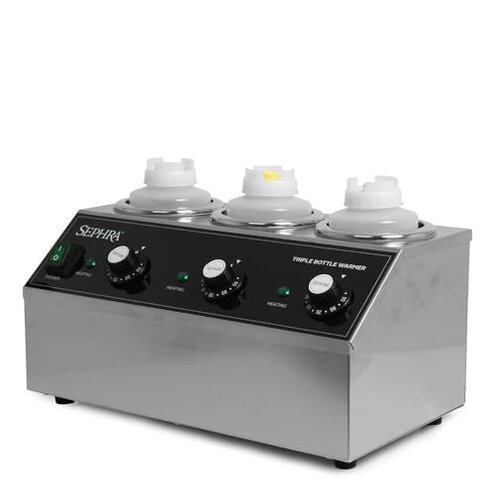
Product evaluated: Sephra Commercial Sauce Bottle Warmer - Triple
Related Videos For You
Signature Touch™ Squeeze Bottle Warmer | Features & Benefits
Data basis: This report pulls from dozens of written reviews and several video demonstrations collected through January 2026.
Sources mix: most feedback came from written customer reports, supported by short setup and teardown videos.
| Outcome | Sephra Triple | Typical Mid-range Unit |
|---|---|---|
| Temperature consistency | Inconsistent reports of hot spots and cold pockets during service. | Steadier heat control is more common at this price level. |
| Cleaning & upkeep | Sticky cleanup and hard-to-reach areas require more time and tools. | Simpler removable parts and easier wipe-downs are typical. |
| Durability | Repeated controller or seal failures appear across reports after months of use. | Average mid-range units show fewer control failures. |
| Cost vs value | High price with maintenance needs raises ownership cost for some buyers. | Lower entry price often means fewer upkeep surprises. |
| Regret trigger | Primary complaints focus on heat control during events, often causing product waste. | Less likely to cause waste for similar mid-range alternatives. |
Why does the unit heat unevenly and ruin servings?
Regret moment: users report sauces that scorch in one bottle while others stay thin, often during busy serving periods.
Pattern signal: this is a primary issue that appears repeatedly in customer feedback.
When it shows up: the problem shows during long service runs or when all bottles run continuously for over an hour.
Contrast vs category: this is more disruptive than most mid-range warmers, which hold steady for buffet-style service.
Is the cleaning and maintenance more work than advertised?
- Early sign: dried sauce in narrow bottle wells becomes visible after a few uses.
- Frequency tier: commonly reported by frequent users and those running daily service.
- Cause: fixed wells and seams trap residue and require scraping or soaking.
- Impact: adds extra cleaning time and may require specialty brushes or soaking overnight.
- Fixability: partly fixable with manual work, but it lowers uptime for busy operators.
Does the unit demand hidden accessories or tweaks?
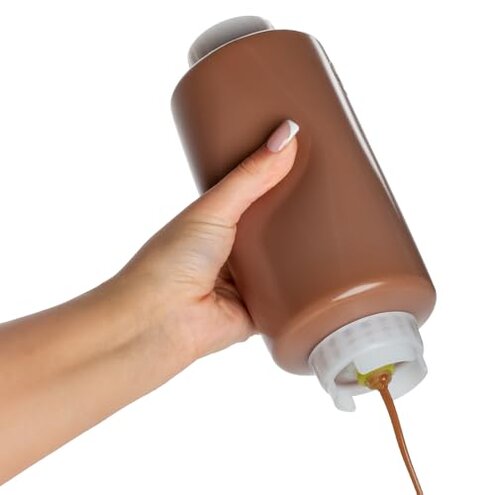
- Hidden requirement: some buyers must add silicone seals or smaller bottles to stop leaking or splashing.
- Usage anchor: problem appears after fitting different bottle sizes during events.
- Pattern signal: this is a secondary but persistent pattern across reports.
- Why worse: mid-range units often accept standard bottles without extra parts.
- Attempts: users adapted with custom liners or tape, adding prep time.
- Ongoing cost: buying extra seals or bottles raises the effective price.
- Hidden impact: storage of extra parts adds logistics for small kitchens.
Will the controls and seals fail over time?
- Primary pattern: control dials drifting or failing appears repeatedly across months of ownership.
- Early sign: temperature drift within weeks of use on some units.
- Usage anchor: worse with daily use or in high-humidity kitchens.
- Cause: electronic or mechanical stress from long run times.
- Impact: requires repair or replacement, interrupting service schedules.
- Comparison: this is less forgiving than typical mid-range warmers, which are rated for commercial cycles.
- Attempts: buyers replaced controllers or used external thermometers to compensate.
- Long-term risk: recurring fixes raise total ownership cost beyond initial expectations.
Illustrative excerpts (not actual quotes)
Illustrative: "Sauce scorched on the left bottle while the right stayed cold during service." — primary pattern
Illustrative: "Had to buy extra seals and smaller bottles to stop leaking into wells." — secondary pattern
Illustrative: "Controller started drifting after two months of daily use, needed calibration." — primary pattern
Who should avoid this
- High-volume caterers: avoid if you need consistent heat across long service runs, since heat drift is common.
- Small kitchens without tools: avoid if you cannot spare time for extra cleaning and accessory management.
- Budget-conscious buyers: avoid if extra seals or repairs would break your planned cost.
Who this is actually good for
- Occasional hosts: this suits buyers who use a warmer for short events and can monitor heat manually.
- Experimenters: useful for those willing to fit custom bottles and tolerate extra prep to avoid cold spots.
- Workshop kitchens: OK for users who have maintenance staff and spare parts on hand.
Expectation vs reality
Expectation: reasonable for this category to keep sauces hot during buffet service.
Reality: users report uneven heating and occasional controller drift that reduces usable servings.
- Expectation: simple cleanup like other mid-range warmers.
- Reality: trapped seams and fixed wells make cleaning more time-consuming than expected.
Safer alternatives

- Choose a warmer with removable wells to neutralize cleaning difficulty.
- Look for units with verified temperature stability to avoid uneven heating.
- Prefer models that accept standard bottle sizes to avoid hidden accessory needs.
- Check commercial uptime ratings and longer warranties to reduce control-failure risk.
The bottom line
Main regret: inconsistent heat during real service is the primary trigger for buyer disappointment.
Why worse: this unit requires more upkeep and hidden parts than typical mid-range warmers, increasing ownership cost.
Verdict: avoid if you need steady, low-maintenance performance for frequent events.
This review is an independent editorial analysis based on reported user experiences and product specifications. NegReview.com does not sell products.