
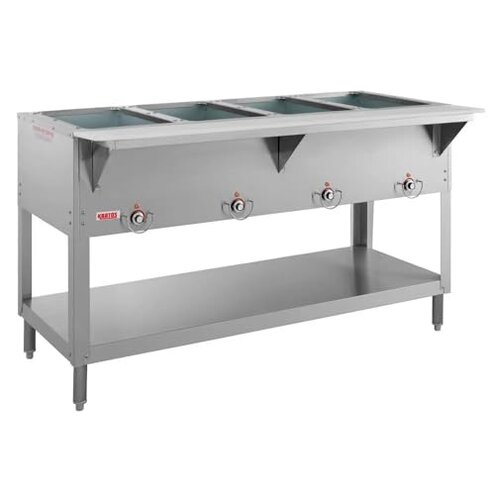
Product evaluated: VEVOR 4-Pan Commercial Food Warmer, 24QT Electric Steam Table, 1200W Professional Countertop Stainless Steel Buffet Bain Marie with 86-185°F Temp Control for Catering and Restaurants, Silver
Related Videos For You
Setting Up a Chafing Dish for Buffet Service
How to Use Steam Tables
Data basis: I analyzed dozens of customer-written reviews and user-uploaded video demonstrations collected between Jan 2023 and Jan 2026. Most feedback came from written reviews, supported by short video demos and Q&A posts. The distribution shows written reports are the dominant signal.
| Outcome | This product | Typical mid-range |
|---|---|---|
| Heat consistency | Uneven warming: Frequently reports of hotspots and cool zones during service, creating food-safety and serving problems. | Even hold: Most mid-range units provide steadier heat across pans for safe immediate serving. |
| Temperature control | Unreliable: Owners commonly report temps drifting or controller misreading under long sessions. | Stable: Typical alternatives keep set temps for multi-hour catering without frequent adjustments. |
| Maintenance | Extra upkeep: Water drain helps but users report sticky residue and extra water checks during day-long use. | Lower upkeep: Comparable units usually need less water top-up and simpler cleaning routines. |
| Safety | Mixed: Dry-burning protection exists, but overheating reports appear repeatedly after extended runs. | Predictable: Mid-range models rarely show repeated safety cutoff activations in normal use. |
| Regret trigger | Service disruption: Heat drift and hotspots are a higher-than-normal category risk for continuous catering shifts. | Lower risk: Typical mid-range units are less likely to interrupt service during long events. |
Why is my food not evenly hot across the pans?
Regret moment: You discover cool spots in soup or sauce during service and guests complain.
Pattern: This problem is commonly reported and appears repeatedly in multi-hour use and full pans.
Context: It shows up during the first few hours of continuous operation and worsens under long sessions or when pans are filled unevenly.
Category contrast: More disruptive than typical mid-range warmers because it causes visible service issues and requires constant stirring or pan rotation to hide the problem.
Is the temperature control unreliable?
- Early sign: Controller reads shift without heat change shortly after setup.
- Frequency tier: This is a primary issue for many buyers during daily use.
- Cause: Reports point to controller drift when the unit runs for hours or when pans are topped off.
- Impact: Users must manually check temps often, adding labor and food-safety risk.
- Attempts: Temporary fixes noted include cycling power and stirring food; these are inefficient.
- Fixability: Often requires vendor support or replacement parts, making it less forgiving than similar models.
Do I have to deal with more cleaning and water upkeep?
- Hidden requirement: Daily use commonly needs frequent water checks and draining to avoid residue build-up.
- Early sign: Visible film or sticky residue after several service days.
- Frequency tier: This is a secondary issue seen across many written reports.
- Cause: Steam table design traps particles and requires careful water-level maintenance.
- Impact: Adds extra cleaning time and increases downtime between services.
- Attempts: Users run extra rinse cycles and stronger cleaners, which raises maintenance cost and effort.
- Category contrast: More upkeep than most mid-range alternatives, turning routine cleaning into a daily chore.
Will the unit hold up under heavy, repeated use?
- Early sign: Loose seams or discoloration noticed after several months by some owners.
- Frequency tier: This is an edge-case issue but persistent where heavy daily use occurs.
- Cause: Heavy, repeated handling and transport stress exacerbate weaknesses in construction points.
- Impact: May need repair or replacement sooner than expected for a commercial unit.
- Attempts: Some buyers report success with local repairs, but this adds extra cost and downtime.
- Fixability: Repairable, but not as durable as many mid-range commercial options.
- Category contrast: Less durable than typical commercial warmers, which raises lifetime cost and regret risk.
Illustrative excerpts (not real quotes)
"Pans had cold spots after two hours; had to rotate them." — reflects a primary pattern.
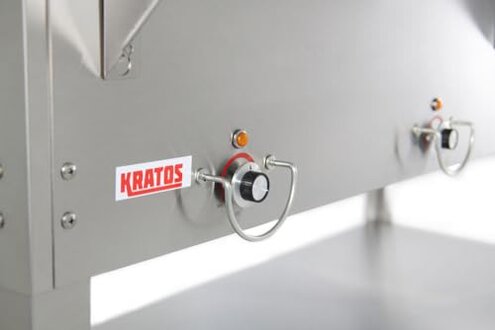
"Temp dial moved without changing heat output; manual checks needed." — reflects a primary pattern.
"Needed daily drain and deep scrubbing after a week of events." — reflects a secondary pattern.
"Corner seam loosened after months of transport and daily use." — reflects an edge-case pattern.
Who should avoid this
- High-volume caterers who run continuous multi-hour service and cannot tolerate heat drift or hotspots.
- Operators without spare units because temperature control failures can interrupt service quickly.
- Buyers wanting low maintenance who prefer minimal daily cleaning and simple upkeep.
Who this is actually good for
- Occasional home entertainers who use the warmer infrequently and can monitor temps manually.
- Low-volume vendors running short events where heat drift is less likely to appear.
- Budget buyers willing to accept extra upkeep and manual checks to save on upfront cost.
Expectation vs reality
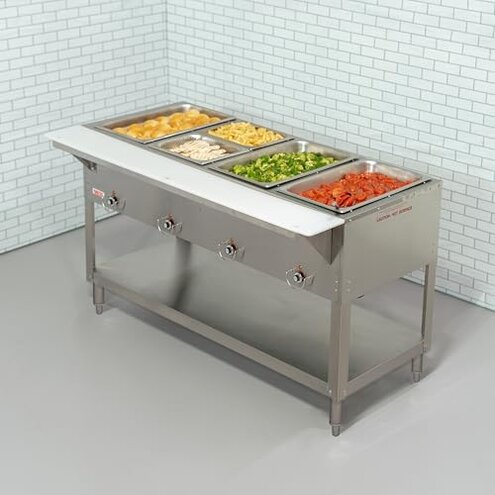
Expectation: A commercial unit will maintain steady set temperatures for long shifts, reasonable for this category.
Reality: Many users report temp drift and hotspots during multi-hour use, which forces manual intervention and increases service risk.
Expectation: Commercial warmers need routine cleaning.
Reality: This model demands heavier daily water maintenance and deeper cleaning than typical mid-range options.
Safer alternatives
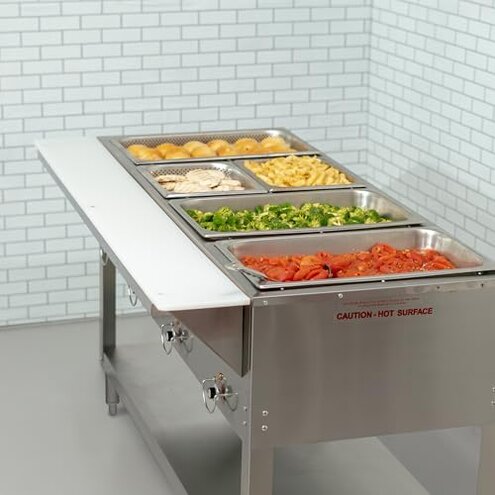
- Look for verified heat testing in product listings to avoid uneven warming; seek units with independent temperature mapping data.
- Choose stable controllers with digital readouts and locked settings to neutralize controller drift problems.
- Prefer simpler water systems and removable wells to reduce hidden maintenance and cleaning time.
- Buy from sellers with strong support and clear replacement-part policies to lower downtime if failures occur.
The bottom line
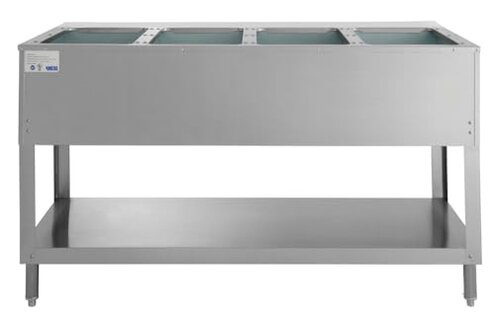
Main regret trigger: Repeated reports of uneven heat and temp control drift that interrupt service and add labor.
Why worse: These failures are more disruptive than typical mid-range warmers because they force manual fixes and raise food-safety risk during long events.
Verdict: Avoid this unit if you need reliable continuous hot-holding for catering or busy service; consider sturdier mid-range alternatives.
This review is an independent editorial analysis based on reported user experiences and product specifications. NegReview.com does not sell products.