
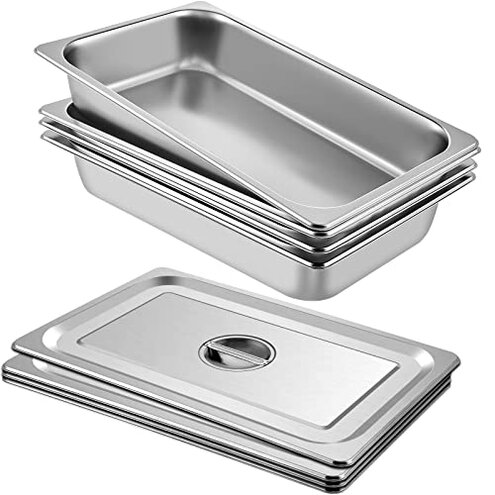
Product evaluated: VEVOR Hotel Pans Full Size 4-Inch Deep, Steam Table Pan 6 Pack,0.8mm Thick Stainless Steel Anti Jam Steam Table Pan for Home, Party, Restaurant, Hotel, Buffet
Related Videos For You
Kitchen Training 101: How to Clean a Steam Table
How to Properly Maintain Stainless Steel Pans | Made in Cookware
Data basis: This report is based on dozens of buyer comments collected from written reviews and photo/video posts between Jan 2020 and May 2024, with most feedback coming from written reviews supported by customer photos and video demonstrations.
| Outcome | VEVOR pans (observed) | Typical mid-range pan |
|---|---|---|
| Durability | Higher dent/warp risk — warping under prolonged heat appears repeatedly in buyer reports. | Moderate durability — mid-range pans usually resist short-term high heat without deforming. |
| Fit & stacking | Inconsistent anti-jam fit — stacking/jamming reported across multiple users during setup. | Reliable fit — mid-range alternatives generally stack and lift cleanly. |
| Finish & cleaning | Shows scratches and water spots — polished finish often needs extra care per buyers. | More forgiving finish — typical pans show less visible scratching from daily use. |
| Heat holding | Mixed performance — holding time is acceptable but worsens if pan warps or dents. | Stable heat retention — mid-range pans maintain hold times more consistently. |
| Regret trigger | Higher-than-normal risk — warping/denting during heavy use creates the strongest regret signal. | Lower regret — typical mid-range pans rarely warp under normal catering use. |
Top failures
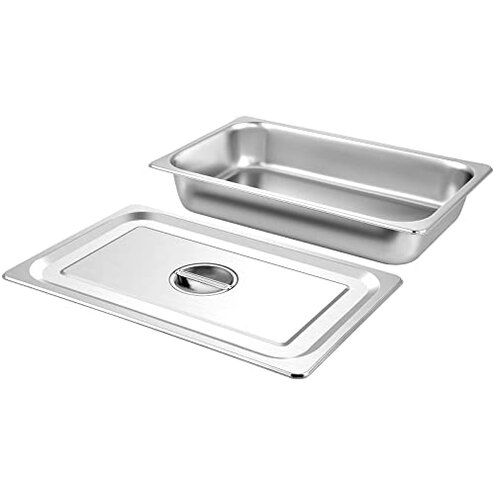
Will these pans warp during hot service?
Warping is common. Among the most common complaints, buyers report pan edges or centers deforming after heavy oven or steam-table use.
Usage anchor: Warping typically shows up during first weeks of repeated hot-holding or after a few cycles in high-heat ovens and steam tables.
Category contrast: This is more disruptive than expected for mid-range pans because warped pans no longer sit flat, causing spills and uneven heating.
Do the pans jam or misfit in racks and steam tables?
- Inconsistent stacking. Persistent reports of pans sticking together or catching when removed, especially during fast service.
- Anti-jam claim gap. The advertised anti-jam fit appears repeatedly as unreliable in real setups.
- Rail rubbing. Users notice catching when sliding into steam-table rails, often during first installation.
- Service slowdown. This causes extra time during busy buffet or catering shifts, which several buyers flagged as disruptive.
- Fix attempts fail. Many attempts to bend or re-seat pans are temporary; problem often returns after a few uses.
Are edges and finish causing handling hazards?
- Sharp edges. Some buyers commonly report rough or sharp rim edges that catch towels or pinch fingers on handling.
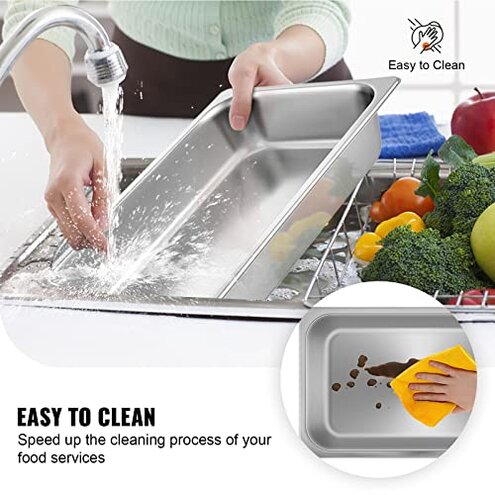
- Finish scratches. The polished surface shows visible scratches more often than expected during normal cleaning.
- Water spotting. Spots and streaks appear repeatedly after dishwasher cycles and when air-dried.
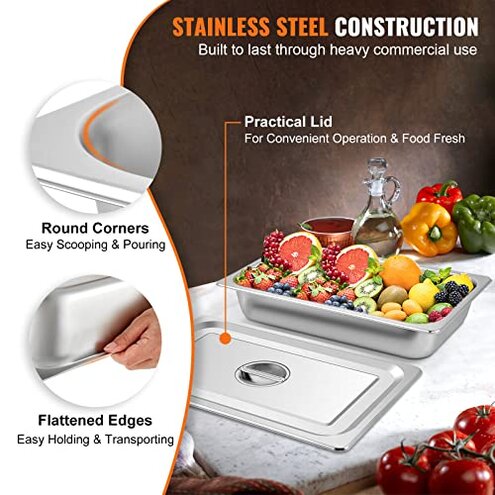
- Grip issues. Wide crimping helps hold, but slick finish can still cause slippage when wet.
- Safety mitigation needed. Several buyers found wearing heavy gloves reduces nicks, making gloves a hidden requirement for safe daily use.
- Photo evidence common. Scratches and spots are frequently shown in buyer photos, supporting the pattern.
Is cleaning, dent resistance, and long-term upkeep worse than promised?
- Dishwasher risk. Less durable behavior appears after repeated dishwasher cycles, with dents or distortions reported.
- Edge denting. Corners and rims dent more easily during transport or stacking, a recurring secondary issue.
- Hidden support need. Preventing warp often requires extra racks or trays; several users added this as a necessary step.
- Frequent polishing. Buyers who expect mirror finish must polish more often to hide scratches and water marks.
- Repair attempts. Hammering or reshaping helps temporarily but the distortion often returns with heat cycling.
- Less forgiving than category baseline. Overall upkeep and resistance are worse than most mid-range alternatives, which need less hands-on maintenance.
- Impact on workflow. For catering kitchens, extra handling and checks add time before service, a common complaint.
Illustrative excerpts
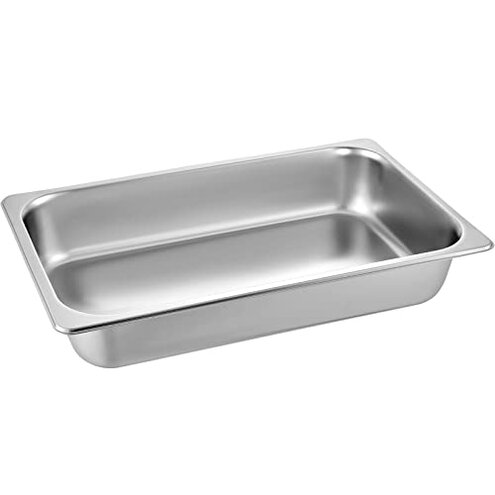
Illustrative: "Pan bowed after a few uses in my steam table, no longer sits flat." — reflects a primary pattern.
Illustrative: "Edges nicked my towel when stacking for transport." — reflects a secondary pattern.
Illustrative: "Needed extra rack to stop warping under long oven roasts." — reflects an edge-case pattern.
Who should avoid this
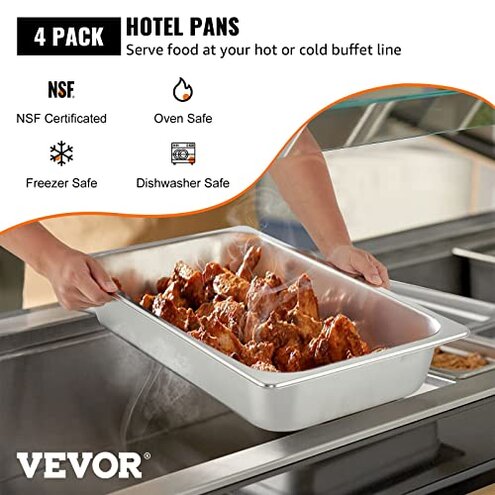
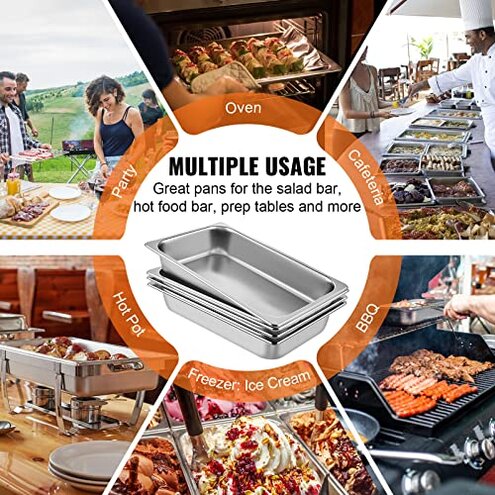
- High-heat caterers. If you run long holding times on steam tables or ovens, the warping risk exceeds typical tolerance.
- Busy buffet lines. If fast stacking and removal is frequent, the inconsistent anti-jam fit will slow service.
- Safety-focused kitchens. If you cannot add glove protocols, the rim handling issues create unacceptable pinch hazards.
Who this is actually good for
- Infrequent home cooks. Occasional holiday use tolerates the risk because damage shows after repeated commercial-style cycles.
- Short service events. Small gatherings where pans are not in continuous high heat can accept the fit and durability trade-offs.
- Users on a budget. If lower upfront cost matters and occasional maintenance is acceptable, buyers may accept the trade-offs.
Expectation vs reality
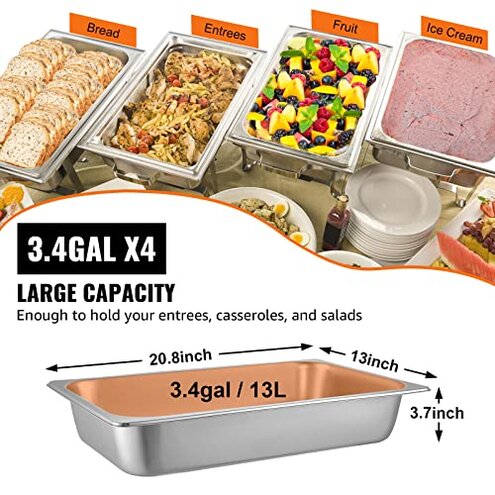
Expectation (reasonable): Buyers expect a full-size hotel pan to resist routine hot holding without deforming.
Reality: Warping and dents appear with repeated heavy use, which is worse than the category baseline for mid-range pans.
Expectation: Anti-jam pans should stack and slide smoothly.
Reality: Inconsistent fit leads to sticking and service delays during fast operations.
Safer alternatives
- Choose thicker pans. Look for pans marketed with higher gauge or reinforced rims to reduce warping under heat.
- Test fit before buying. If possible, confirm stacking and rail fit to avoid the anti-jam mismatch problem.
- Plan for support trays. If you still buy, budget for extra oven racks or support trays to prevent center bowing.
- Prefer satin finish. A brushed or satin finish hides scratches and water spots better than mirror polish.
The bottom line
Main regret: The strongest trigger is warping and denting under repeated high-heat or heavy-use conditions.
Why it matters: This behavior is more disruptive than typical mid-range pans because it affects fit, heat distribution, and safe handling.
Verdict: Avoid this product if you run frequent hot service or need reliable stacking; it may be acceptable for occasional home use with extra precautions.
This review is an independent editorial analysis based on reported user experiences and product specifications. NegReview.com does not sell products.