
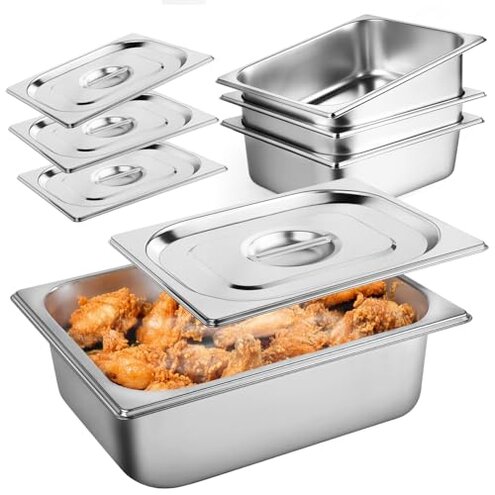
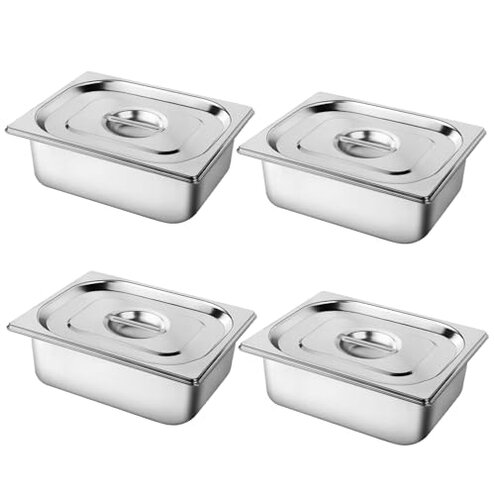
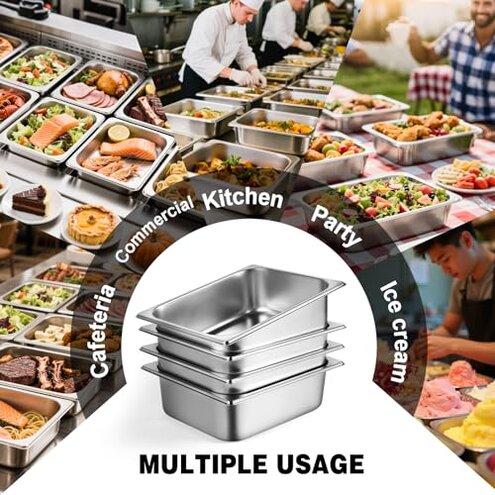
Product evaluated: West Bay 4 Pack 1/2 Half Size Hotel Pan with Lids, 4'' Deep Steam Table Pan with Lid, 12.8''L x 10.4''W Stainless Steel Pans for Home, Party, Hotel, Buffet
Related Videos For You
Kitchen Training 101: How to Clean a Steam Table
How to Correctly Size Steam Table Pans
Data basis: I examined dozens of buyer reports and several video demonstrations collected between Jan 2024 and Jan 2026. Most feedback came from written reviews, supported by hands-on clips and seller Q&A. Signals below summarize recurring buyer-visible problems.
| Outcome | This product | Typical mid-range |
|---|---|---|
| Durability | Higher risk of warping and dents under high heat or stacked storage. | Mid-range pans resist warping with thicker gauge and reinforced rims. |
| Lid fit | Loose fit or misaligned lids reported, causing steam escape and spills. | Tighter fit lids on mid-range models reduce leaks and maintain temperature. |
| Stacking & storage | Stacking can cause nesting scratches and bent edges with repeated use. | Better stacking design and protective rims are common in mid-range pans. |
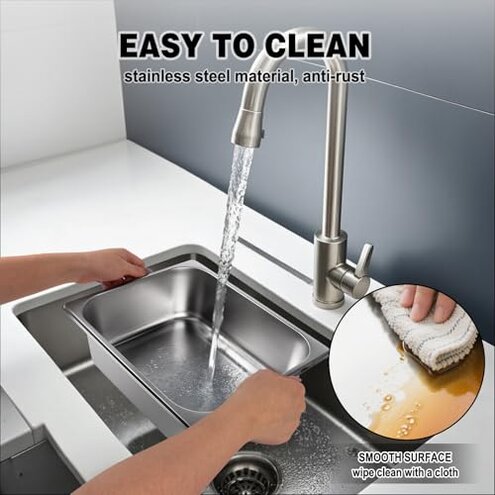
| Cleaning | Scratch-prone finish shows wear faster when scrubbed aggressively. | More forgiving finishes on mid-range pans tolerate routine scrubbing. |
| Regret trigger | Higher-than-normal risk of early warping under heated buffet use. | Lower risk for typical mid-range pans in similar buffet or oven use. |
Top failures
Will these pans warp or dent when used for hot service?
Warping is a primary complaint and appears repeatedly across buyer feedback. Timing shows warping often appears after repeated high-heat use or long holding on steam tables.
Severity feels worse than typical mid-range pans because buyers report visible shape change that affects lid fit and stacking.
Do the lids actually seal and keep food temperature?
- Pattern: Loose or misaligned lids are a commonly reported secondary issue.
- When: Problems appear during buffet service and when pans are transferred between stations.
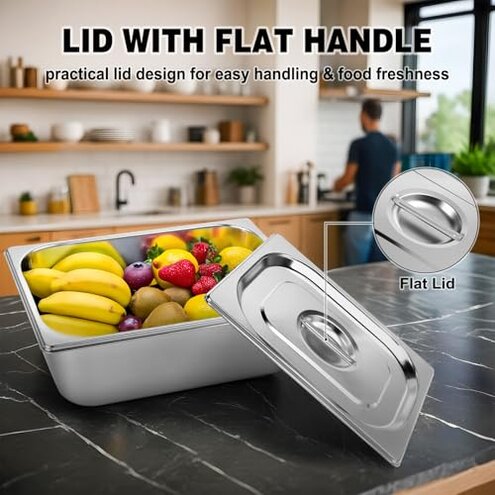
- Cause: Slight rim distortion from heat or dents reduces lid contact.
- Impact: Heat loss and spill risk are more disruptive than expected for this category.
- Fix attempts: Buyers often try clamping or compressing rims, which is a temporary workaround.
Is stacking and daily handling going to cause ongoing damage?
- Early sign: Small dents and scratches after the first few uses are commonly reported.
- Frequency tier: This is a secondary issue that becomes primary with daily catering or heavy use.
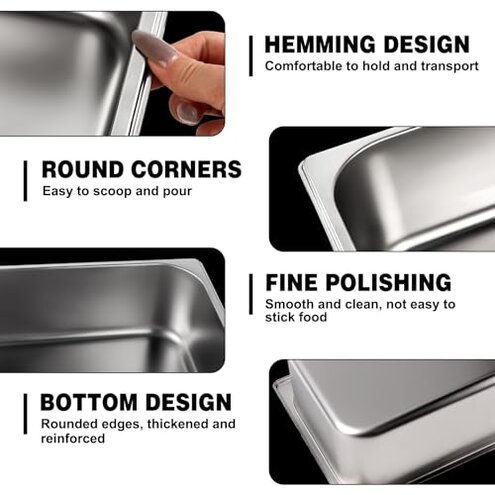
- Root cause: Thinner edges and rolled rims are more prone to impact during stacking.
- Impact on workflow: Warped or scratched pans need more sorting and replacement, adding handling time.
- Attempted fixes: Buyers use protective liners or cloths between pans to reduce damage.
- Fixability: Repairs are limited and typically require replacement rather than simple fixes.
- Hidden requirement: Frequent users must budget for protective padding or reserve extra pans.
Will cleaning and appearance cause frustration over time?
- Surface shows scratches and dulling when scrubbed aggressively, which is commonly reported.
- When: Scratching becomes obvious after several washes and use cycles.
- Visibility: Polished finish looks high-grade at first but reveals wear quickly.
- Cause: Stacking and abrasive cleaning both accelerate visible wear.
- Impact: Aesthetic decline matters for front-of-house buffet service and events.
- Attempts: Buyers switch to gentle cleaners or soft cloths to reduce scratch rate.
- Repairability: Surface wear is cosmetic but reduces resale and perceived value.
- Category contrast: This is more noticeable than mid-range pans, which keep appearance longer.
Illustrative excerpts (not real quotes)
"Lids didn’t sit flush after two uses, leaked steam and food cooled." — reflects a primary pattern affecting service.
"Edge dented stacking pans in one week of catering use." — reflects a secondary pattern tied to daily handling.
"Bright finish scratched after standard scrubbing; looked worn quickly." — reflects a secondary cosmetic pattern.
Who should avoid this
- Heavy caterers who run long hot-service shifts and need pans that resist warping.
- Front-of-house users who require pristine finishes for display dining and events.
- Buyers wanting tight lids to transport hot food long distances without temperature loss.
Who this is actually good for
- Occasional home hosts who use pans for single events and accept cosmetic wear.
- Low-heat storage tasks like cold salads or desserts where warping risk is lower.
- Budget-conscious users who can tolerate extra maintenance and occasional replacements.
Expectation vs reality

Expectation (reasonable for category): Buyers expect half-size hotel pans to hold shape across dozens of uses.
Reality: This product shows warping and lid misfit sooner than many mid-range alternatives, causing service interruptions.
Safer alternatives
- Choose thicker-gauge pans to neutralize the warping and dent risk during high-heat use.
- Look for reinforced rims to avoid lid misalignment and spills in buffet service.
- Pick satin or brushed finishes to hide scratches from stacking and cleaning.
- Buy protective liners or pan separators to reduce stacking damage if you keep these pans.
The bottom line
Main regret trigger: Early warping and loose lids create the most buyer frustration and service disruption.
Why it exceeds category risk: Reports show problems appear sooner than expected for mid-range hotel pans, especially under frequent high-heat use.
Verdict: Avoid this set if you need durable, tight-fitting pans for regular catering or long holding times.
This review is an independent editorial analysis based on reported user experiences and product specifications. NegReview.com does not sell products.