
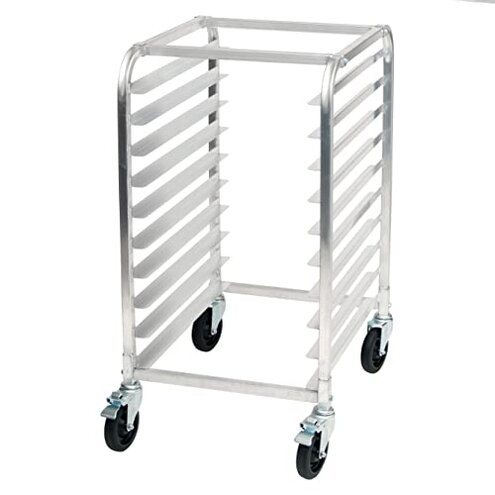
Product evaluated: Winco 10-Tier Aluminum Sheet Pan Rack with Brake
Related Videos For You
How to build a cheap and easy baker's rack or sheet pan rack
Ultimate Sheet Pan Rack Video
Data basis Dozens of written reviews and several video demonstrations were analyzed between 2019–2025, with most feedback coming from written buyer reports supported by visual setup clips and seller Q&A entries.
| Outcome | Winco 10-Tier Rack | Typical Mid-range Rack |
|---|---|---|
| Stability | Higher wobble risk when fully loaded or moved. | More stable with similar loads in normal use. |
| Mobility | Casters and brakes reported as unreliable by buyers. | Smoother casters and dependable brakes are common. |
| Pan fit | 3" spacing can be tight for thick or warped pans. | More forgiving spacing on many mid-range racks. |
| Durability | Signs of bending and fast wear after repeated heavy use. | Better longevity under daily commercial handling. |
| Regret trigger | High — wobble while moving loaded rack is the main regret. | Moderate — stability issues are less common. |
Top failures
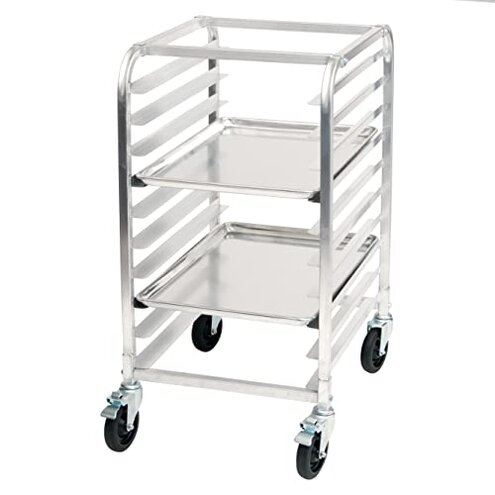
Will this rack wobble or tip when loaded?
Regret moment Buyers commonly notice dangerous wobble the first time they move a fully loaded rack.
Pattern This is a commonly reported primary complaint and appears repeatedly in buyer accounts during transport of heavy trays.
Why worse Compared with typical mid-range racks, this unit is more disruptive because wobble shows up at normal loads and adds handling risk in a busy kitchen.
Are the casters and brakes reliable?
- Early sign Some buyers report sticky movement right after assembly.
- Frequency tier This is a secondary issue that appears often enough to affect confidence in transport.
- Cause Wear or poor caster fit is a likely cause when brakes do not hold.
- Impact Unreliable brakes increase the chance of rollaway or shifts during loading.
- Fixability Some users resolve this with aftermarket casters or extra washers, which adds time and cost.
Will my pans actually fit and slide easily?
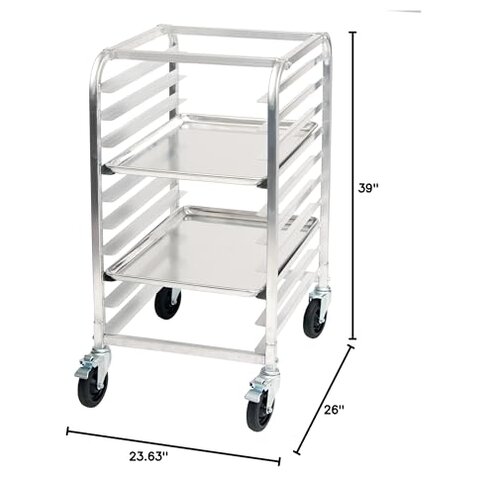
- Hidden requirement The rack lists 3" spacing between shelves; thick or warped pans may not fit.
- Early sign Pans catching when inserted is a commonly reported annoyance at first setup.
- Frequency tier This is a secondary issue that affects users with thicker commercial pans more than home users.
- Cause Narrow spacing plus minor frame misalignment causes rubbing and stuck trays.
- Impact Slower workflow: adds extra steps to straighten or remove pans.
- Fixability Some buyers bend rails slightly or use thinner pans to work around the problem.
Does the rack hold up under daily commercial use?
- Pattern Durability complaints are less frequent than wobble, but they are persistent across time.
- When it shows Problems appear after repeated heavy use, not necessarily on first day.
- Cause Bending and loose weld points come from constant loading and moving.
- Impact Structural wear leads to more wobble and possible premature replacement.
- Attempts Buyers report reinforcing legs or replacing parts as a workaround.
- Scope Seen across multiple buyer reports, mostly from daily commercial kitchens.
- Fixability Repairs are possible but costly compared with buying a more robust mid-range rack.
Illustrative excerpts
"Moved a full rack and it felt unstable and dangerous to push." — primary pattern
"Brake didn’t hold; rack rolled while loading pans." — secondary pattern
"Thick hotel pans scrape the rails and get stuck when sliding in." — secondary pattern
"After months the frame showed visible bending at the joints." — edge-case pattern
Who should avoid this
- High-volume kitchens that move fully loaded racks frequently; wobble risk exceeds normal category tolerance.
- Users needing perfect mobility where reliable brakes are mandatory for safety or workflow.
- Operations using thick pans that rely on generous shelf clearance; tight 3" spacing causes delays.
Who this is actually good for
- Light-duty home bakers who store pans and rarely move fully loaded racks; they can tolerate modest wobble.
- Cost-sensitive buyers who accept occasional repairs or caster upgrades to save on initial cost.
- Users with thin hotel pans where the 3" spacing is sufficient and pan fit is not an issue.
Expectation vs reality
Expectation Reasonable for this category: buyers expect a medium rack to move loaded pans safely.
Reality This rack shows more wobble under normal loads than is typical, creating real handling risk.
Safer alternatives
- Choose heavier-base racks to neutralize the stability failure by lowering tipping risk.
- Upgrade casters or buy racks with tested commercial brakes to fix mobility problems.
- Confirm shelf spacing before purchase if you use thicker pans to avoid fit issues with 3" shelves.
- Inspect welds and frame for reinforced designs when durability under daily use matters.
The bottom line
Main regret The biggest trigger is wobble when the rack is moved fully loaded.
Why it matters That wobble is more disruptive than expected for a mid-range rack and raises safety and workflow risks.
Verdict Avoid this unit if you need dependable stability or daily heavy use; consider reinforced alternatives or caster upgrades.
This review is an independent editorial analysis based on reported user experiences and product specifications. NegReview.com does not sell products.