
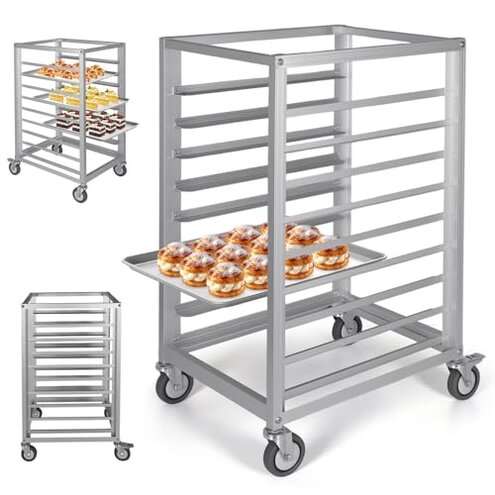
Product evaluated: VEVOR 10-Tier Bun Pan Rack, Aluminum Racking Trolley Storage with Brake Wheels, Commercial Bakery Racks for Half & Full Sheet, Speed Rack For Kitchen Home, Bread Baking Equipment, 26"L x 20.3"W x 39"H
Related Videos For You
Bun Pan Rack Assembly
Cleaning Tar from Commercial Bakery Racks with Euro Pumps
Data basis: This report used dozens of written product reviews and several video demonstrations collected between 2023 and 2025, with most feedback coming from written reviews and supported by demonstration clips.
| Outcome | VEVOR 10-Tier Rack | Typical Mid-Range Rack |
|---|---|---|
| Stability | Higher wobble when loaded or moved, appearing more often than buyers expect. | Moderate stability with predictable stiffness under load for similar price models. |
| Assembly time | Longer setup with alignment fuss and occasional extra steps or tools required. | Faster assembly with clearer instructions and fewer hidden parts for mid-range alternatives. |
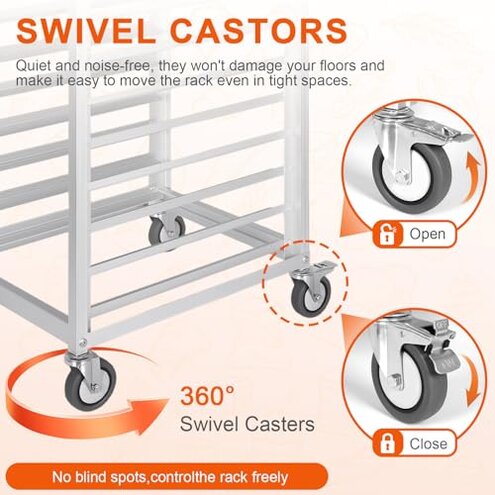
| Wheels & brakes | Inconsistent brakes and wobble from wheel fit noted after first uses. | Reliable rolling and consistent brakes in most mid-range competitors. |
| Load reliability | Load feels risky under frequent heavy use, a higher-than-normal risk for its category. | Steadier under load and designed for daily heavy kitchen use in similar models. |
| Regret trigger | Wobble under load that forces re-packing or limits mobility. | Occasional friction or minor alignment fixes, less disruptive overall. |
Top failures
Does the rack feel unstable when full or moving?
Regret moment: You notice side-to-side wobble the first time you roll the rack with pans loaded.
Severity and trade-off: This primary issue often forces buyers to re-stack pans or avoid moving a full rack, which increases handling time.
Pattern: This is a commonly reported problem, especially noticeable during first uses and when the rack is pushed across uneven kitchen floors.
Category contrast: Stability is worse than typical mid-range racks because the wobble appears despite a stated high load capacity, making the feel more fragile than expected.
Is assembly more difficult than advertised?
- Early sign: Parts require careful alignment during the first assembly step or shelves won’t sit level.
- Frequency tier: A primary complaint among buyers is extra assembly time beyond expectations.
- Cause: Slot tolerances and threaded fasteners often need re-tightening to avoid misalignment.
- Impact: Assembly can take much longer than typical racks and sometimes needs extra tools not listed.
- Fixability: Some users resolved issues with washers or extra bolts, but this adds hidden cost and time.
Do the wheels and brakes perform reliably?
- Early sign: Brakes may not hold firmly on small inclines or textured floors immediately after setup.
- Frequency tier: A secondary but persistent issue reported after repeated movement across kitchen floors.
- Cause: Wheel fit and axle tolerances vary, producing noise, uneven roll, or loose spinning.
- Impact: Unreliable brakes increase the chance of the rack drifting during prep or storage moments.
- Attempts: Buyers often tighten fasteners or replace wheels to regain control, adding maintenance steps.
- Hidden requirement: Some fixes require replacement wheels or tools buyers may not have on hand.
- Category contrast: Wheel and brake inconsistency is worse than expected for mid-range units, which usually offer plug-and-play rolling.
Will pans slide in and out cleanly on the shelves?
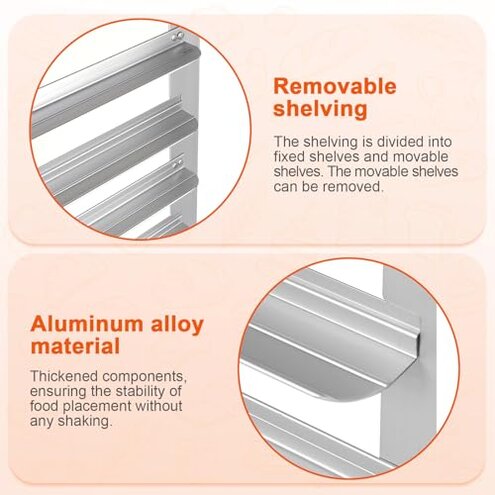
- Early sign: Shelves may show tight slots or uneven spacing on first use, causing pans to stick.
- Frequency tier: A common complaint affecting daily workflow in busy kitchens.
- Cause: Slight misalignment of shelf rails increases friction and scraping when inserting pans.
- Impact: Slower loading/unloading and higher risk of bent pans or food spills during service rushes.
- Attempts: Users file or shim rails to smooth movement, which requires tools and time.
- Fixability: Repairs are possible but not quick, so the issue is disruptive during early ownership.
- Hidden requirement: Keeping the rack working smoothly often needs periodic adjustment, unlike many competitors.
- Category contrast: This is more aggravating than standard because mid-range alternatives usually allow instant pan sliding.
Illustrative excerpts (not real quotes)
"Wobbles badly when loaded; I avoid moving it full." — Primary pattern
"Assembly took extra hours and extra bolts I didn't have." — Secondary pattern
"Wheels squeak and brakes barely hold on tile." — Secondary pattern
Who should avoid this
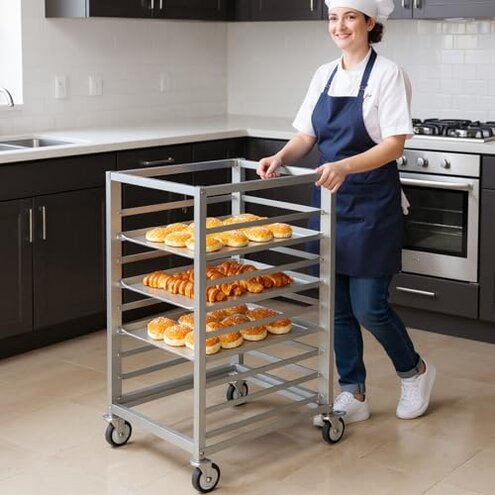
- High-volume bakeries: Avoid if you rely on moving fully loaded racks every day because wobble and brake issues are more disruptive than typical for this category.
- Shops without tools: Avoid if you cannot spend extra time or money on tools and replacement parts to fix alignment or wheels.
- Uneven-floor kitchens: Avoid if you have textured or sloped floors, since stability problems worsen when rolling across imperfect surfaces.
Who this is actually good for
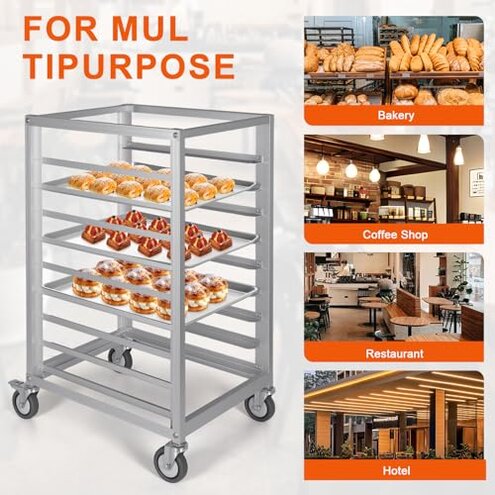
- Low-frequency home bakers: Good if you rarely move full racks and can tolerate occasional wobble while storing pans.
- Budget-conscious buyers: Good if you accept extra assembly work to save money and can perform minor fixes yourself.
- Static storage use: Good if you plan to use the rack stationary where wheel and brake performance matters less.
Expectation vs reality
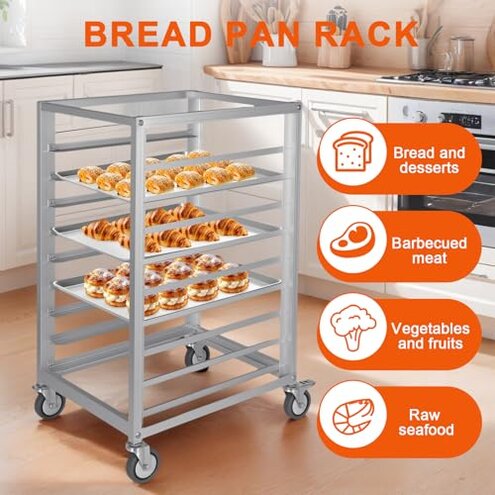
- Expectation: Reasonable for this category is a ready-to-roll rack that stays steady under full trays.
- Reality: The VEVOR often wobbles under normal loads, requiring re-stacking or fixes that add time.
- Expectation: Reasonable for this category is quick assembly with included hardware.
- Reality: You may face extra alignment steps and need tools or spare parts to reach smooth operation.
Safer alternatives
- Choose reinforced frames: Look for racks that emphasize cross-bracing or thicker frame joints to neutralize wobble under load.
- Check wheel specs: Prioritize models with documented brake ratings and replaceable high-quality casters to avoid rolling issues.
- Prefer tool-free assembly: Buy units with clear step-by-step guides and minimal hidden hardware to reduce extra setup time.
- Buy from sellers offering parts: Select sellers who list replacement wheels and fasteners to avoid hidden repair costs.
The bottom line
Main regret trigger: The combination of wobble under load and extra assembly fixes is the core complaint driving buyer frustration.
Why it exceeds category risk: These problems occur during first use and during routine moving, making the product feel less reliable than typical mid-range racks.
Verdict: Avoid this rack if you need dependable, ready-to-roll performance for daily heavy use without extra fixes.
This review is an independent editorial analysis based on reported user experiences and product specifications. NegReview.com does not sell products.