
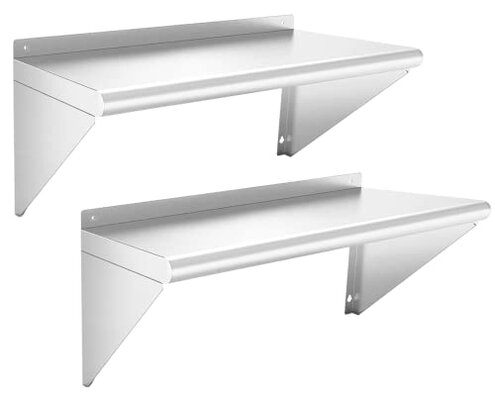
Product evaluated: Chingoo Stainless Steel Shelf 12" x 24" - 2 Pack 250 lb Wall Mounted Commercial Stainless Steel Shelves Metal Shelving for Restaurant, Bar, Utility Room, Kitchen and Garage
Related Videos For You
Floating Shelf Installation Hacks - Keys for a TIGHT Install
The Best Way To Clean Stainless Steel Appliances!
Data basis: This report is based on dozens of buyer accounts collected from written reviews and photo/video demonstrations between 2022 and 2026. Most feedback came from written reviews, supported by uploaded photos and a smaller set of video demos. The distribution shows strong repetition on certain failure modes.
| Outcome | Chingoo 12x24 Shelf | Typical mid-range shelf |
|---|---|---|
| Build & mounting | Variable — mounting hardware often reported as weak or mismatched. | Consistent — most mid-range shelves include sturdier brackets and clearer hardware. |
| Load reliability | Uncertain — 250 lb claim appears overstated for typical wall-only installs. | Predictable — mid-range shelves usually specify stud-mounted capacities or lower safe loads. |
| Finish & corrosion | Mixed — scratches and early discoloration reported more than expected. | Better — many competitors show more consistent surface protection out of box. |
| Installation effort | Higher — multiple buyers found extra steps or hardware required beyond the package. | Lower — typical mid-range products give clear instructions and complete fittings. |
| Regret trigger | Higher-than-normal risk — requires stud mounting or upgraded hardware to reach the claimed load. | Lower risk — clearer load limits reduce surprise failures. |
Top failures
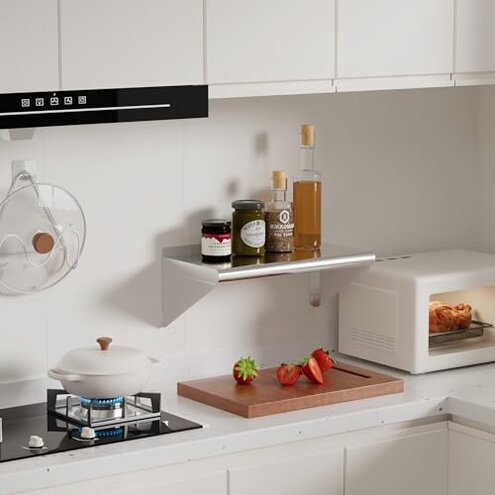
Will the shelf actually hold heavy items without falling?
Mount risk: The most disruptive complaint is that the shelf won’t reliably hold heavy loads when mounted using the included hardware. This is a commonly reported pattern and creates an immediate regret moment when placing appliances or heavy cookware.
Usage anchor: Problems appear during first use and after loading with everyday heavy items like microwaves or canned goods, and they worsen if the shelf is mounted only into drywall. Compared with a reasonable category baseline, this product is less forgiving because the 250 lb claim is treated as a general promise rather than a stud-specific maximum.
Why are holes and brackets not lining up?
- Alignment failures: Many buyers report bracket holes and shelf holes misalign on first assembly.
- Early sign: Misalignment shows up immediately during drilling or test-fitting before heavy loading.
- Frequency tier: This is a secondary issue that appears repeatedly but not universally across purchases.
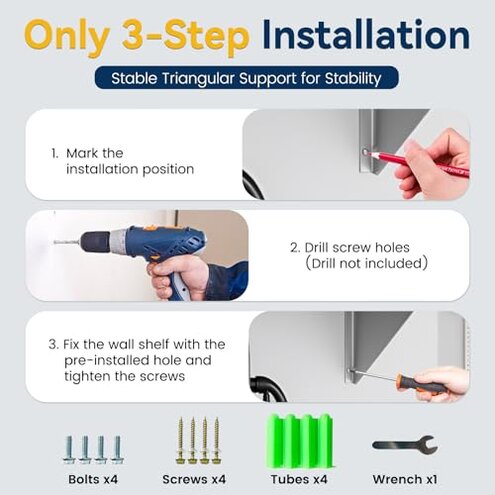
- Impact: Misaligned holes add extra installation time and may require drilling new holes or buying different anchors.
- Category contrast: More expensive mid-range shelves usually have pre-aligned fittings that reduce on-site adjustments.
Why does the finish look scratched or dull so soon?
- Surface wear: Buyers commonly notice scratches or dull spots during initial unpacking and after light use.
- Scope signal: This appears across multiple surface reports and photo uploads, not just isolated cases.
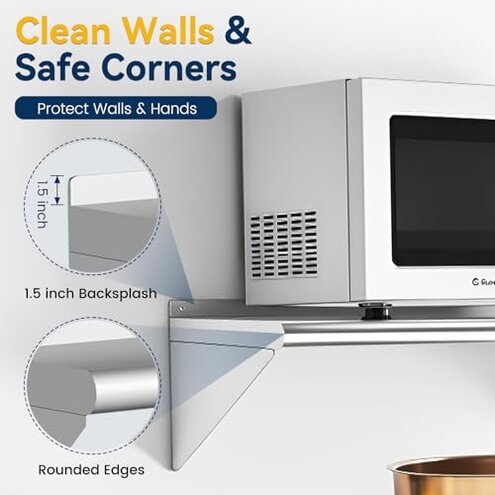
- Cause: Protective film may be poorly applied or removed roughly, exposing the surface to abrasions.
- Impact: Cosmetic damage lowers perceived quality for kitchen or visible installations.
- Attempted fixes: Some users buff or polish the surface; others accept visible marks.
- Category contrast: Mid-range alternatives typically have better packing or clearer surface protection to prevent early blemishes.
Do I need extra tools or studs to make this work long-term?
- Hidden requirement: Several buyers found a stud-mounted install was necessary to approach advertised load limits.
- When it shows up: This becomes obvious when following the included instructions or when the shelf sags under load.
- Frequency tier: This is a primary pattern for heavier uses but an edge-case for light storage.
- Impact: Needing studs or stronger anchors adds cost and may force reinstallation or reinforcement.
- Fixability: The issue is fixable with upgraded anchors, but that defeats the convenience of the advertised plug-and-play setup.
- Buyer trade-off: Compared with typical shelves, this product places more hidden installation demands on the buyer.
- Category contrast: Many mid-range shelves label stud-only capacities clearly, which prevents this surprise.
Illustrative excerpts
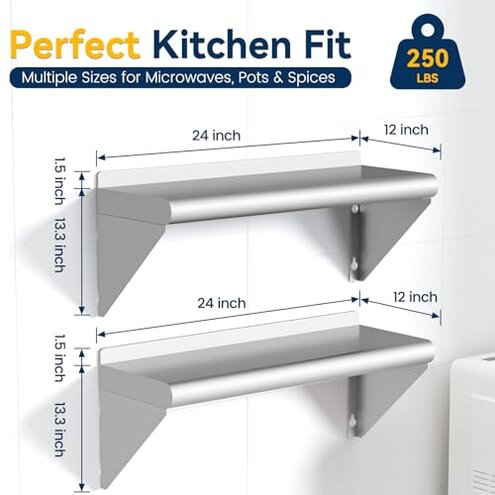
Illustrative excerpt: "Shelf sagged overnight after placing a small microwave on it." — Primary
Illustrative excerpt: "Holes didn’t line up; I had to re-drill twice." — Secondary
Illustrative excerpt: "Surface arrived already scratched under the protective film." — Secondary
Illustrative excerpt: "Had to buy heavy-duty anchors to use it in my apartment." — Primary
Who should avoid this
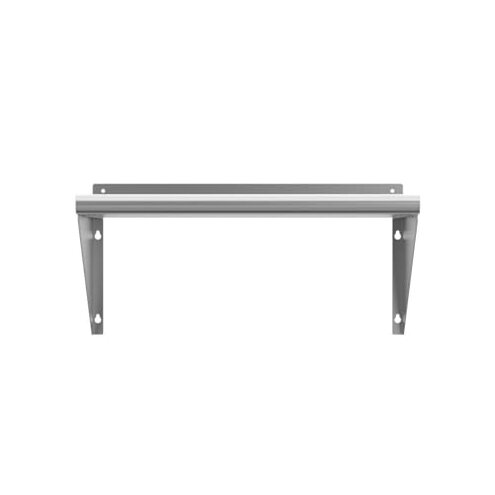
- Heavy-load users: Avoid if you need a true out-of-box 250 lb shelf without stud mounting or extra hardware.
- Visible-kitchen buyers: Avoid if you expect a flawless finish for visible installations and can’t tolerate early scratches.
- Low-effort installers: Avoid if you want a plug-and-play shelf with guaranteed anchors and perfect alignment.
Who this is actually good for
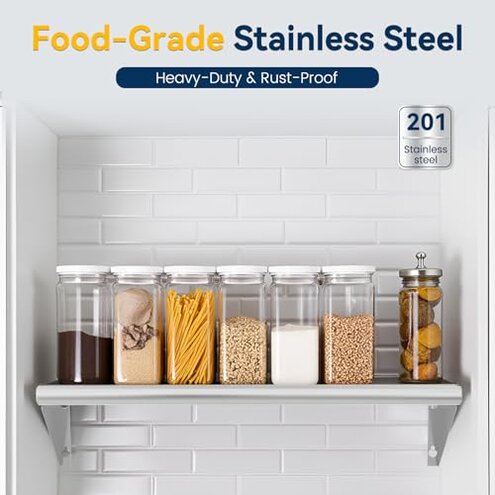
- Bargain refurbishers: Good for users willing to accept cosmetic marks and perform minor polishing or touch-up.
- DIY installers: Good for people comfortable reinforcing with studs or buying heavy-duty anchors to reach needed load.
- Non-critical storage: Suitable for light items and open shelving where minor alignment or finish issues are acceptable.
Expectation vs reality

- Expectation: Reasonable for this category to advertise high load if clearly stating installation needs. Reality: The 250 lb claim reads like a general capacity but often requires stud mounting to be safe.
- Expectation: Typical mid-range shelves come with aligned hardware and full fittings. Reality: This product may need extra drilling or purchased anchors.
Safer alternatives
- Prefer stud-rated listings: Look for shelves that explicitly state "stud-mounted" capacity to neutralize the hidden mounting requirement.
- Check hardware completeness: Pick options that include heavy-duty anchors and matching brackets to avoid alignment surprises.
- Seek protected finish: Choose products with verified surface protection or better packing to prevent immediate scratches.
- Read photo reviews: Prioritize sellers with many package-photos to detect recurring alignment or hardware problems before buying.
The bottom line
Main regret: The prime trigger is unstable mounting and an overstated 250 lb capacity unless you reinforce with studs or upgraded anchors.
Why worse: This risk exceeds normal category surprise because buyers frequently report extra installation work and early cosmetic flaws.
Verdict: Avoid if you want true out-of-box heavy-load reliability; consider it only if you can reinforce and accept finish issues.
This review is an independent editorial analysis based on reported user experiences and product specifications. NegReview.com does not sell products.