
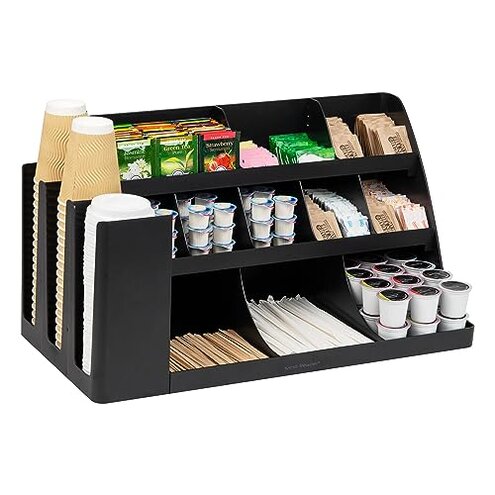
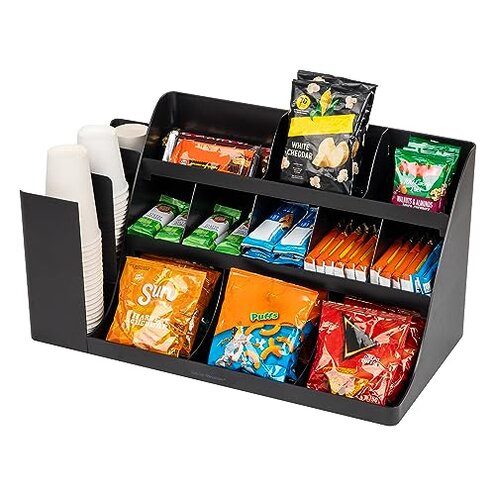
Product evaluated: Mind Reader Extra Large Cup and Condiment Station, Countertop Organizer, Coffee Bar, Kitchen, Stirrers, 24"L x 11.5"W x 12.5"H, Black
Related Videos For You
coffee station upgrade☕️ #aesthetic #amazon #home #coffee
Cup and Lid Holder
Data basis: This report summarizes dozens of buyer feedback points collected from written comments and photo or video demonstrations between 2021 and 2026. Most input came from longer written feedback, with supporting signals from visual setup posts that helped show how this organizer fits and behaves during daily counter use.
| Buyer outcome | This organizer | Typical mid-range alternative |
|---|---|---|
| Counter fit | Higher risk of feeling too large once placed, because the listed footprint is 24 x 11.5 x 12.5 inches. | Usually easier to fit into shared coffee corners or office counters. |
| Daily access | Can help when many supplies need one station, but the large size can crowd nearby items during routine use. | More balanced access with less counter takeover for smaller setups. |
| Flexibility | Less forgiving if your supply mix changes, because 14 fixed compartments can lock you into one layout. | Often simpler to adapt when storage needs change. |
| Upkeep burden | Moderate risk of more wipe-down time because the 3-tier layout creates more surfaces and corners. | Usually lower cleanup effort in simpler caddies. |
| Regret trigger | Most regret starts after setup, when buyers realize the organizer solves clutter by creating a new space problem. | Typical regret is smaller, usually tied to capacity rather than footprint. |
Will this take over more counter space than you expect?
This is the primary issue. The regret moment usually happens on first placement, when the 24-inch length looks manageable on paper but feels dominating on a real coffee bar.
The pattern appears repeatedly. That is more disruptive than expected for this category, because a mid-range countertop organizer is usually bought to reduce visual clutter, not replace it with bulk.
- Early sign: Buyers with smaller kitchens, office nooks, or shared break areas notice the size problem immediately after setup.
- Frequency tier: This is a primary issue and among the most common complaints for large countertop organizers.
- Why it happens: The listed dimensions, 24 x 11.5 x 12.5 inches, create a long and tall block that needs real breathing room.
- Daily impact: It can crowd coffee machines, snack bins, or prep space during normal refills and cleanup.
- Why worse than normal: Many organizers trade compactness for storage, but this one pushes that trade-off harder than a typical mid-range option.
- Can you fix it: Only if you already have a dedicated station with unused width, because the size itself is not adjustable.
Will the compartment layout feel helpful at first, then limiting later?
- Recurring pattern: This is a secondary issue that shows up after buyers start loading real supplies instead of imagining ideal categories.
- Usage moment: It becomes noticeable during weekly restocking, especially when cup sizes, snack packs, or condiment amounts change.
- Hidden requirement: You need a fairly predictable supply mix for 14 compartments to stay useful.
- Buyer frustration: Fixed sections can leave some spaces underused while other items still need overflow storage nearby.
- Category contrast: Some organizer limitations are normal, but this feels less forgiving than typical because the large body suggests broader flexibility than fixed slots allow.
- Workaround: Buyers who standardize one cup size and a narrow condiment range usually manage the layout better.
- Why regret builds: The unit can look organized while still forcing extra steps, because mismatched items end up stored somewhere else.
Are you expecting a low-maintenance coffee station fix?
This issue is persistent but not universal. It usually appears during daily use, when crumbs, stirrers, packets, and dust settle into multiple compartments and shelf levels.
The effort feels higher than normal. Compared with simpler caddies, this style adds more corners and surfaces to wipe, so the time savings from organizing can partly come back as cleanup work.
It worsens in busy spaces. Front desks, break rooms, and waiting areas with many hands touching supplies tend to make the upkeep burden more noticeable.
Mitigation exists. If one person maintains the station and refills on a schedule, the cleaning burden becomes easier to manage.
Does the sturdy feel also make it harder to move and rework?
- Pattern level: This is a secondary issue, less frequent than size complaints but more frustrating once the setup needs to change.
- When it shows up: It appears during office rearranges, cabinet tests, or countertop cleaning because the unit weighs 5.2 pounds before loading.
- User-visible effect: Once filled, moving it becomes more of a lift-and-clear task than a quick slide-and-adjust task.
- Why this matters: A heavy organizer can discourage routine repositioning, which is annoying in multi-use kitchen spaces.
- Category contrast: Some stability is expected, but this can feel less convenient than typical when buyers want frequent layout changes.
- Best case: It works better in permanent stations than in flexible counters that get repurposed often.
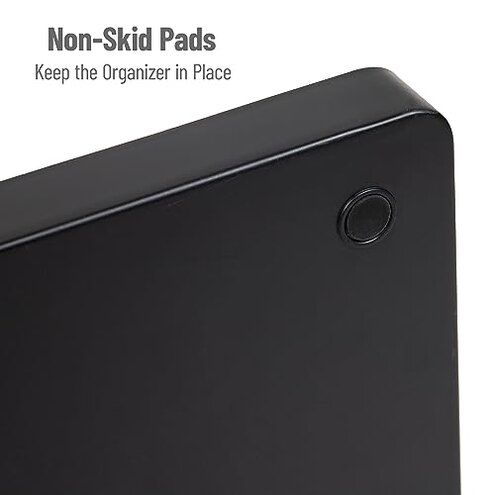
- Fixability: Rubber grips help with staying put, but they do not solve the effort of relocating a loaded station.
Illustrative excerpt: “I wanted one tidy spot, but now the organizer is the whole counter.”
Pattern: This reflects a primary pattern tied to footprint regret after setup.
Illustrative excerpt: “Looks neat until you realize half your supplies still do not fit right.”
Pattern: This reflects a secondary pattern tied to fixed compartment limits.
Illustrative excerpt: “It works, but cleaning every little section takes more time than expected.”
Pattern: This reflects a secondary pattern tied to upkeep burden in daily use.
Illustrative excerpt: “Stable once placed, but not something I want to move often.”
Pattern: This reflects a edge-case to secondary pattern tied to relocation effort.
Who should avoid this
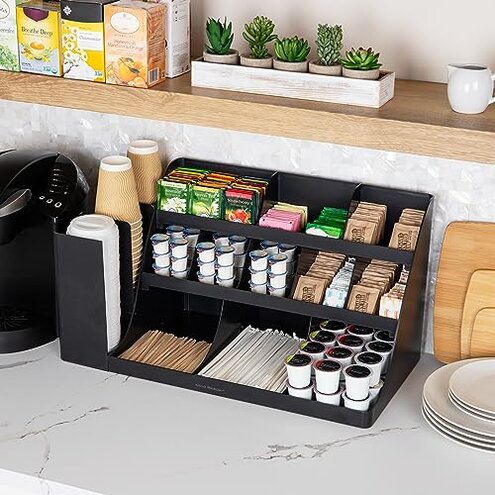
- Avoid it if your coffee area also needs prep space, because the large footprint creates a higher-than-normal space penalty.
- Avoid it if your cups, snacks, and packets change often, because the fixed 14-compartment layout is less adaptable than it first appears.
- Avoid it if you want a quick-clean station for heavy traffic areas, because the tiered design adds more wipe-down points than simpler options.
- Avoid it if you regularly move countertop items for cleaning or reconfiguring, because the loaded unit can become cumbersome.
Who this is actually good for
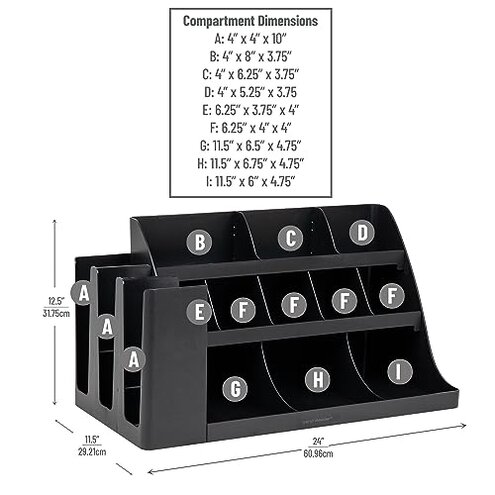
- Good fit for a dedicated office beverage station with open counter width, where size is accepted in exchange for centralized storage.
- Good fit for buyers with a stable supply routine, such as one cup type and a repeat set of condiments.
- Good fit for waiting rooms or lobbies where visual organization matters more than compactness.
- Good fit for users willing to trade extra cleanup time for a single, fixed home for many small items.
Expectation vs reality
- Expectation: A large organizer should reduce clutter without changing how the counter feels.
Reality: The size can solve loose-item mess while creating a new bulk problem. - Expectation: More compartments mean more flexibility.
Reality: Fixed sections can be helpful only when your supplies match the layout closely. - Expectation: Reasonable for this category is easy upkeep after a quick wipe.
Reality: The multi-level layout can require more attention than a typical mid-range caddy. - Expectation: Stable means convenient.
Reality: The same stay-put feel can make loaded repositioning less convenient than expected.
Safer alternatives
- Choose smaller if your counter does more than hold coffee supplies, especially if width is limited or shared with appliances.
- Choose modular if your mix of cups, snacks, and packets changes often, because removable bins reduce the fixed-layout problem.
- Choose simpler if fast cleaning matters, since fewer shelves and corners cut daily upkeep.
- Choose lighter if you frequently wipe under organizers or rework the counter setup.
- Measure first with a paper outline at 24 x 11.5 inches to test real counter loss before buying any large station.
The bottom line
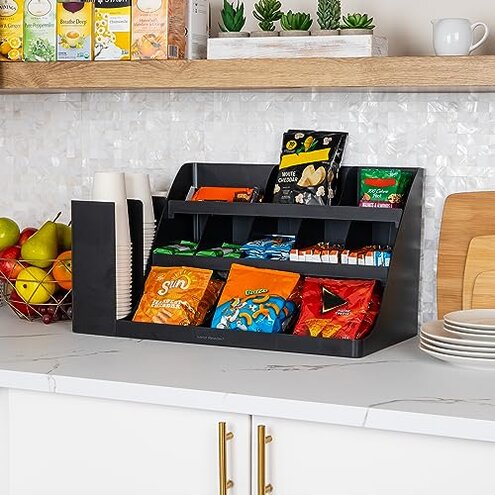
Main regret usually starts with the footprint, not the appearance. This organizer can tidy many items, but the space it demands is higher than normal for buyers expecting a flexible countertop fix.
Verdict: If your station is not truly dedicated and spacious, this is easier to regret than a typical mid-range organizer. It makes the most sense only when you can tolerate bulk, fixed compartments, and extra cleanup.
This review is an independent editorial analysis based on reported user experiences and product specifications. NegReview.com does not sell products.