
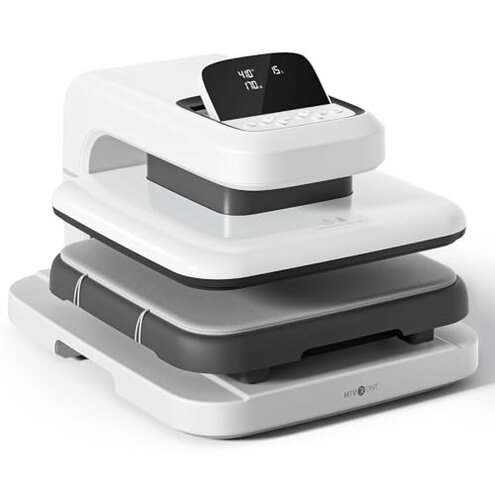
Product evaluated: HTVRONT Auto Heat Press 2 - Heat Press Machine for T Shirts with Adjustable Pressure & Higher Heating Height, Heats Up Fast & Evenly Heat Press 15x15 for HTV, Sublimation, Heat Transfer Projects
Related Videos For You
Sapphire 6-in-1 Heat Press Machine Tutorial - How to use Sapphire 6-in-1 Heat Press Machine
How to Use Heat Presses: Featuring the HTVront Auto Heat Press!
Data basis This report is based on dozens of buyer comments collected from written feedback and video-style demonstrations between late 2024 and early 2026. Most feedback came from written impressions, with supporting patterns from hands-on setup clips and comparison content, which helped separate first-use excitement from repeat-use complaints.
| Buyer outcome | HTVRONT Auto Heat Press 2 | Typical mid-range alternative |
|---|---|---|
| First-use learning | Higher friction because pressure, height, and workflow need more setup judgment. | Moderate friction with simpler clamp-style habits many users already know. |
| Daily workflow | Faster when dialed in, but mistakes cost more time when settings are off. | Slower but simpler, with fewer automatic steps to troubleshoot. |
| Thick item tolerance | Can handle more, but setup precision becomes more important than normal. | More limited, though often easier to predict on basic shirts. |
| Category risk | Higher-than-normal sensitivity to pressure setup for buyers expecting push-button results. | More forgiving for casual users doing standard HTV work. |
| Regret trigger | Paying premium money and still needing trial runs to avoid wasted blanks. | Accepting slower output but with fewer surprises. |
Why does “automatic” still feel like extra work?
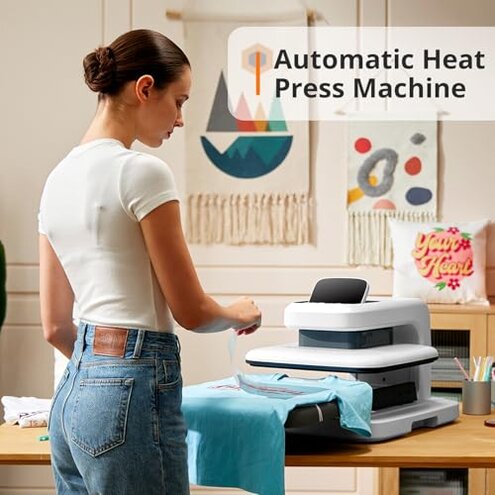
Primary issue is setup friction, and it appears repeatedly in feedback from buyers who expected near push-button simplicity. After setup, the machine can run hands-free, but getting to that point often takes more judgment than expected.
Compared with a typical mid-range press, this feels less forgiving because wrong pressure choices can waste transfers instead of just slowing you down. That trade-off matters more at this price because buyers usually expect fewer test cycles, not more.
- Early sign is uncertainty about how much pressure to use on different project types.
- Pattern is recurring rather than universal, especially for buyers moving up from simpler manual presses.
- When it hits is first use and the first few project changes, not just unboxing.
- Why it stings is that automatic closing does not remove the need to choose the right pressing force.
- Real impact is extra test materials, extra time, and less confidence on paid or gift projects.
- Hidden requirement is that buyers still need process knowledge, even though the product pitch sounds beginner-friendly.
- Fixability is decent if you are willing to log settings and do repeat test presses.
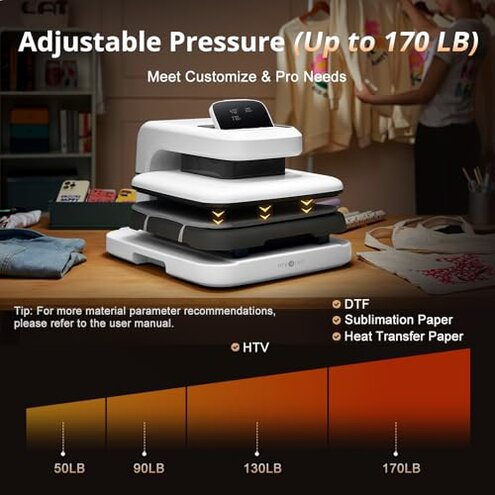
Does the stronger pressure create a bigger failure when you miss a setting?
- Severity is among the most disruptive complaints because bad pressure is more damaging than simple underheating.
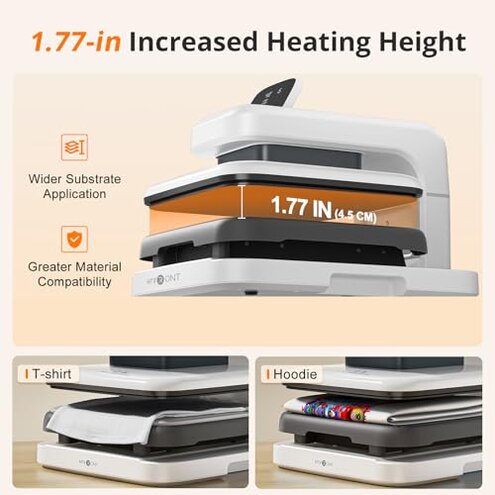
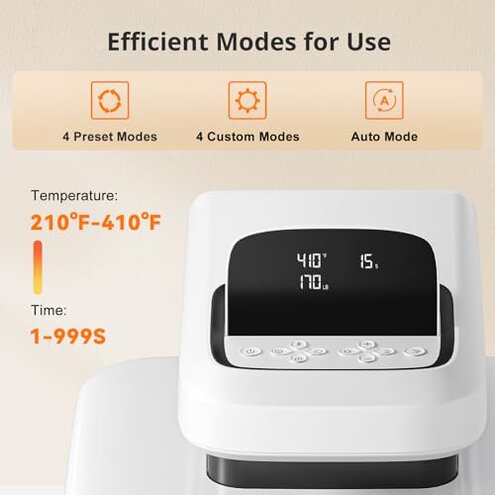
- Context shows up during daily use when switching between thin shirts and thicker items like hoodies.
- Pattern appears repeatedly across mixed-skill feedback, not just from total beginners.
- Buyer notice is uneven-looking results, poor transfer quality, or wasted material after a press cycle.
- Category contrast is that many mid-range presses require more effort, but they are often easier to “feel out” manually.
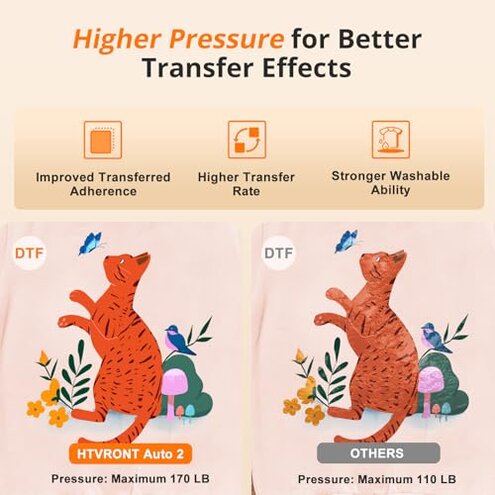
- Why worse here is that the machine’s added pressure range raises the cost of a wrong guess.
- Mitigation is to keep separate settings notes for each material and thickness.
- Not universal because users with a repeatable workflow tend to report fewer problems.
Will the size and weight become annoying in a real workspace?
Secondary issue is the physical burden, which is less frequent than setup complaints but more frustrating when it occurs. During setup or when rearranging a craft room, the roughly 47.49-pound weight becomes hard to ignore.
That feels worse than expected because compact styling does not change the fact that this is still a heavy machine for many home users. Compared with lighter basic presses, it asks for a more permanent workspace than some buyers planned.
- Early clue is realizing this is not something you will casually move between shelves and tables.
- Pattern tier is secondary, but persistent among buyers with limited space.
- When it worsens is in shared rooms, apartments, or setups that need frequent storage.
- Impact is less spontaneous use because pulling it out becomes a chore.
- Fix usually means giving it a dedicated sturdy surface.
Does the speed promise matter if warm-up and prep still slow you down?
- Primary complaint is not that it fails to heat, but that time savings can feel smaller in real use than buyers expect.
- Context is back-to-back projects where setup choices and material positioning still eat up time.
- Signal is a recurring gap between “heats fast” expectations and the full workflow buyers actually experience.
- Product claim says up to 410°F in 5 minutes 30 seconds, which sounds quick on paper.
- Regret point is that heating speed does not remove test pressing, loading, or pressure correction.
- Category contrast is that mid-range alternatives may warm more slowly, but they also create fewer expectations of near-automatic throughput.
- Best case comes after you standardize your materials and stop switching often.
Illustrative excerpt: “I thought automatic meant fewer decisions, not more trial runs.” Primary pattern because it reflects the most common regret trigger.
Illustrative excerpt: “It presses hard, but that made mistakes more expensive.” Primary pattern because pressure setup is the main complaint theme.
Illustrative excerpt: “Great once tuned, but not friendly for casual weekend crafting.” Secondary pattern because it ties performance to a hidden learning curve.
Illustrative excerpt: “I needed a permanent table because moving it got old.” Secondary pattern because space and weight matter more after purchase.
Who should avoid this
- Avoid it if you want true plug-and-play results without test runs or settings notes.
- Avoid it if you switch materials often and do not want pressure tuning to become part of every session.
- Avoid it if your workspace is small, shared, or requires frequent moving and storage.
- Avoid it if wasted blanks or transfers would bother you more than slower production.
Who this is actually good for
- Good fit for repeat crafters who make the same project types and can reuse tested settings.
- Good fit for buyers who want hands-free pressing and accept a learning phase to get it.
- Good fit for users with a dedicated table, where the machine can stay in place.
- Good fit for thicker-item projects if you are willing to tune pressure carefully.
Expectation vs reality
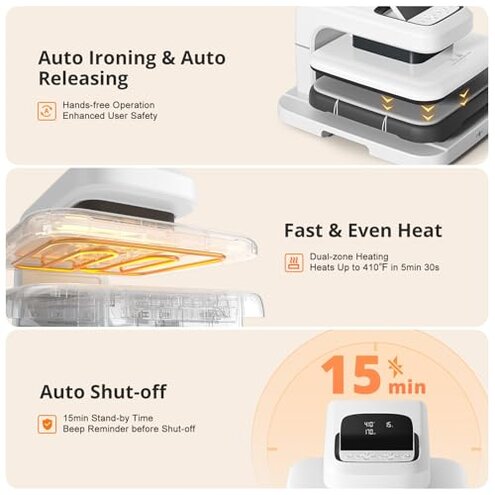
Expectation: Automatic pressing should remove most of the learning curve.
Reality: Automatic mostly removes hands-on pressing effort, not setup judgment.
Expectation: A stronger pressure range means better results with less hassle.
Reality: More pressure can make errors more costly when material thickness changes.
Expectation: Fast heat-up should make the whole workflow feel fast.
Reality: Workflow time still depends on testing, positioning, and resetting for different blanks.
Expectation: It is reasonable for this category to need some learning.
Reality: This model can demand more setup discipline than many mid-range alternatives, which is worse than some buyers expect at this price.
Safer alternatives
- Choose simpler controls if you mostly press basic shirts and want fewer setup variables.
- Prioritize manual feel if you learn better by sensing pressure instead of assigning numbers.
- Buy for repetition if your projects are consistent, because this type rewards fixed workflows more than constant switching.
- Check workspace needs before buying, especially if you cannot leave a heavy press on one sturdy table.
- Look for forgiving behavior over feature count if you are a casual crafter who values fewer ruined test pieces.
The bottom line
Main regret is paying for an automatic heat press and then discovering the hard part is still choosing the right setup. That risk feels higher than normal for this category because the stronger pressure range and automation raise expectations of simplicity. Verdict: avoid it if you want beginner-easy results, portable use, or low-risk switching between project types.
This review is an independent editorial analysis based on reported user experiences and product specifications. NegReview.com does not sell products.