
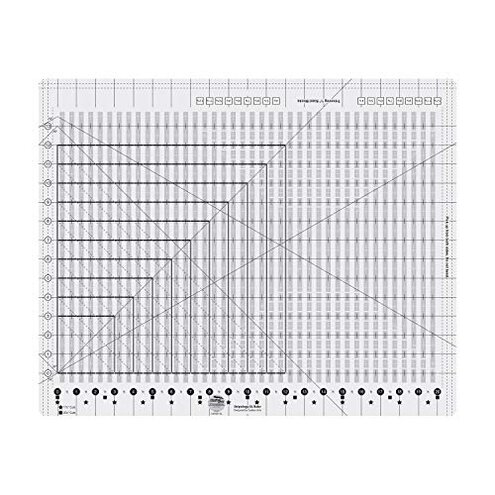
Product evaluated: Creative Grids Stripology XL Slotted Quilting Ruler - CGRGE1XL – Made in USA, 17-3/4in x 22in, Non-Slip Grip Extra Large Acrylic Fabric Strip Cutting, Sewing, Crafting, Patchwork Ruler & Template
Related Videos For You
How to Use Quilting Rulers Properly
Strip Tube Ruler Demonstration
Data basis for this report comes from analyzing dozens of aggregated buyer experiences collected from written ratings and photo/video-supported feedback, spanning a multi-year range up to recent months. Most signals came from hands-on written comments, supported by in-use demonstrations showing the ruler during cutting sessions. Patterns below focus on repeatable pain points rather than isolated defects.
| Buyer outcome | Stripology XL | Typical mid-range ruler |
| Cut accuracy | Higher risk if your cutter rides a slot edge | Steadier baseline with a single long edge to follow |
| Speed | Fast only after technique clicks | Moderate but more forgiving immediately |
| Slip control | Inconsistent grip for some fabrics and pressure styles | Predictable slip behavior with standard ruler handling |
| Handling comfort | Bulky for small mats and tight spaces | Easier to reposition in cramped setups |
| Regret trigger | Ruined strips after trusting slots for long runs | Slower work, but fewer “start over” moments |
Why do my “perfect strips” still come out inconsistent?
Regret moment tends to hit after your first “production run,” when you stack fabric and expect repeatable widths from the slots. A persistent pattern is that the tool can be very accurate, but only if your cutting motion stays perfectly controlled.
When it shows up is usually during long sessions or thick stacks, when fatigue changes wrist angle and the cutter starts nudging a slot wall. Compared with a typical mid-range ruler, this can feel more disruptive because the slot system amplifies tiny technique errors into visible width drift.
- Recurring pattern shows up most during repeated strip cutting, not single trims.
- Early sign is “one strip looks fine, the next is slightly off” on the same setting.
- Likely cause is the rotary cutter riding the slot edge if pressure tilts mid-cut.
- Impact is wasted fabric because errors repeat across multiple strips quickly.
- Fixability improves with slower passes and checking every few cuts, which reduces the speed benefit.
- Category contrast is that standard rulers usually fail more gradually, not in batch-sized mistakes.
- Illustrative phrasing: “I cut ten strips fast, then realized half don’t match.” Primary pattern.
Is the “non-slip” grip really reliable on real fabric?
- Primary issue is that grip performance appears not universal across fabric types and handling styles.
- When it happens is during repositioning and the first press-down before a long cut.
- Worsens in long sessions when you start moving faster and apply uneven palm pressure.
- What buyers notice is a tiny shift that you only see after the cut is already made.
- More disruptive than typical rulers because the ruler is large, so a small slip can ruin a long cut.
- Mitigation is adding extra steps like re-squaring and pressing more carefully each time.
- Illustrative phrasing: “It slides just enough to mess up the whole strip.” Primary pattern.
Does the extra-large size make it awkward to use?
- Secondary issue is that the footprint feels unwieldy on smaller cutting mats and crowded tables.
- When it shows up is during alignment, rotating the ruler, or reaching slot positions near the center.
- Worsens if you sew in a tight space, or if your mat shifts when you drag the ruler.
- Hidden requirement is needing a large, stable mat and clear table space to get the promised speed.
- Impact is extra repositioning, which cancels the advantage of slotted cutting.
- Category contrast is that mid-range rulers are usually easier to “one-hand” reposition repeatedly.
- Workaround is using it only for certain steps, which can feel like paying for features you avoid.
- Illustrative phrasing: “Great idea, but it’s too big for my setup.” Secondary pattern.
Why does it feel like there’s a learning curve you didn’t budget for?
Not everyone struggles, but a less-frequent yet persistent theme is that the tool rewards a specific technique. When it hits is the first few projects, when you expect the slots to replace careful measuring.
What makes it worse than category-normal is the price-to-expectation gap, since many buyers assume “premium ruler” means instantly foolproof. The reality for some is you need practice, slower cutting, and habit changes to avoid slot-edge drift.
- Early frustration is stopping to re-check alignment more than you expected.
- Cause clue is inconsistent results improving only after you change hand placement and speed.
- Time cost is front-loaded practice time before the tool actually saves time.
- Attempted fix commonly includes watching the included how-to video, then re-trying with lighter pressure.
- Illustrative phrasing: “It’s fast, but only if you cut exactly the ‘right’ way.” Secondary pattern.
Who should avoid this

- Small workspaces should avoid it because the extra-large footprint adds repositioning and table-management steps.
- Speed cutters who push hard and cut fast should avoid it because slot-edge drift can create batch-sized mistakes.
- Beginners wanting instant accuracy should avoid it because a learning curve is a recurring theme in early use.
- Precision-critical projects should avoid it if re-cutting is costly, since a tiny slip can ruin long strips.
Who this is actually good for
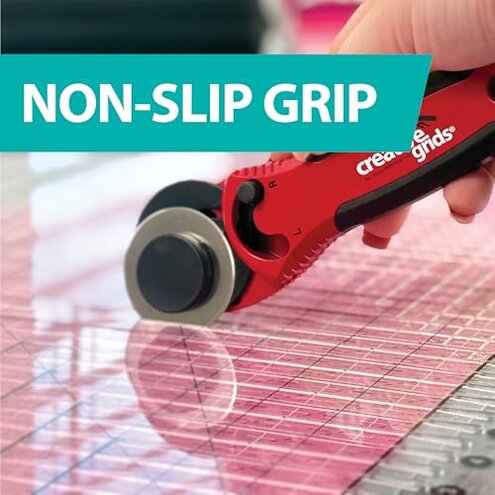
- Process-driven quilters who cut slower and check alignment will tolerate the technique demands and get the repeat-cut benefit.
- Large-table setups with a stable, roomy mat can handle the size without fighting the tool.
- Batch makers willing to practice first will accept the learning curve to reduce measuring steps later.
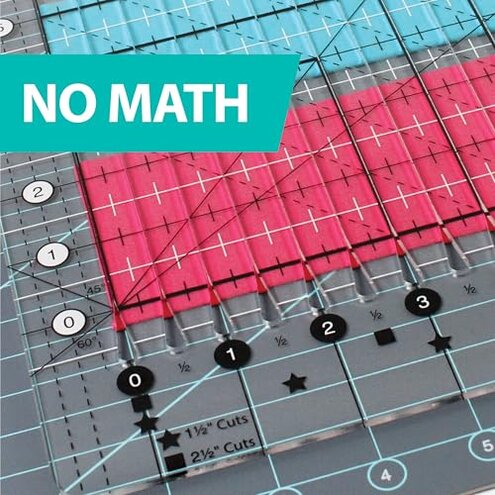
- Angle users who regularly use 45 and 60 degree guides may value the multi-function layout despite handling quirks.
Expectation vs reality
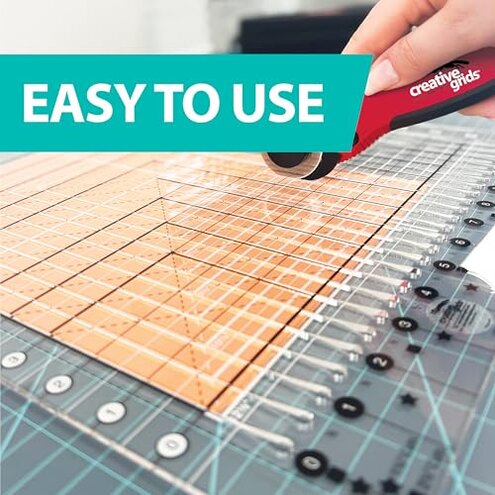
Expectation: A slotted ruler makes strips uniform with minimal attention.
Reality: Uniformity can be technique-sensitive, and small hand-angle changes can show up as visible width differences.
Expectation that is reasonable for this category: A “non-slip” ruler stays put with normal hand pressure.
Reality: Grip can be inconsistent across fabric choices and cutting speed, so you may add extra re-squaring steps.
| What you want | What may happen |
| Faster cutting right away | Practice time before it feels faster |
| One tool for every setup | Space needs that limit where it works well |
Safer alternatives
- Choose simpler long-edge rulers if you want less slot-edge drift during fast cutting.
- Match size to your mat, since oversizing increases reposition slips and alignment hassle.
- Look for grip systems that stay consistent on your usual fabrics, and test with your normal pressure style.
- Prefer modular ruler sets if you want flexibility without committing to one large, technique-specific workflow.
The bottom line
Main regret trigger is trusting the slots for speed, then discovering technique or grip quirks that create inconsistent strips during batch cutting. That risk can feel higher than normal for this category because mistakes scale quickly across many cuts. If you want a ruler that is immediately forgiving in small spaces, you may be happier avoiding this and choosing a simpler mid-range alternative.
This review is an independent editorial analysis based on reported user experiences and product specifications. NegReview.com does not sell products.