
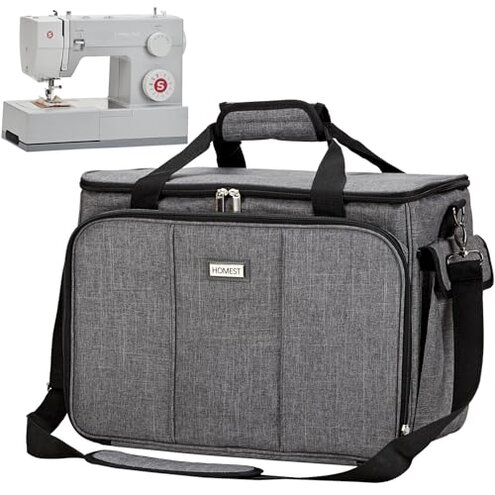
Product evaluated: HOMEST Sewing Machine Carrying Case with Multiple Storage Pockets, Universal Tote Bag with Shoulder Strap Compatible with Most Standard Singer, Brother, Janome, Grey (Patent Design)
Related Videos For You
SINGER® 1234 Sewing Machine - Tote Bag Tutorial
How to Pack the 7 Series in BERNINA Luggage
Data basis: This report is based on dozens of aggregated buyer feedback collected from written reviews and photo-backed ratings spanning a recent multi-year period through early 2026. Most input came from longer written experiences, supported by shorter star-only ratings that help confirm which problems feel recurring versus one-off.
| Buyer outcome | HOMEST case | Typical mid-range tote |
| Fit confidence | Less predictable if your machine is bulky or has add-ons | More consistent sizing across common machines |
| Carry comfort | More tiring once loaded for classes or travel | Usually steadier in-hand and on shoulder |
| Accessory storage | Good on paper, but can feel fussy in real use | Simpler layout with fewer “special” pockets |
| Durability risk | Higher-than-normal complaints around stress points over time | More average wear for this price tier |
| Regret trigger | Doesn’t fit your exact machine the way you expected | Meets basics even if it looks less stylish |
Top failures
“Why doesn’t my machine fit like the listing implies?”
Regret moment usually hits on first load-in, when the zipper won’t close cleanly or the bag bulges awkwardly. Severity is high because a carry case that doesn’t fit becomes a storage bin, not a travel tool.
Pattern appears repeatedly, but it’s not universal, because some standard machines slide in fine. Trade-off is that the bag’s pocketed design can steal usable space from the main compartment.
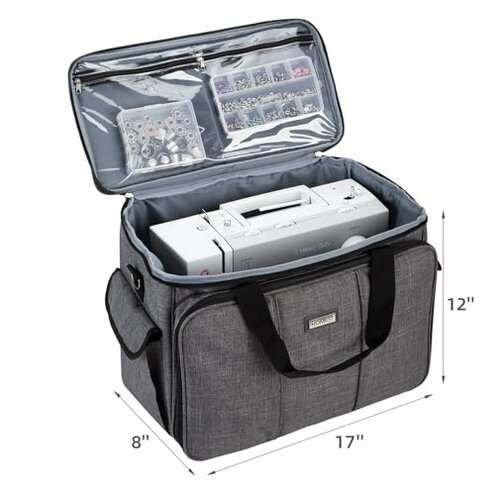
When it shows: first use, especially if your machine has a wide base, a hard cover, or you leave a foot attached. Worsens when you also try to pack pedals, cords, and accessories inside.
Category contrast: most mid-range sewing totes are more forgiving about “almost fits,” but this one is commonly reported to be pickier than expected.
- Early sign: the machine goes in, but the zipper line looks strained.
- Primary tier: fit mismatch is among the most common frustrations in the feedback mix.
- Hidden requirement: you may need to measure your machine including knobs and handwheel, not just “standard size.”
- Real impact: buyers report having to remove parts or repack accessories into a second bag.
- Fixability: it’s hard to fix without changing how you transport your machine.
- Workaround: using it as home storage reduces the downside, but defeats the travel promise.
- Comparison cue: simpler totes with fewer built-in organizers tend to have more usable interior volume.
- Illustrative: “My machine is ‘standard,’ but the top won’t zip.” Primary pattern tied to fit tolerance.
“Why does carrying it feel awkward once it’s loaded?”
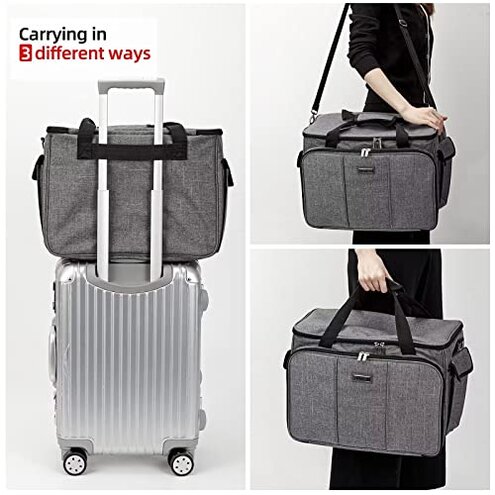
- Regret moment: it feels fine empty, then swings or pulls once you walk to class.
- Recurring: comfort complaints show up repeatedly, especially from people who carry longer distances.
- When it shows: during daily handling, like car-to-building walks and stairs.
- Worsens: heavier machines make the strap feel more punishing on shoulder.
- Category contrast: mid-range alternatives often use more structured shapes that feel steadier under load.
- Impact: awkward carry leads to more bumps against door frames and car interiors.
- Mitigation: carrying by the handle instead of shoulder reduces swing but adds fatigue.
- Illustrative: “Great pockets, but it’s a pain to haul across parking lots.” Secondary pattern tied to loaded comfort.
“Why are the pockets less useful than I expected?”
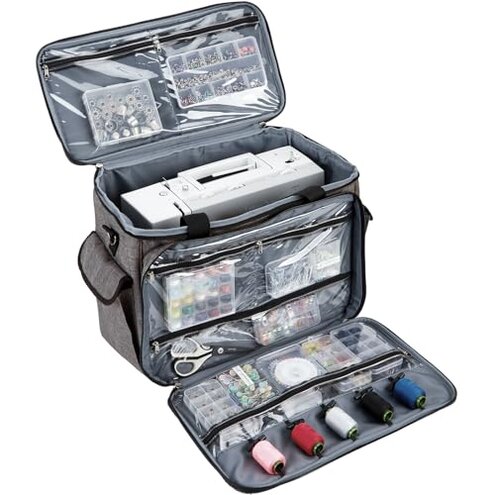
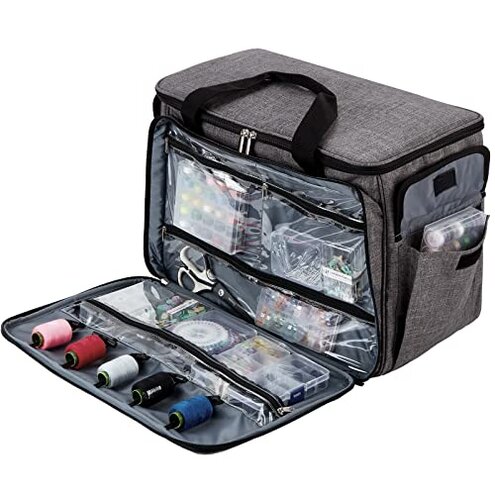
- Expectation gap: the organizer layout looks ideal, yet feels fiddly when you’re packing fast.
- Persistent: pocket-layout frustration is secondary, but shows across varied buyer use cases.
- When it shows: during packing and unpacking before and after projects.
- Worsens: if you carry bulky accessories, the pockets can push inward and reduce main space.
- Real impact: you spend extra time re-sorting instead of grabbing-and-go.
- Category contrast: many mid-range bags have fewer pockets, but feel faster in real use.
- Mitigation: using small pouches inside can restore speed, but adds another item to manage.
- Illustrative: “I thought the pockets would help, but they eat the space.” Secondary pattern tied to layout trade-offs.
“Will it hold up if I travel with it often?”
- Durability worry: wear shows up after repeated use, not just day one.
- Less frequent: durability issues are more edge-case than fit, but more painful when they happen.
- When it shows: frequent zipping, lifting into trunks, and weekly classes.
- Worsens: heavier loads create more stress at seams and strap connections.
- Category contrast: some mid-range cases feel plain, but tolerate abuse better over time.
- Impact: once a seam or closure starts failing, confidence drops because the machine is heavy.
- Mitigation: keeping weight low and avoiding overstuffing reduces strain, but limits the “all-in-one” idea.
- Illustrative: “After a few trips, the stress points started looking rough.” Edge-case pattern tied to heavy usage.
Who should avoid this
Frequent travelers should skip it if you carry your machine weekly, because recurring feedback flags higher stress-point risk with heavy use.
Owners of bulky machines should avoid it unless you can measure and confirm fit, because fit mismatch is a primary regret trigger.
Anyone needing fast setup should look elsewhere, since pocket organization can add extra steps during packing.
Shoulder-carry users may want alternatives, because loaded comfort issues appear repeatedly during longer walks.
Who this is actually good for
Occasional movers who transport a lighter standard machine a few times a year can tolerate the carry quirks for the extra storage.
Home organizers who mainly want dust-free storage can accept the fit pickiness by leaving accessories elsewhere.
Careful packers who don’t mind a slower routine can benefit from the pocket visibility and keep tools separated.
Car transport users doing short distances can overlook the strap comfort limits because the bag is used briefly.
Expectation vs reality
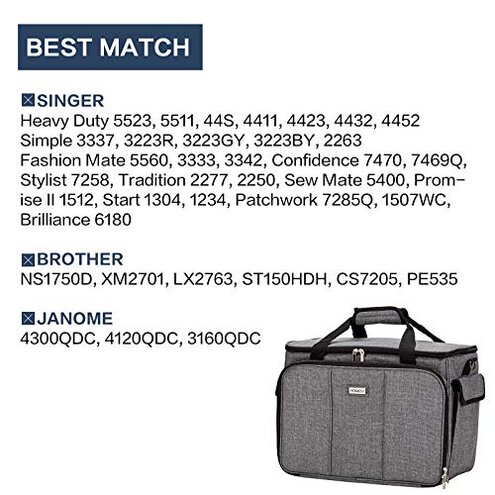
- Reasonable: “Universal fit” should work for most standard machines. Reality: fit is commonly reported as more model-sensitive than buyers expect.
Expectation: pockets make packing faster. Reality: the organizer layout can add repacking time, especially with bulky items.
| What you want | What can happen |
| Comfort on the shoulder | Awkward load once the machine and accessories are inside |
| Travel confidence for classes | Wear concerns if you do frequent trips with heavy machines |
Safer alternatives
- Measure first and shop by internal dimensions plus knob clearance to neutralize the fit mismatch risk.
- Choose rigid or semi-structured totes if you walk far, since structure reduces swinging under heavy loads.
- Prefer simpler interiors if you pack bulky gear, because fewer built-ins preserves usable space.
- Prioritize reinforcements at straps and seams if you travel weekly to reduce stress-point failures.
- Use modular pouches instead of fixed pockets if you want speed, reducing repacking friction.
The bottom line
Main regret is fit: a “universal” case that can be picky about real machine shapes becomes frustrating fast. Risk exceeds normal tote-bag expectations because a small fit miss blocks zipping and safe carrying.
Verdict: avoid if you need guaranteed fit and frequent travel reliability, and consider it only if you can measure and you carry occasionally.
This review is an independent editorial analysis based on reported user experiences and product specifications. NegReview.com does not sell products.