
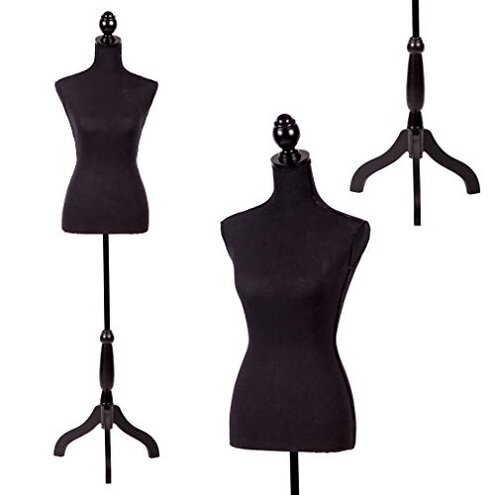
Product evaluated: FDW Manikin 60”-67”Height Adjustable Female Dress Model Display Torso Body Tripod Stand Clothing Forms (Black)
Related Videos For You
How to pad your dress form to be your EXACT measurements (TWO WAYS) #shorts
🧵How to Pad Your Dress Form | Sewing Hack for Curvy Bodies #curvygirlhacks #sewingtutorial
Data basis: This report used dozens of buyer comments and several demonstration videos collected between Jan 2018 and Feb 2026. Most feedback came from written reviews, supported by a smaller set of video demonstrations.
| Outcome | FDW Manikin | Typical mid-range alternative |
|---|---|---|
| Stability on stand | Wobbly under light movement; reported more often after setup. | Stable tripod or weighted base, typical for mid-range forms. |
| Surface finish | Fabric glue marks and loose cover reported across multiple posts. | Cleaner finish with tighter covers is common in alternatives. |
| Height adjust mechanism | Loose knob or slipping reported during handling after setup. | Tighter adjustment hardware or locking pins on mid-range models. |
| Assembly & durability | Quick to assemble but parts feel light and less durable over time. | Longer assembly sometimes, but more durable for frequent use. |
| Regret trigger | Display failure — garments shift or the stand wobbles during normal handling. | Lower risk of display failure for most mid-range alternatives. |
Will the stand keep a dress from leaning or sliding over time?
Regret moment: Many buyers report the tripod feels unstable when adjusting or moving garments.
Pattern & context: This is a primary complaint that appears at first setup and often worsens after repeated repositioning.
Category contrast: Stability is worse than typical for this price tier, causing real display regret compared to mid-range models.
Does the cover and finish look clean on display?
- Early sign: Visible glue or loose fabric appears shortly after unboxing.
- Frequency tier: This is a secondary pattern, seen across multiple written reports.
- Likely cause: Poorly stretched cover or adhesive visible under the surface fabric.
- Buyer impact: The display looks cheaper and needs cosmetic fixes for photography or retail windows.
- Fixability: Some buyers re-stretch or replace the cover, adding extra time and cost.
Will the height knob hold up during regular use?
- Early sign: Height seems secure on first use but can slip when you move the form.
- Frequency tier: This is a primary issue that shows up repeatedly in handling reports.
- When it happens: Slippage often occurs during dressing or when adjusting height for photos.
- Why it matters: A slipping knob demands frequent readjustments and interrupts work flow.
- Attempted fixes: Buyers tighten the knob or add extra washers, which adds steps and tools.
- Hidden requirement: Expect to need basic tools or parts to stabilize the mechanism for day-to-day use.
- Category contrast: This is less forgiving than most mid-range dress forms where adjustment locks are sturdier.
Will garment fit and proportions match real measurements?
- Early sign: Some buyers notice the chest and waist look slightly off for tailored garments.
- Frequency tier: This is a secondary complaint that affects precision tailoring tasks.
- When it matters: Mis-proportion is most obvious during fittings or photography with form-fitting pieces.
- Cause: Simplified foam shaping produces approximate, not exact, body contours.
- Impact: Expect extra adjustments for pattern work or custom sewing jobs.
- Attempts: Users add padding or pins to correct the silhouette, which adds time.
- Fixability: Workarounds exist but they make the product less convenient than category alternatives.
- Category contrast: For serious tailoring this model is less accurate than many mid-range dress forms with adjustable panels.
Illustrative excerpts
Illustrative: "Base wobbled and I had to re-center a hem during first setup." — Primary pattern.
Illustrative: "Glue shows under the cover, looks bad in photos." — Secondary pattern.
Illustrative: "Knob slipped while I was pinning a dress." — Primary pattern.
Illustrative: "Needed extra stuffing to match my size." — Edge-case pattern.
Who should avoid this

- Serious tailors: Avoid if you require precise measurements without adding pads.
- Retail windows: Avoid if you need a clean, permanent display without cosmetic fixes.
- High-traffic use: Avoid for constant dressing changes where stability is critical.
Who this is actually good for

- Casual hobbyists: Good if you want a lightweight form for occasional sewing or display.
- Photo props: Useful if minor surface flaws are acceptable for quick shoots.
- Budget-conscious buyers: Good if you can tolerate extra tweaks to stabilize or clean the form.
Expectation vs reality

- Expectation (reasonable for category): Buyer expects a stable, adjustable display at this price.
- Reality: The form is prone to wobble and often needs extra parts or tightening.
- Expectation: Cover will be smooth for photography without extra work.
- Reality: Visible glue marks and loose fabric often require reworking or replacement covers.
Safer alternatives

- Choose weighted bases: Pick forms with weighted or metal bases to neutralize the stand wobble risk.
- Look for locking hardware: Favor models with locking pins or stronger adjustment clamps to avoid slippage.
- Inspect covers: Buy alternatives with removable, tight covers or replaceable fabric for cleaner displays.
- Prepare tools: If you buy this model, have washers and a wrench to fix the height knob fast.
The bottom line
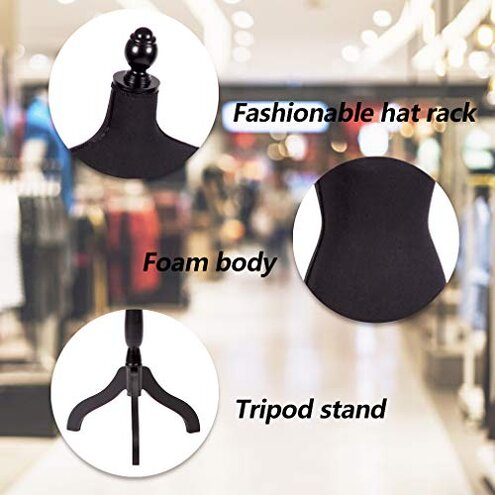
Main regret: The most damaging issue is the unstable stand which causes garments to shift and interrupts use.
Why worse: Stability and finish problems appear more often than expected for mid-range dress forms and require fixes.
Verdict: Skip this FDW if you need a reliable display; consider sturdier mid-range alternatives or plan for fixes.
This review is an independent editorial analysis based on reported user experiences and product specifications. NegReview.com does not sell products.