
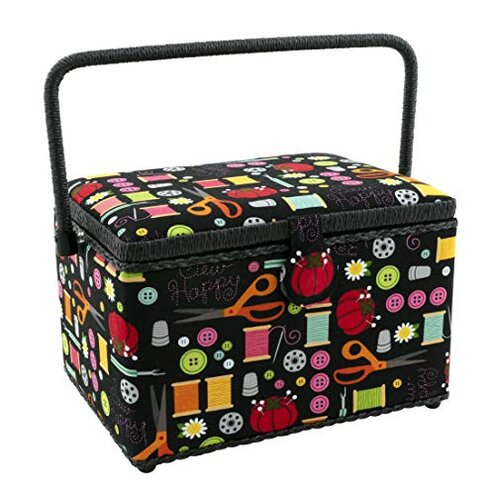
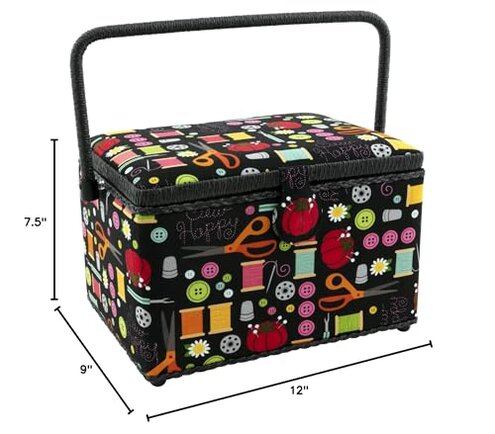
Product evaluated: Dritz Large Sewing Basket, Black Sewing Notions
Related Videos For You
Sewing basket organizer | Hand work in a basket!
Data basis: This report used dozens of customer reviews and several video demonstrations collected between 2020 and 2025. Most feedback came from written reviews, supported by short video demos and Q&A notes. The distribution shows written reviews as the dominant signal, with videos used to confirm visible failures.
| Outcome | Dritz Sewing Basket | Typical Mid‑Range Basket |
|---|---|---|
| Durability | Higher wear risk reported for handles, closures, and lining under regular use. | Moderate durability with reinforced handles and tested closures. |
| Organizer usefulness | Tray limits small tools and shifts during transport more often. | Better compartmenting and stable trays for frequent users. |
| Shipping/fit | Fit surprises like tighter internal space than labeled are commonly reported. | Closer to spec with clearer internal dimensions. |
| Regret trigger | Closure/handle failure that makes the basket unusable sooner than expected. | Less frequent hardware failures in the category. |
| Higher‑than‑normal risk | Handle/closure problems appear more disruptive than typical for similar mid‑range baskets. | Lower failure impact when hardware is reinforced. |
Why did the handle or closure feel so unreliable when I first used it?
Regret moment: Buyers describe the basket feeling secure on the table but failing during transport. The handle or magnetic snap can distort or separate after light lifting. This is a primary issue that appears repeatedly.
Pattern: This problem is commonly reported and often appears within the first few weeks of regular use. It gets worse when the basket is carried loaded or moved frequently.
Category contrast: Sewing baskets in this price range usually tolerate light travel. The Dritz shows more disruptive failures than expected for mid‑range options.
How bad is the organizer tray and pocket layout for real projects?
- Early signs: The removable tray often rocks or shifts at first lift, indicating weak seating.
- Frequency tier: This is a secondary issue seen across many buyers who store small tools.
- Cause: Simple tray lip and slot fit allow movement under load.
- Impact: Tools shift, pins spill, and sorting takes extra time during sewing sessions.
- Attempted fixes: Users add tape or non‑slip pads to steady the tray with mixed success.
Why does the interior lining and finish wear so quickly?
- Early signs: Lining shows scuff marks or thread pulls after repeated retrieval of notions.
- Frequency tier: This counts as a secondary complaint that appears after repeated use.
- Worsening context: Wear accelerates with heavy tools or sharp objects stored inside.
- Category contrast: Compared with mid‑range baskets, the Dritz requires more careful handling to avoid visible wear.
- Fixability: Interior wear is partly cosmetic but reduces long‑term neatness and resale value.
- Hidden requirement: To avoid damage, the basket often requires separate pouches for sharp tools, which is not obvious up front.
Do buyers report surprises about size, weight, or shipping?
- Package surprises: Some buyers note tighter internal space than photos suggest, causing fit disappointment.
- Frequency tier: This is a tertiary/edge-case but appears enough to warn buyers who need exact capacity.
- When it occurs: The issue shows up at first unpacking and when comparing project storage needs.
- Impact: Heavy projects require extra bags because the basket cannot safely carry large kits.
- Why worse: The product lists a size category of "Large," yet usable space feels smaller than similar mid‑range baskets.
- Workaround: Buyers often pack light or use the basket only as a table organizer to avoid transport failures.
- Fixability: Tight fit and weight limits are permanent and not easily altered.
Illustrative excerpts (not real quotes)
- Illustrative: "Handle bent the first week when I lifted a full kit." — Primary pattern.
- Illustrative: "Tray slides and pins scattered during travel." — Secondary pattern.
- Illustrative: "Lining ripped after a month of daily use." — Secondary pattern.
- Illustrative: "Smaller inside than photos looked." — Edge‑case pattern.
Who should avoid this
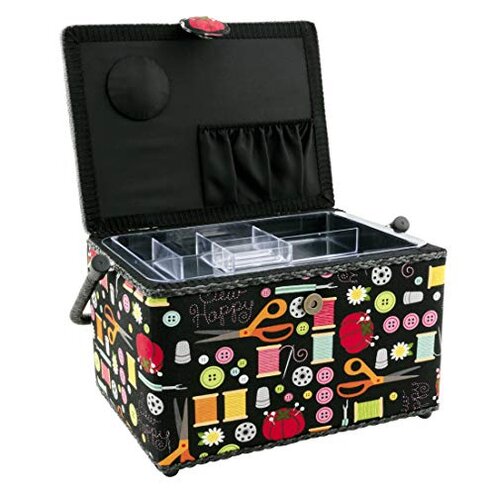
- Frequent travelers: Avoid if you move your kit between classes or events often, because handle and closure stress is common.
- Heavy‑tool users: Avoid if you store sharp or bulky tools, because the tray and lining show wear faster than expected.
- Precision packers: Avoid if exact internal volume matters, because the usable space can be smaller than labeled.
Who this is actually good for
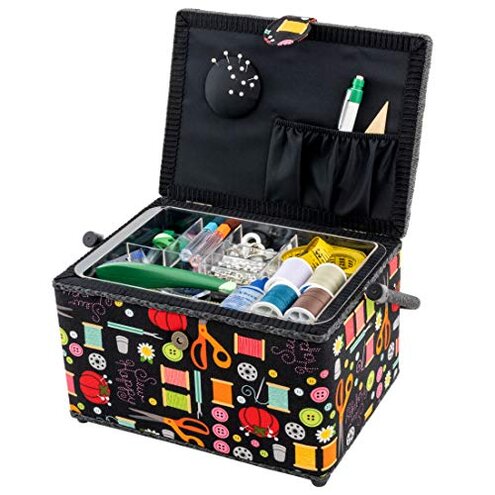
- Light home users: Good if you keep the basket on a table and store only small notions, as wear is slower in low‑movement use.
- Budget conscious buyers: Acceptable if you want a basic organizer and can tolerate minor fixes like adding non‑slip pads.
- Stationary crafters: Works if you rarely carry the basket and prefer a simple table caddy for occasional projects.
Expectation vs reality
- Expectation: Reasonable for this category is a basket that survives light travel. Reality: Handle or closure may fail within weeks under light travel.
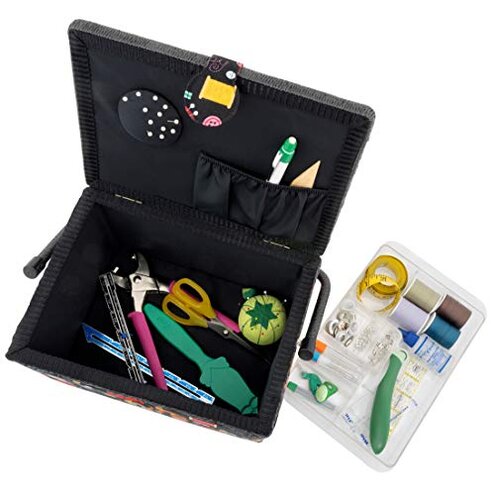
- Expectation: A "Large" basket gives roomy internal storage. Reality: Usable space often feels smaller than photos imply.
- Expectation: Internal organizers steady tools. Reality: Tray movement means you must add non‑slip fixes yourself.
Safer alternatives
- Seek reinforced handles: Look for baskets that advertise reinforced hardware to avoid early handle failure.
- Choose stable trays: Prefer designs with locking trays or interlocking compartments to stop shifting.
- Check interior specs: Compare internal usable dimensions, not just external size, to prevent fit surprises.
- Prefer padded cases: For travel, use a padded sewing case that protects lining and tools better than a basic basket.
The bottom line
Main regret: The basket’s handle and closure are the primary failure trigger and they appear more disruptive than typical for mid‑range sewing baskets.
Why avoid: If you need a travel‑ready or heavy‑duty organizer, this model requires extra fixes and careful packing to perform acceptably.
Verdict: Consider alternatives with reinforced hardware or locking organizers unless you will keep this basket stationary and lightly used.
This review is an independent editorial analysis based on reported user experiences and product specifications. NegReview.com does not sell products.