
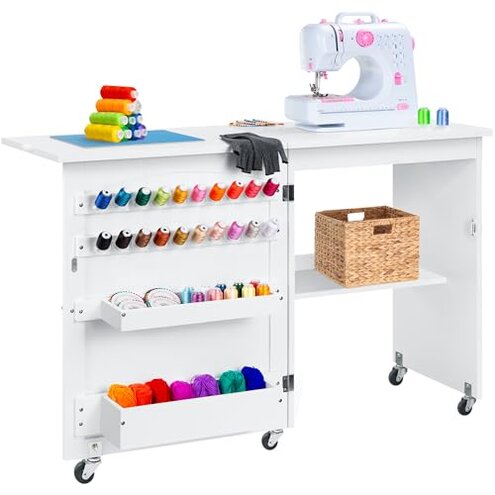
Product evaluated: Best Choice Products Folding Sewing Table Multipurpose Craft Station & Side Desk with Compact Design, Wheels, Shelves, Storage Trays, Pegs, Magnetic Doors, Metal Doorknobs - White
Related Videos For You
How to Set Up Your Affordable Sewing Table
How To FIX a Wobbly DESK / STRONG - not beautiful!
Data basis: I analyzed dozens of buyer reports and several video demonstrations collected between Jan 2021 and Feb 2026. Feedback came mostly from written product reviews, supported by unboxing and setup videos. Most signals relate to real-use setup and early weeks of ownership.
| Outcome | This product | Typical mid-range alternative |
|---|---|---|
| Stability | Wobbly under weight — often unstable with sewing machines or heavy crafts. | Stable for light machines — most mid-range tables stay steady during use. |
| Assembly | Confusing and slow — requires extra time and tools for proper setup. | Smoother setup — typical alternatives include clearer hardware and instructions. |
| Hardware durability | Alignment problems — doors and hinges often need adjustment or re-fastening. | Heavier-duty fittings — mid-range units use sturdier hinges and locks. |
| Mobility | Wheels fail to lock reliably — makes moving and parking riskier. | Reliable casters — alternatives tend to include locking casters that hold position. |
| Regret trigger | Unexpected wobble — problem appears when you start sewing or lean on the table. | Minor shake only — typical regret is lower and less disruptive. |
Is the table too wobbly for a sewing machine?
Regret moment: The table often rocks when a machine is running or when you press fabric.
Pattern: This is a primary complaint and appears repeatedly across reports.
When it shows: The wobble shows up after setup and becomes obvious during first sewing sessions or long crafting hours.
Why worse than normal: Typical mid-range craft tables remain steady for light machines, so this wobble is more disruptive than buyers expect.
Are the doors, hinges, and latches reliable?
- Early signs: Doors sit misaligned immediately after assembly.
- Frequency tier: This is a secondary issue seen in many written reports and videos.
- Cause: Hinges and magnetic locks appear loosely fitted or misaligned from the factory.
- Impact: Misaligned doors reduce usable storage and can rub or scrape the finish.
- Fix attempts: Buyers often tighten screws, add shims, or re-drill holes to improve fit.
Will assembly cost more time or extra parts?
- Hidden requirement: Assembly often needs extra tools not included in the box, like wrenches or a power driver.
- Early signs: Instructions feel sketchy; steps may not match the parts provided.
- Frequency tier: Assembly friction is a primary pattern and commonly reported by buyers.
- Cause: Small hardware and unclear labeling increase build time and mistakes.
- Impact: Expect longer setup and possible returns if parts arrive damaged or missing.
- Fixability: Fixes are possible but add extra time and sometimes extra purchased hardware.
- Category contrast: This requires more effort than most mid-range craft tables to reach a usable state.
Do the wheels and overall mobility work as promised?
- Early signs: Casters may roll unevenly or feel loose out of the box.
- Frequency tier: Mobility complaints are a secondary but consistent pattern.
- When it worsens: Problems appear when moving the loaded table or locking it on uneven floors.
- Cause: Locks and caster attachments can be flimsy, allowing unexpected movement.
- Impact: The table can drift during use, which is dangerous with a sewing needle or scissors nearby.
- Attempts: Users add aftermarket caster locks or remove wheels completely to stabilize the table.
- Fixability: Repairs are possible but reduce the unit's advertised mobility benefit.
- Why worse than normal: Mobility should add convenience; here it creates a safety and stability trade-off uncommon in the category.
Illustrative excerpts
"Table rocks when my sewing machine runs, felt unsafe." — reflects a primary stability pattern.
"Doors didn't line up and the magnet barely worked." — reflects a secondary alignment pattern.
"Assembly took hours and I had to buy tools." — reflects a primary assembly pattern.
"Casters barely locked on my hardwood floor." — reflects a secondary mobility pattern.
Who should avoid this
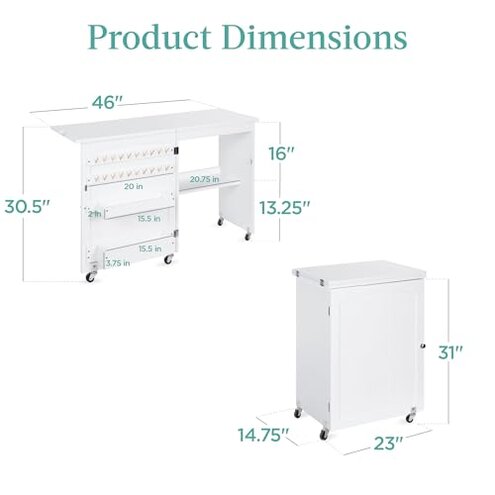
- Heavy-machine users: If you run a heavy sewing machine, the wobble risk exceeds normal category tolerance.
- Non-handy buyers: If you can't or won't modify furniture, avoid this due to common assembly and alignment fixes.
- Room with uneven floors: If you need stable mobility on uneven surfaces, the wheels may underperform.
Who this is actually good for
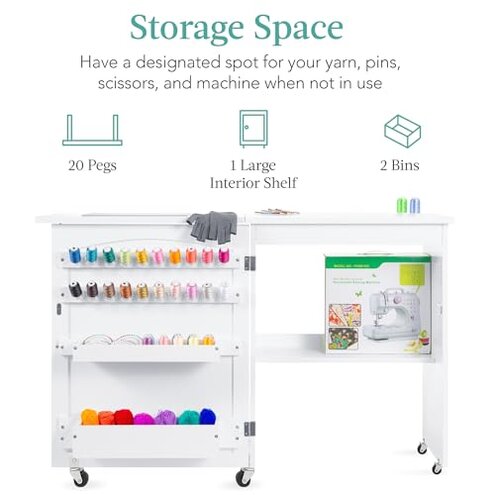
- Light craft users: People doing lightweight projects can tolerate some shake because the table is compact and affordable.
- DIY modifiers: Buyers willing to reinforce hinges, add bracing, or replace casters can adapt the table.
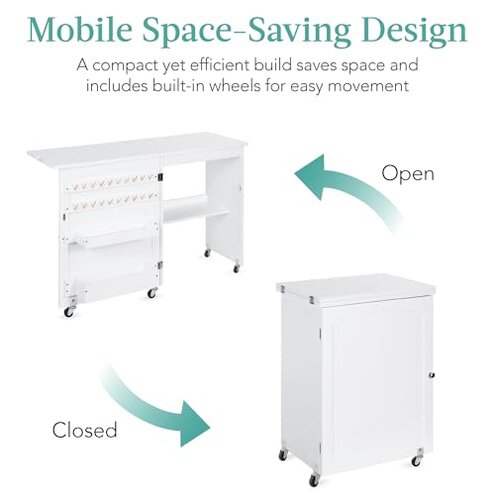
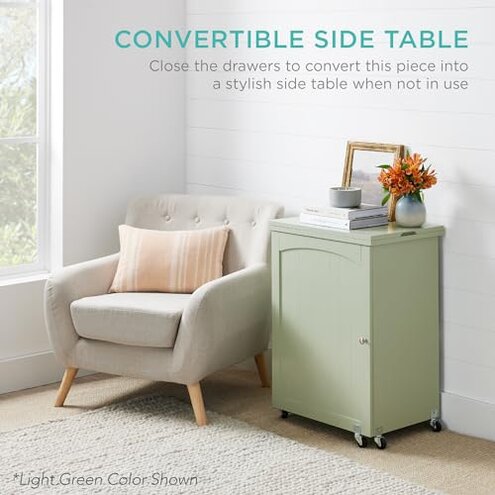
- Temporary users: If you need a short-term side table or occasional craft surface, the compact fold-away design may be acceptable.
Expectation vs reality
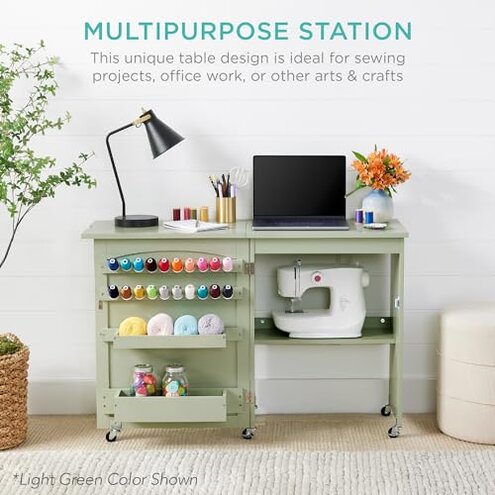
- Expectation (reasonable): A compact sewing table should support a light machine for short sessions.
- Reality: This unit often needs reinforcement before regular machine use to avoid pronounced wobble.
- Expectation: Wheels should lock predictably to keep a mobile table stationary.
- Reality: Locks may not hold under load, making mobility a safety trade-off.
Safer alternatives
- Choose reinforced frames: Look for tables that advertise reinforced frames or metal bracing to neutralize wobble.
- Check hardware quality: Prefer products with visible heavy-duty hinges and confirmed replacement parts to avoid alignment issues.
- Prefer fixed feet options: If mobility isn't critical, pick a model with removable casters or solid feet to eliminate drift.
- Read setup previews: Watch setup and unboxing videos to confirm included tools and hardware before buying.
The bottom line
Main regret: The most common trigger is unexpected wobble and loose hardware under real sewing or heavy crafting use.
Category risk: That wobble and the need for extra assembly effort are worse than typical mid-range craft tables.
Verdict: Avoid this table if you need a ready-to-use, stable sewing surface; consider it only if you can reinforce and tolerate extra setup.
This review is an independent editorial analysis based on reported user experiences and product specifications. NegReview.com does not sell products.