
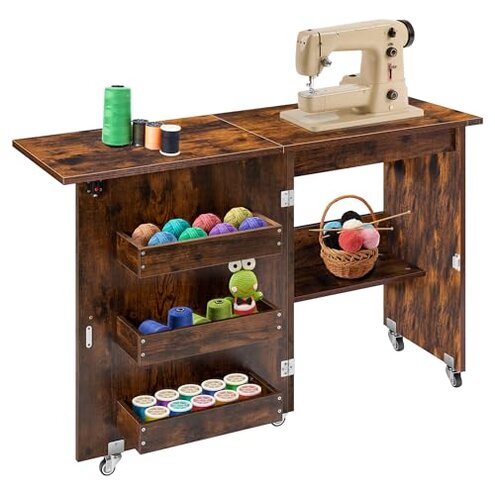
Product evaluated: VIVOHOME Folding Sewing Craft Table, Rolling Sewing Machine Desk with Storage Shelves, Sewing Cabinet with Lift for Small Spaces, Rustic Brown
Related Videos For You
Best Sewing Table from Ikea | Using a Norden Gateleg Table as a Sewing Table
Juki DDL 8700 Table, Motor & Sewing Machine Assembly
Data basis I reviewed dozens of written buyer reviews and several video demonstrations collected between January and December 2025, with most feedback from written reviews supported by short video clips; the distribution shows written reports as the dominant source.
| Outcome | VIVOHOME table | Typical mid-range table |
|---|---|---|
| Workspace | Smaller usable surface when folded and with inset lift, reducing room for large machines or cutting mats. | Roomier surface generally keeps full sewing footprint without awkward cutouts. |
| Stability | Notably wobbly under long sewing sessions or when leaning on edges, a frequent complaint. | Stable during use with fewer reports of wobble for mid-range competitors. |
| Assembly | Tricky fit and occasional missing alignment during setup, making assembly longer than expected. | Smoother assembly with clearer fittings and fewer alignment problems. |
| Durability | Higher wear risk on hinges and caster mounts after repeated use, worse than typical for the class. | More durable hardware designed for repeated opening and rolling without loosening quickly. |
| Regret trigger | Stability plus hardware wear causes functional regret and more maintenance than buyers expect from this price point. | Lower regret for steady daily use and less ongoing tightening or part replacement. |
Why does the table wobble under my sewing machine?
Regret moment You notice side-to-side wobble during long sewing sessions, which interrupts stitching and forces frequent repositioning.
Pattern signal This is a primary issue and appears repeatedly in buyer feedback, especially during heavy or extended use.
When it shows Wobble usually appears within the first days of use and worsens during long projects or when the machine is placed toward an edge.
Category contrast Stability problems are more disruptive than expected for mid-range sewing tables because they directly affect stitch quality and user safety.
Are the hinges and wheels reliable long-term?
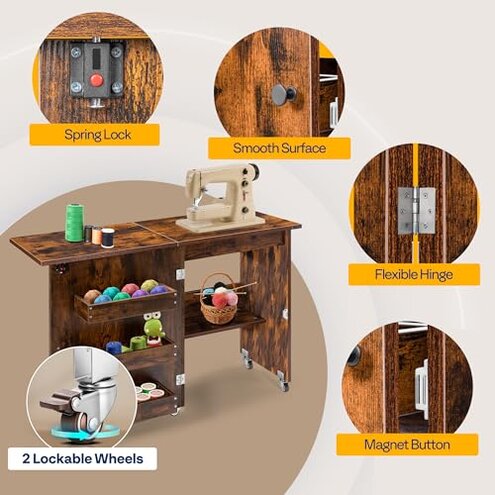
- Early sign Hinges feel loose or squeaky after a few openings, reported commonly across comments.
- Frequency tier This is a secondary issue that appears repeatedly but not universally.
- Cause Reported causes point to thin fasteners and light hardware that loosen under frequent folding and rolling.
- Impact Loose hinges reduce stability and sometimes make the fold mechanism fail to lock securely.
- Fix attempts Buyers commonly retighten screws or add washers to regain firmness, adding time and tools.
Is assembly difficult or missing parts common?
Immediate frustration Assembly can be fiddly because parts must align precisely for the folding mechanism to work.
Pattern signal This is a primary complaint reported by many buyers during first setup.
- Step pain Pre-drilled holes sometimes misalign, causing extra fitting and trimming during assembly.
- Hidden requirement The table often needs additional basic tools and patience beyond the simple Allen wrench included.
- Frequency Many buyers report spending significantly more time assembling than the product description implies.
- Impact Misalignment can produce permanent stress on joints, leading to faster wear.
- Fixability Most users can complete assembly, but it adds extra steps and time compared with competitors.
- Category contrast Assembly friction is worse than typical mid-range tables, increasing early regret for impatient buyers.
Will the storage and surface meet my sewing needs?
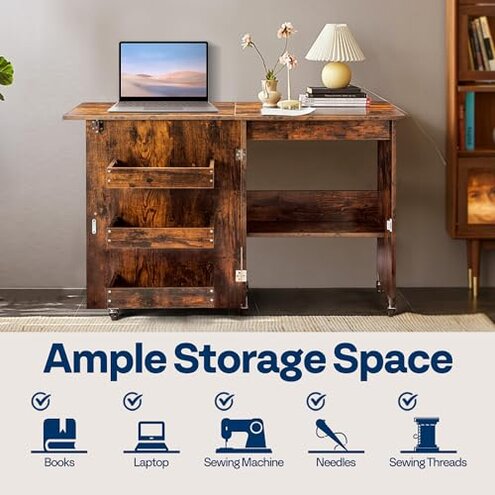
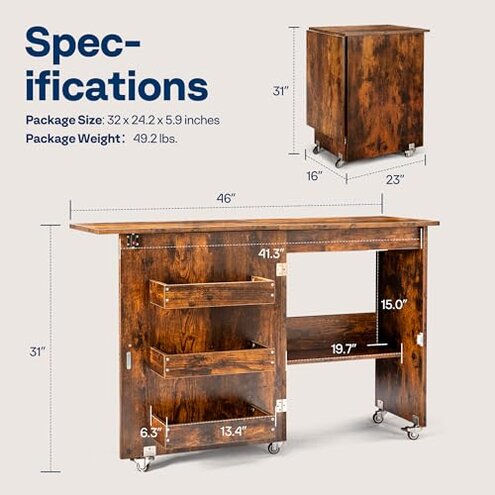
- Usable surface The inset lift and fold design reduce practical workspace for large machines or cutting mats.
- Storage size Hidden bins are shallow and better for small supplies than bulky organizers.
- Frequency tier This is a persistent secondary complaint for buyers with larger setups.
- Impact Limited storage leads to clutter on the tabletop, worsening the wobble and work flow.
- Attempted workarounds Users place external bins or move additional tables nearby, adding clutter and defeats the space-saving pitch.
- Long-term effect Using external storage increases time and reduces the expected convenience of a single compact unit.
- Category contrast Compared with typical mid-range sewing desks, storage is less useful and more likely to need supplements.
Illustrative excerpts
Excerpt "Table wobbles during long sewing sessions and stops my machine motor." — Primary pattern reflecting frequent stability complaints.
Excerpt "Hinges loosened within a week, had to add washers to tighten." — Secondary pattern about hardware wear and homemade fixes.
Excerpt "Bins are tiny; I still need a separate drawer to store thread." — Secondary pattern about limited storage capacity.
Who should avoid this
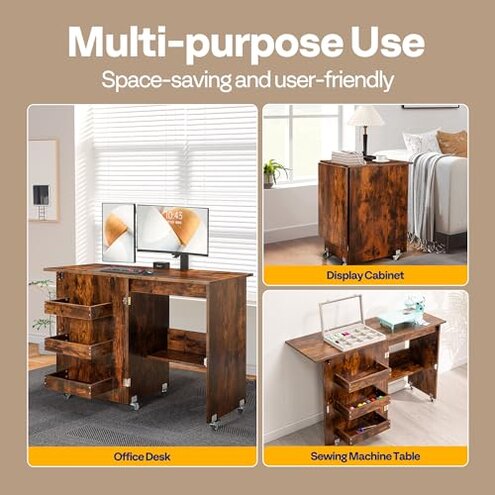
- Heavy users Buyers who sew for long sessions should avoid it because wobble and hardware wear are disruptive.
- Large-machine owners Those with full-size sewing machines should avoid it because the usable surface is reduced by the lift area.
- Low-tolerance builders Shoppers unwilling to spend extra assembly time or tools should avoid this model.
Who this is actually good for
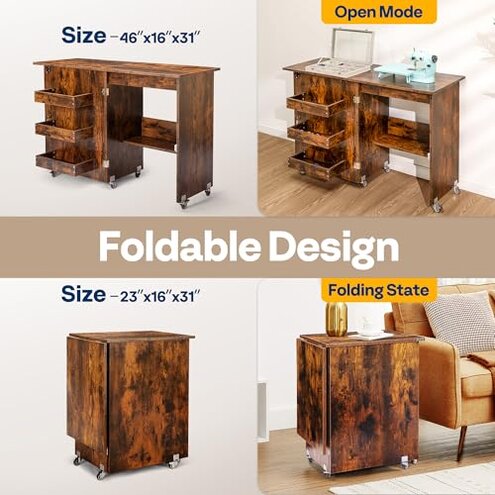
- Occasional crafters People who sew briefly or use lightweight machines can tolerate the wobble for the compact footprint.
- Small-space users Buyers who prioritize storage and foldability over heavy-duty stability may accept the trade-offs.
- DIY fixers Shoppers comfortable with tightening hardware and adding reinforcement will find it workable.
Expectation vs reality
Expectation Reasonable for this category: a folding sewing table should save space and offer basic stability for light use.
Reality The table often delivers the space savings but falls short on stability and durable hardware, making it less reliable than typical mid-range options.
Expectation Reasonable for this category: pre-drilled parts should speed assembly.
Reality Misaligned holes and light fasteners commonly add assembly time and require extra tools or fixes.
Safer alternatives
- Look for reinforced frames Choose tables that specify metal frames or thicker hardware to neutralize the wobble issue.
- Prioritize larger worktops Pick a desk with a continuous top rather than inset lifts to avoid reduced usable space.
- Check hardware reviews Seek products with repeated praise for hinge and caster durability to avoid long-term loosening.
- Prefer easier assembly Favor tables advertising tool-free or fewer-step assembly to prevent alignment headaches.
The bottom line
Main regret The combination of wobble and light hardware is the primary regret trigger for buyers seeking steady sewing work.
Severity These problems exceed normal category risk because they affect stitch quality and require ongoing fixes.
Verdict Avoid this model if you need a stable, long-lasting sewing desk; consider it only for light, occasional use or if you plan reinforcement fixes.
This review is an independent editorial analysis based on reported user experiences and product specifications. NegReview.com does not sell products.