
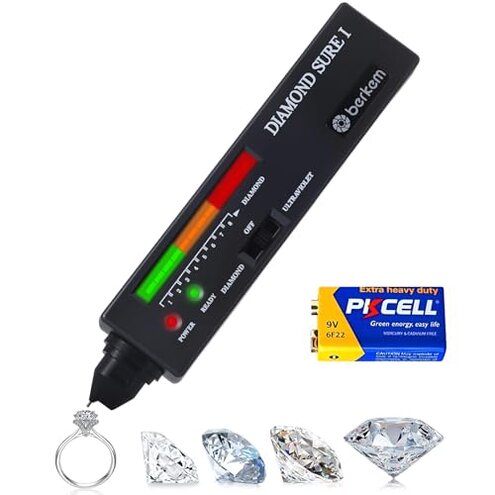
Product evaluated: Valkynos Professional Diamond Tester Pen with 365nm UV Light & Thermal Sensor – Fast 0.5s Detection, Portable Gem Checker for Novice & Experts – Battery Included
Related Videos For You
Diamond Selector 2 II Diamond Tester From AMAZON - Demo How To Use and Test For Diamonds
How Diamond Testers Work
Data basis: I reviewed dozens of buyer comments and video demonstrations collected between 2023 and 2025, with most feedback coming from written reviews and supported by video tests and seller Q&A.
| Outcome | Valkynos | Typical mid-range tester |
|---|---|---|
| Accuracy on small stones | Higher risk — inconsistent below the stated 0.02ct threshold, more false negatives reported. | Category baseline — usually reliable on 0.02ct+ with fewer false reads. |
| Warm-up & sensitivity | Needs specific setup — 25s warm-up and bare-finger contact required for best results. | More forgiving — many alternatives tolerate brief contact or gloves and shorter warm-up. |
| UV fluorescence utility | Limited help — UV adds info but can be misleading without gem knowledge. | Comparable — some mid-range units omit UV or pair with clearer guidance. |
| Battery & maintenance | Higher upkeep — battery quirks and replacement notes create extra steps for frequent users. | Lower fuss — many testers use common batteries and report longer stable performance. |
| Regret trigger | False confidence — inconsistent readings can lead to costly buying mistakes. | Lower risk — mid-range options rarely induce buyer-level regret when used as directed. |
Top failures
Is the machine reliably distinguishing real diamonds?
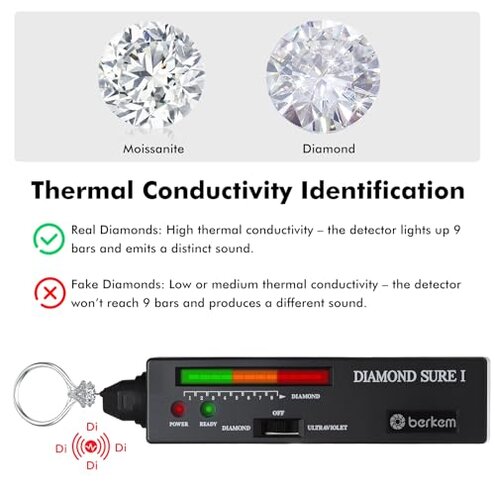
Primary issue: The biggest buyer regret is inconsistent accuracy, especially on small or low-fluorescence stones.
Pattern note: This concern is commonly reported across written tests and videos, not universal but frequent enough to matter.
Usage anchor: It often appears during first verification or when testing stones near the stated 0.02 carat limit.
Category contrast: This is worse than typical because mid-range testers usually give fewer false negatives at the same price, so results here add real buying risk.
Why does the tester need warm hands and a wait?
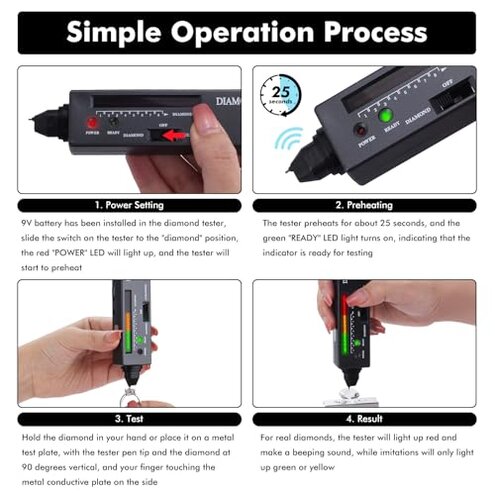
- Early sign: Device requires a 25s warm-up before first use, adding friction for quick checks.
- Frequency tier: This is a secondary issue that appears every time you power on the tool.
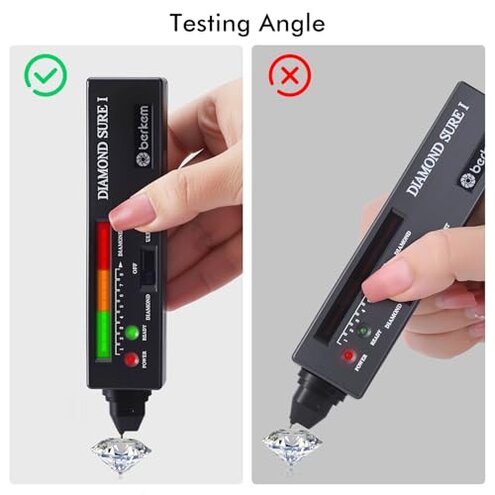
- Cause: Thermal conductivity sensing demands bare-finger contact and room temperature for best accuracy.
- Impact: The extra setup makes store-spot checks slower than most casual users expect.
- Fixability: You can reduce failures by strictly following the warm-up and contact rules, which is tedious for frequent testing.
Does the UV light actually help verify diamonds?
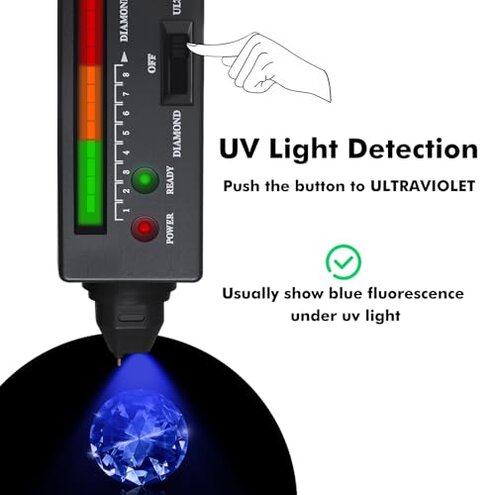
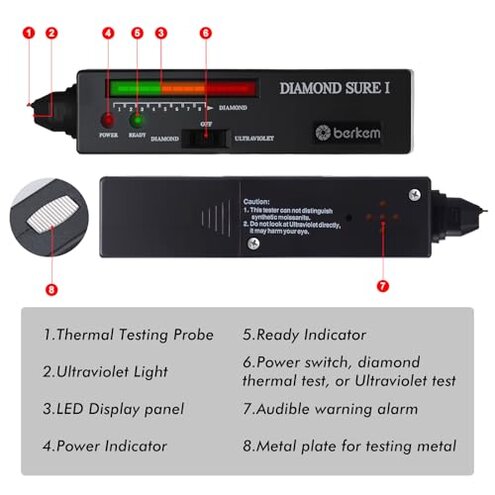
- Early sign: The built-in 365nm UV lamp sometimes shows fluorescence that confuses buyers.
- Pattern note: This is a secondary pattern seen across demos where users expect a clear pass/fail signal.
- When it shows up: It matters when stones have faint fluorescence or are treated, and during low-light checks.
- Cause: Fluorescence alone does not confirm authenticity and can be misread without gemology context.
- Impact: Relying on UV increases false reassurance for novice buyers.
- Workaround: Use UV as a clue only and combine with thermal test results for a fuller picture.
- Category contrast: This device gives less guidance than some alternatives that bundle clearer interpretation instructions.
Will it survive regular use and battery swaps?
- Early sign: Reports show battery and durability concerns after repeated testing cycles.
- Pattern level: This is an edge-case issue but persistent for frequent users and resellers.
- When it worsens: Problems appear after heavy daily use or when batteries are replaced often.
- Hidden requirement: The listing notes battery replacement availability in the U.S., which matters for international buyers.
- Cause: Lightweight, compact design sacrifices some robustness versus field-grade testers.
- Impact: Replacement or downtime is more disruptive for resellers than casual users.
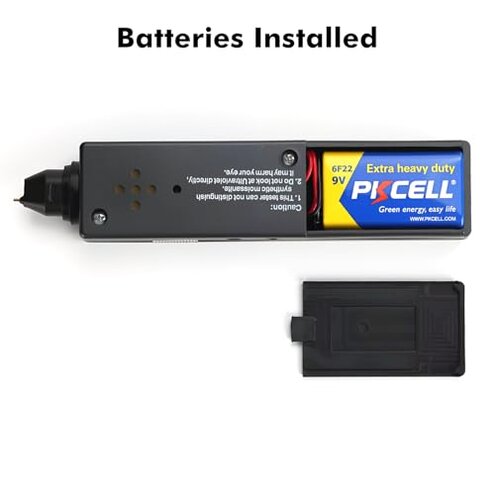
- Fix attempts: Carrying spare batteries and a case reduces downtime but adds ongoing cost.
- Category contrast: This is more upkeep than most mid-range testers that last longer between service or swaps.
Illustrative excerpts
Excerpt: "Device flashed real on a CZ and missed my small diamond twice." — illustrative; primary pattern.
Excerpt: "Needed bare skin and warm room or it misread every time." — illustrative; secondary pattern.
Excerpt: "UV made a fake look suspiciously real without other proof." — illustrative; secondary pattern.
Excerpt: "Worked fine once, then battery quirks after heavy use." — illustrative; edge-case pattern.
Who should avoid this
- Resellers who test dozens daily should avoid it due to durability and battery limits that exceed normal hassle.
- Casual buyers who need quick, glove-friendly checks should avoid it because the warm-up and bare-finger rules add friction.
- Buyers of small stones under or near 0.02ct should avoid it because the accuracy drop increases buying risk.
Who this is actually good for
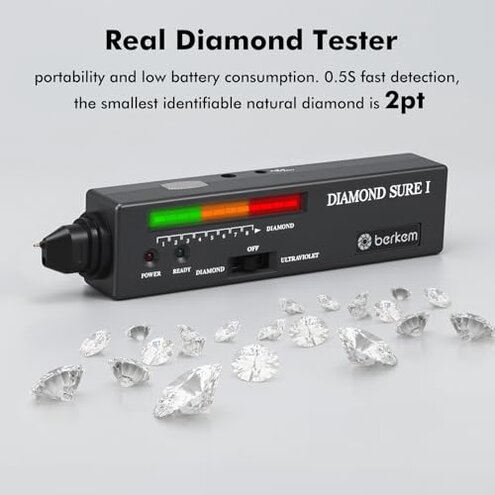
- Occasional owners who test a ring now and then and can follow the setup steps will tolerate the warm-up and get useful checks.
- Traveling buyers who want a compact pen and carry a case will accept extra retests in exchange for portability.
- Hobby collectors who understand fluorescence and combine tests manually can use the UV clue effectively.
Expectation vs reality
- Expectation: Reasonable for this category is quick, consistent reads for common stones.
- Reality: Valkynos often needs extra setup and retesting, making results slower and less reliable.
- Expectation: Built-in UV should add clear verification context.
- Reality: UV alone is ambiguous and can mislead novices without extra guidance.
Safer alternatives
- Choose testers with documented accuracy on sub-0.02ct stones to avoid the primary accuracy gap.
- Prefer units that tolerate gloves or shorter warm-up to neutralize the warm-up friction problem.
- Look for kits that include clearer UV interpretation guides to reduce false reassurance from fluorescence.
- Select sturdier models with user reports of long battery life to avoid repeated replacements and downtime.
The bottom line
Main regret: Inconsistent accuracy on small stones is the core risk that leads to costly buying mistakes.
Why worse: The device requires specific setup and maintenance that is more burdensome than most mid-range testers.
Verdict: Avoid this model if you need fast, dependable reads or plan heavy daily use; consider sturdier mid-range alternatives.
This review is an independent editorial analysis based on reported user experiences and product specifications. NegReview.com does not sell products.