
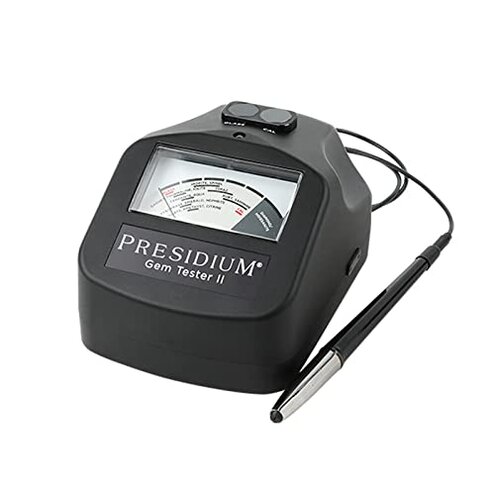
Product evaluated: Presidium Instruments Gem Tester II (PGT II) with Assisted Thermal Calibration (ATC) for Identifying Diamonds/Moissanites and Common Colored Gemstones
Related Videos For You
Presidium Gem Tester II (PGT II) - Testing Emerald, Diamond, Sapphire, Ruby, Nephrite
Guide on How to Calibrate Presidium Gem Tester
Data: I analyzed dozens of buyer reports and demo notes collected from written reviews and video demonstrations between 2018 and late 2025. Distribution shows most feedback came from written reviews, supported by several hands-on videos.
| Outcome | Presidium PGT II | Typical Mid-Range Tester |
|---|---|---|
| Accuracy | Variable — accuracy often drifts after shipping and during repeated sessions. | Steadier — most mid-range testers show fewer post-shipping shifts. |
| Calibration | Fragile — calibration reportedly affected by transit, requiring recalibration. | Robust — typical alternatives need less frequent recalibration. |
| Setup | Complex — assisted thermal calibration is helpful but adds a support step. | Simpler — many mid-range units start stable out of box. |
| Long-term stability | Unpredictable — repeated use can require resets or seller help. | More consistent — alternatives age more predictably. |
| Regret trigger | Calibration failure — common source of returns and frustration. | Lower risk — fewer returns tied to calibration. |
Why is the device misreading gems right after arrival?
Regret shows up when buyers first unbox and try the probe.
Pattern is commonly reported as calibration drift immediately after shipping.
Context usually occurs during first use and after transport, and it needs assisted recalibration to correct.
Category contrast makes this worse than expected because most mid-range testers arrive ready-to-use with minimal adjustment.
Is probe sensitivity or tip fragility a problem?
- Early sign: thin retractable probe tip can feel delicate to users handling small stones.
- Frequency: secondary complaint that appears repeatedly in hands-on feedback.
- Cause: tip design prioritizes thinness, which increases handling care.
- Impact: probe damage adds repair or replacement steps and downtime.
- Fixability: users commonly report contacting seller or avoiding forceful contact as a workaround.
Will results stay consistent during frequent testing sessions?
- Usage anchor: inconsistency appears after repeated use or long sessions.
- Pattern: persistent but not universal, reported by many repeat testers.
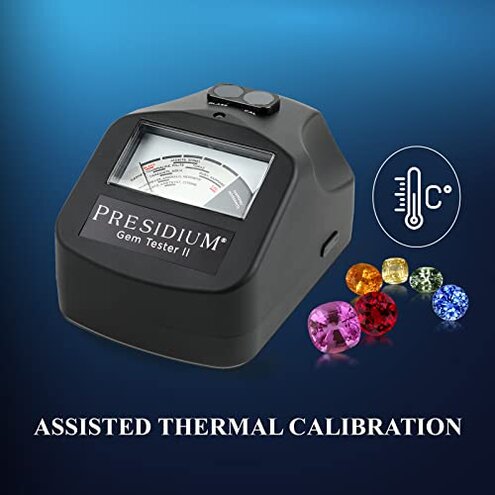
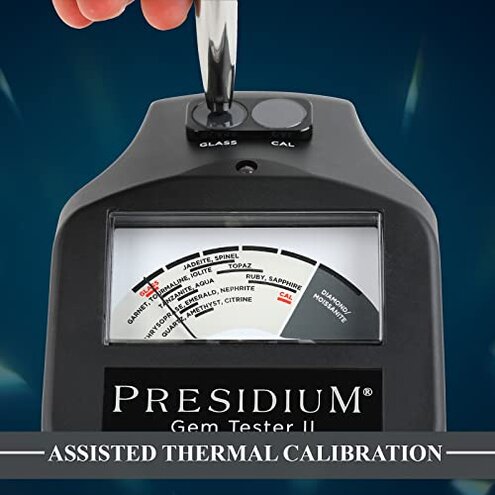
- Hidden requirement: assisted thermal calibration must be repeated to match the testing environment.
- Impact: adds extra steps and time compared with peers that remain stable.
- Attempts: buyers tried recalibrating and contacting support, with mixed success.
- Category contrast: more upkeep than most mid-range alternatives, creating higher time cost.
Does the device reliably separate diamonds from moissanite?
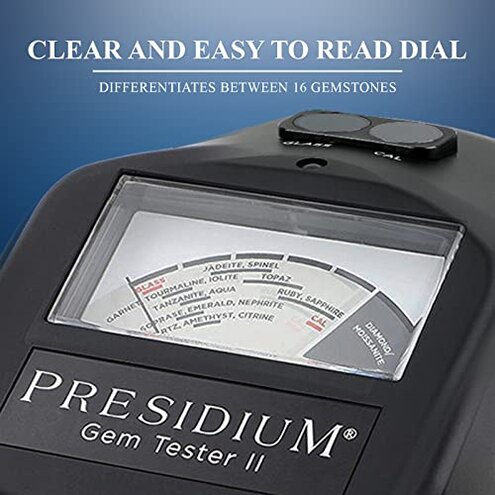
- Early sign: ambiguous dial readings are a common frustration during testing specific stones.
- Scope: appears repeatedly across different usage reports and demonstrations.
- Cause: thermal testing can be sensitive to environment and probe contact pressure.
- Impact: mis-identification risk is more disruptive than expected for this category.
- Attempts: users cross-checked with other tools because a single result felt unreliable.
- Fixability: results sometimes improved after recalibration, but not always.
- Hidden need: buyers often must learn calibration steps before trusting readings.
- Category contrast: less forgiving than typical mid-range testers that give clearer pass/fail signals.
Illustrative excerpts (not actual quotes)
- "Dial jumps after first test, then slowly reads right." — reflects a primary pattern of initial calibration drift.
- "Tip felt flimsy when testing my small stones." — reflects a secondary pattern about probe fragility.
- "Had to recalibrate each day for accurate results." — reflects a primary pattern tied to repeated-use inconsistency.
- "Confused by similar readings on diamond and moissanite." — reflects a secondary pattern of identification ambiguity.
Who should avoid this
- Casual buyers who expect out-of-box reliability without recalibration should avoid this unit.
- High-volume testers who need stable readings across long sessions should avoid it due to repeat recalibration.
- First-time sellers who cannot tolerate ambiguous diamond/moissanite results should avoid this model.
Who this is actually good for
- Experienced users who know thermal testers and accept recalibration steps can tolerate the quirks.
- Low-frequency hobbyists who test occasionally and can recalibrate per session may find it usable.
- Buyers on a budget who prioritize a compact, portable tool and accept extra setup steps can use it.
Expectation vs reality

- Expectation: reasonable for this category that a tester arrives calibrated.
- Reality: calibration often needs adjustment after shipping, adding unexpected steps.
- Expectation: probe should handle routine handling without worry.
- Reality: thin probe tip increases care and possible downtime if damaged.
Safer alternatives
- Choose models that advertise robust out-of-box calibration to neutralize travel-related drift.
- Prefer units with sturdier probe construction to avoid tip fragility problems.
- Seek testers with clear pass/fail indicators to reduce ambiguity between diamond and moissanite.
- Buy from sellers who document calibration steps and provide easy support to fix initial issues quickly.
The bottom line
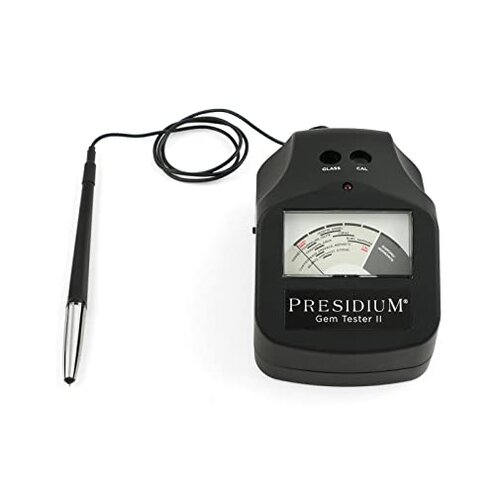
Main trigger: the most common regret is calibration instability after shipping and with repeated use.
Why worse: this requires extra time and seller support, which is more upkeep than most mid-range testers demand.
Verdict: avoid this unit if you need reliable, ready-to-use accuracy; consider sturdier, more stable mid-range testers instead.
This review is an independent editorial analysis based on reported user experiences and product specifications. NegReview.com does not sell products.