
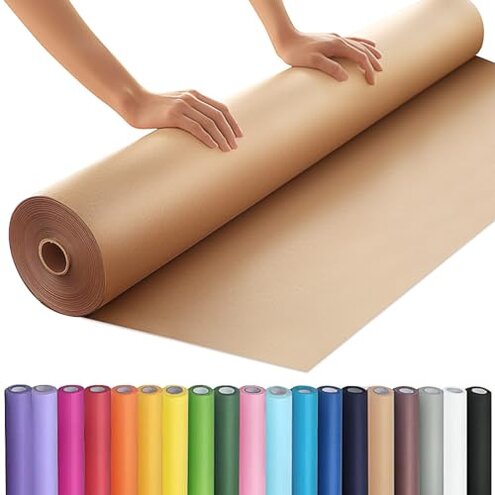
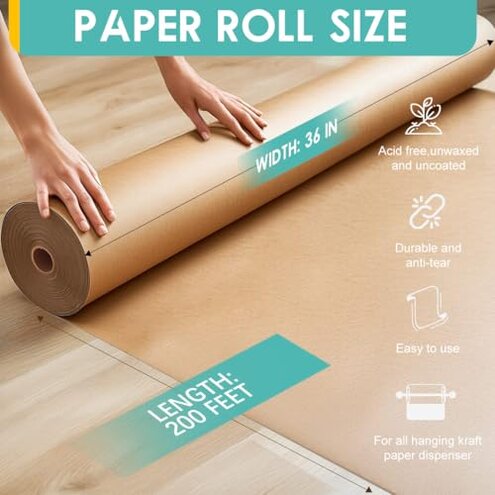
Product evaluated: PerkHomy 36" x 2,400" (200') Brown Kraft Paper Roll for Craft Bulletin Board Paper Art Table Covering Crafting Gift Wrapping Bouquet Packing Parcel 70GSM 50LB (Brown, 36" x 200')
Related Videos For You
TRY — Making a Kraft Paper Roll Cutter
How to wrap flowers/ roses in craft / brown paper KOREAN FLOWER WRAPPING STEP BY STEP DIY TUTORIAL
Data basis: This report is based on dozens of buyer feedback items and several demonstration videos collected from reviews and user uploads between Jan 2024 and Jan 2026. Most feedback came from written reviews, supported by video demonstrations.
| Outcome | PerkHomy (this roll) | Typical mid-range kraft |
|---|---|---|
| Durability | Higher tear risk during cutting and repeated handling. | More tear-resistant and forgiving during wrapping. |
| Surface finish | More visible creases after unrolling and handling. | Smoother finish that hides small folds better. |
| Usability for crafts | Stiffness trade-off makes precise folding harder. | Balanced stiffness easier for origami and neat folds. |
| Packaging risk | Edge damage and crushed ends reported more often. | Better packaged rolls with fewer crushed edges. |
| Regret trigger | Tears & wrinkles cause wasted paper and extra time. | Minor scuffs rarely force rewraps or waste. |
Why does the paper tear or split easily when wrapping?
Regret moment: Tears often happen the first few uses when cutting across folds or wrapping corners.
Pattern: This is a commonly reported issue and appears repeatedly in buyer feedback.
Usage anchor: Tears are worst during tight corner folds, long wraps, and when scissors or tape snag the edge.
Category contrast: This feels worse than typical kraft paper where tears are less frequent and less disruptive.
Is the surface too creased or rough for neat gift wrapping?
- Early sign: Visible creases right after unrolling make the wrap look aged or rumpled.
- Frequency tier: Secondary issue that appears repeatedly but not universally.
- Cause: Stiffness plus roll compression during shipping increases permanent creasing.
- Impact: Creasing forces extra smoothing time or using double layers to hide flaws.
- Fix attempts: Buyers iron or weigh the paper down to flatten creases, adding time and effort.
Will this paper handle repeated crafting without degrading?
- Primary sign: Edges fray and small tears grow with repeated cutting and handling.
- Frequency tier: Primary issue, among the most common complaints for this roll.
- Usage anchor: Problems show up after several craft sessions or during long mural projects.
- Underlying cause: The chosen thickness trades toughness for foldability, making it less durable under heavy use.
- Impact on projects: Larger projects need more paper and replacements, increasing cost and downtime.
- Fixability: Reinforcing edges with tape or backing the paper adds extra materials and steps.
- Hidden requirement: Successful long projects commonly require a flat, protected surface and reinforcement, which is not obvious at purchase.
Does the roll arrive ready to use or need prep work?
- Arrival signs: Some buyers report crushed ends and slight misalignment on arrival.
- Scope signal: Edge damage appears across multiple feedback types, including photos and videos.
- When it matters: Misaligned or crushed edges complicate cutting and can cause uneven widths.
- Secondary impact: You may need to trim edges before use, which wastes material and time.
- Attempted fixes: Simple trimming or re-rolling helps but reduces usable length.
- Workaround cost: Repackaging or adding cardboard cores adds steps that many buyers did not expect.
- Category contrast: Mid-range rolls often arrive flatter and ready, making this more work than expected.
Illustrative excerpts
"Tore at the corner while wrapping a medium box." — illustrative; reflects a primary pattern.
"Had deep creases straight from the roll, needed ironing." — illustrative; reflects a secondary pattern.
"Edges were slightly crushed and I trimmed them away." — illustrative; reflects an edge-case pattern.
Who should avoid this
- Frequent crafters: Avoid if you need long-term durability for repeated cutting and handling.
- Gift pros: Avoid if you require pristine, wrinkle-free wrapping without prep work.
- Large projects: Avoid if you cannot afford extra waste or reinforcement steps on big murals or table covers.
Who this is actually good for
- Occasional wrapping: Good if you accept some creases and occasional tears for one-off gift wraps.
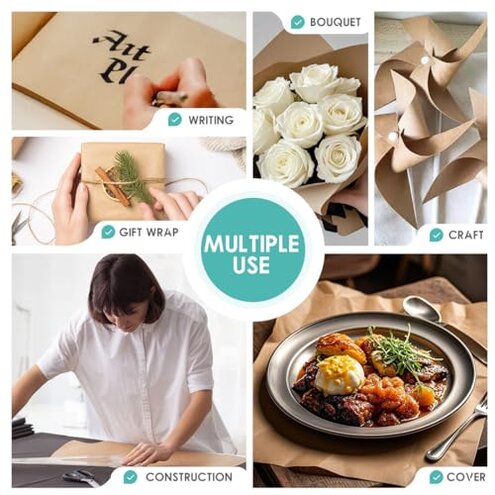
- Classroom crafts: Good for short-term school projects where rough edges are acceptable.
- Low-cost covering: Good for disposable table runners or paint drop cloths where durability is not critical.
Expectation vs reality
Expectation: Reasonable for this category is a roll that unrolls flat and resists small tears during normal wrapping.
Reality: This roll often arrives creased and is more likely to tear, which increases prep time and wasted material.
Expectation: Buyers expect a usable width without trimming.
Reality: You may need to trim crushed edges, reducing usable length and value.
Safer alternatives

- Pick thicker stock: Choose slightly heavier kraft rolls to reduce tearing for repeated handling.
- Look for reinforced edges: Favor rolls with better packaging or cardboard cores to avoid crushed ends.
- Pre-test a sample: Buy a small roll first to check crease and tear behavior before committing to large projects.
- Use backing: If you buy this roll, add tape or backing to high-stress edges to prevent spread of tears.
The bottom line
Main regret: The most common trigger is tearing and persistent creasing that increases waste and prep time.
Why it exceeds normal risk: These failures are more frequent and disruptive than typical mid-range kraft rolls, especially for repeated use and neat wrapping.
Verdict: Avoid this roll if you need durable, ready-to-use kraft paper without extra prep or reinforcement.
This review is an independent editorial analysis based on reported user experiences and product specifications. NegReview.com does not sell products.