
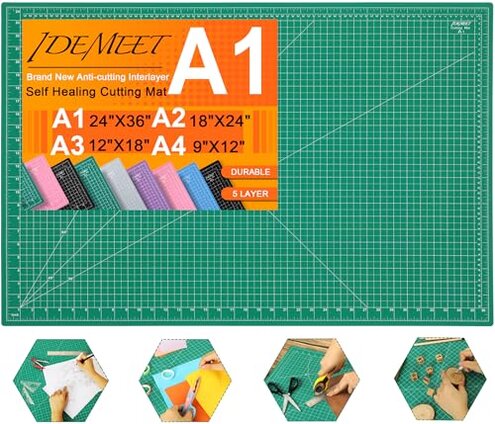
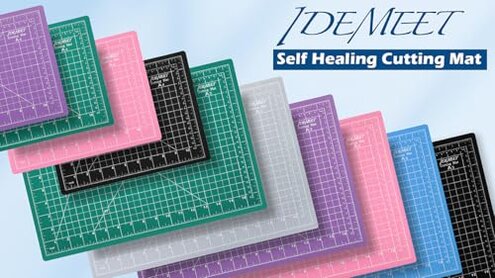
Product evaluated: Density-upgraded 24" x 36" Large Self Healing Sewing Mat, Idemeet Rotary Cutting Mat 5-Ply Cut Board for Crafts Hobby Project, Scale Size 24" x 36", A1, Green
Related Videos For You
🧰 SELF HEALING CUTTING MATS - How to clean and other tips - What you need to know
Data basis: This report aggregates dozens of written reviews and video demonstrations collected between Jan 2023 and Jan 2026, with most feedback from written reviews supported by hands-on clips and Q&A posts.
Comparative risk snapshot
| Outcome | Idemeet 24" x 36" | Typical mid-range mat |
|---|---|---|
| Self-healing longevity | Shorter-lived: grooves appear after repeated cutting, commonly reported as faster wear. | More durable: mid-range alternatives hold a smooth surface longer under similar use. |
| Warping / edges | Higher risk: curling and edge lift seen after weeks in typical home storage conditions. | Lower risk: average mats resist curl with normal flat storage. |
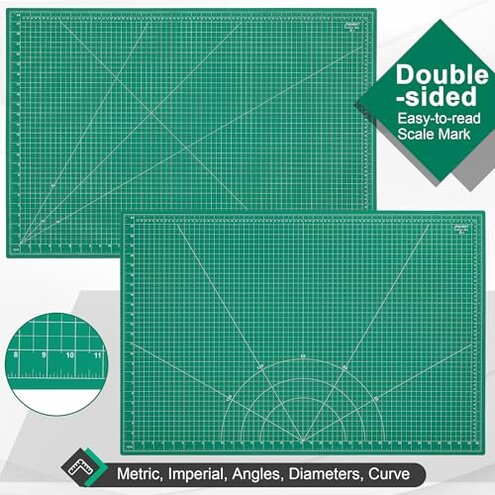
| Printed scale durability | Fades sooner: grid lines reported to wear with cleaning and long sessions. | More resistant: mid-range prints usually tolerate routine cleaning better. |
| Thickness / buffering | Inconsistent feel: some buyers report soft spots under heavy rotary use. | More consistent: category peers provide steadier backing for blades. |
| Regret trigger | High: visible cuts, curl, or faded grids create functional regret during frequent crafting. | Moderate: mid-range mats rarely force early replacement for similar hobby use. |
Top failures
Does the mat stop looking usable after a few weeks?
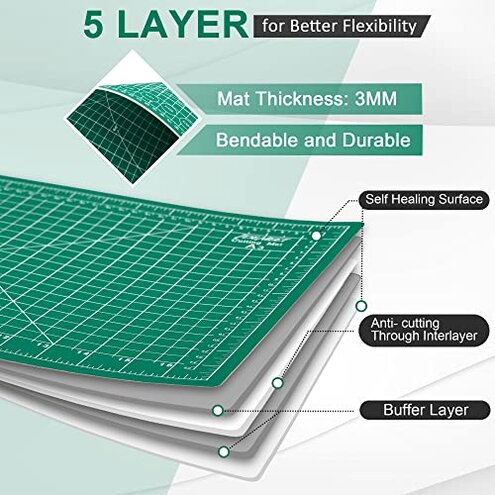
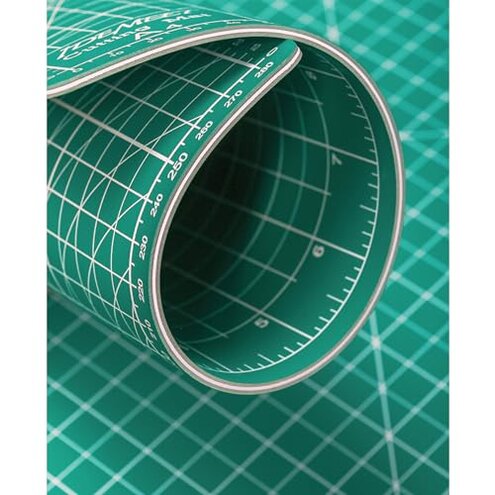
Primary pain: Many buyers report the self-healing surface develops visible grooves and tracking after repeated cutting sessions.
When it appears: This complaint typically shows up after setup and several weeks of routine rotary or straight-blade use, especially with long cutting sessions.
Why worse than normal: Self-healing wear is expected, but the speed of wear here is more disruptive than typical mid-range mats and leads to earlier replacement.
Does the mat curl or warp in household storage?
- Early sign: edges lifting after unrolling for the first few uses is a commonly reported symptom.
- Frequency tier: This is a primary issue for many users, not just an edge case.
- Usage anchor: Warping often gets worse when left upright or stored bent, not when stored flat.
- Cause clue: Buyers link curl to humidity and thin packing during shipping.
- Impact: Lifted edges catch rotary cutters and make straight-line cuts harder to keep steady.
Do the printed grids fade or scratch off quickly?
- Label: print wear Grid and metric markings are reported to fade with routine cleaning and repeated strokes.
- Pattern: This is a secondary issue that appears persistently across feedback types.
- When: Fading usually shows after weeks of use or repeated solvent cleaning attempts.
- Why worse: Mid-range mats often keep legible lines longer, so losing guides here adds time and errors for cutting projects.
- Attempted fixes: Buyers tried gentle cleaning and avoiding solvents, with limited improvement.
- Hidden need: Some users must rely on external rulers sooner than expected because the printed guide becomes unreliable.
- Fixability: Reversing the mat helps briefly, but fading returns under continued use.
Does the claimed thickness actually protect your work surface?
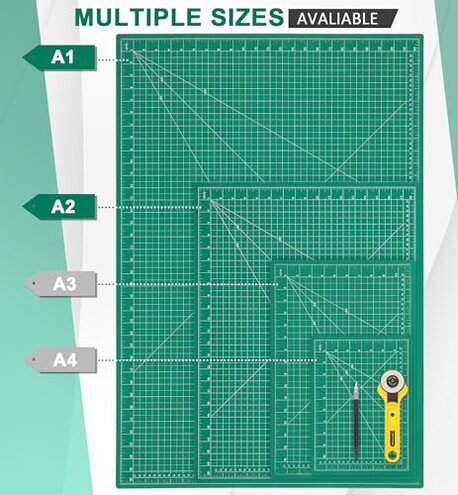
- Claim vs reality: The product markets upgraded density, yet some buyers report blade penetration or feel-through on heavy cuts.
- Scope: This is a secondary but actionable issue for users who cut daily or press hard with rotary blades.
- When it shows up: Problems surface during long sessions, with thicker materials, or when using a new sharp blade.
- Impact: Users notice nicked desks or the need for extra backing boards, adding time and cost.
- Category contrast: More reliable mid-range mats let serious hobbyists cut without an extra underlayer.
- Attempted workaround: Many buyers stack mats or add plywood underneath as a hidden requirement.
- Long-term effect: Extra backing reduces convenience and makes the mat less portable for workshops or classes.
Illustrative excerpts
Illustrative: "Surface shows grooves after a month of weekly quilting cuts." — primary pattern
Illustrative: "Edges curled after being stored upright for two weeks." — primary pattern
Illustrative: "Grid lines faded after cleaning with a damp cloth." — secondary pattern
Illustrative: "Needed plywood under it for deep rotary cuts." — secondary pattern
Who should avoid this
- Daily cutters: Buyers who cut every day should avoid it because self-healing degrades faster than mid-range mats.
- Precision quilters: Anyone relying on crisp grid lines should avoid it because the printed scale may fade with normal cleaning.
- Mobile makers: Crafters who transport the mat often should avoid it because the curl risk increases with rolled or upright storage.
Who this is actually good for
- Casual hobbyists: Occasional crafters who cut lightly and infrequently can tolerate faster wear because upfront cost is low.
- Budget shoppers: Buyers prioritizing low price over long lifespan may accept earlier replacement as an acceptable trade-off.
- Short projects: Users who need a large mat for a one-off project can use it and accept fading or curl afterwards.
Expectation vs reality
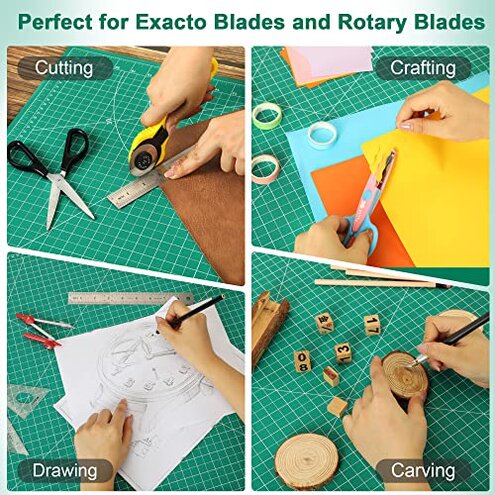
Expectation: Reasonable for this category is that self-healing reduces visible grooves for many months.
Reality: The mat often shows visible grooves and tracking after weeks, forcing earlier replacement.
Expectation: Reasonable is that grid printing survives routine cleaning.
Reality: The printed scale can fade with normal use, reducing cutting accuracy over time.
Safer alternatives
- Choose thicker mats: Look for mats explicitly rated for heavy rotary use to avoid blade penetration and the need for extra backing.
- Prefer double-sided prints: Buy mats with durable UV-coated grids or reversible layouts to extend usable life before prints fade.
- Check storage guidance: Select mats that vendors recommend storing flat, and avoid rolled shipping to reduce curl risk.
- Seek longer warranty: Consider brands that offer clear durability guarantees so you can return failing mats without hassle.
The bottom line
Main regret: The most common trigger is faster-than-expected surface wear and curling, which reduces cutting accuracy and convenience.
Why it matters: These faults are more disruptive than typical mid-range mats because they force extra steps like backing boards or earlier replacement.
Verdict: Avoid this mat if you cut frequently, need lasting grid accuracy, or want a worry-free portable solution.
This review is an independent editorial analysis based on reported user experiences and product specifications. NegReview.com does not sell products.