

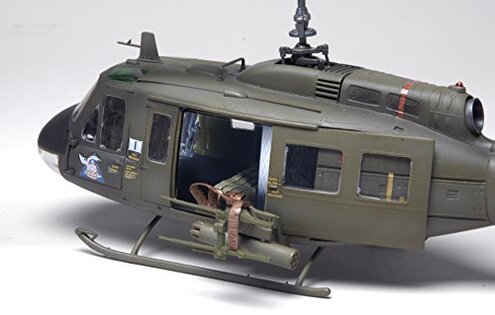
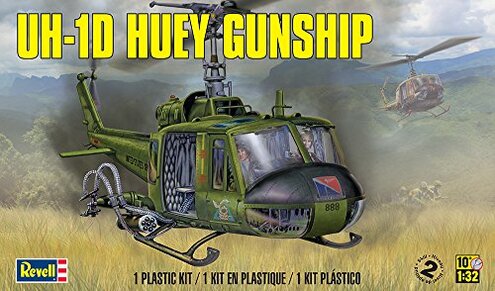
Product evaluated: Revell UH-1D Huey Gunship Model Kit
Related Videos For You
HobbyZone: My New Workbench Setup
The Ultimate Gunpla Beginner's Guide
Data basis: This report uses feedback from dozens of written buyer reviews and several video demonstrations, collected between 2017 and 2024. Most feedback came from written reviews, supported by video demonstrations that showed build steps and final results.
| Outcome | Revell UH-1D Huey | Typical mid-range kit |
|---|---|---|
| Build fit | Poor — parts often need sanding and gap-filling, a higher-than-normal category risk. | Average — most mid-range kits require light clean-up but fit together without major gaps. |
| Instructions | Unclear — steps and decal placement are commonly reported as confusing. | Clearer — competitors usually offer clearer step sequences and callouts. |
| Parts completeness | Inconsistent — missing or fragile small pieces appear repeatedly in feedback. | Reliable — mid-range kits more often include all small details intact. |
| Finish effort | High — decals and painting require extra work to look correct. | Moderate — typical kits need paint but have fewer decal headaches. |
| Regret trigger | Time & rework — assembly delays and extra tools often cause buyer regret. | Lower — fewer unexpected repairs mean smoother builds for the same price. |
Why does assembly feel like a chore?
Regret moment: Many buyers report that the model requires extra trimming and filler during the first assembly attempt. Severity is moderate to high because this adds hours to a build that should be straightforward.
Pattern: This recurs across multiple reports and appears repeatedly during initial construction steps. Usage anchor: Problem shows up when dry-fitting the fuselage halves and attaching the rotor mast.
Category contrast: This is worse than typical mid-range kits because most alternatives need only light clean-up, while this model often needs gap-filling and sanding.
Are the instructions and decals usable?
- Early sign — instruction diagrams have small callouts that buyers commonly call confusing.
- Frequency tier — this is a primary issue for many builders and appears across written and video feedback.
- Cause — decal placement information is often minimal, increasing the chance of misalignment.
- Impact — unclear steps force builders to pause and research, slowing the build time considerably.
Will I find missing or fragile pieces?
- Primary pattern — reports of missing or broken small parts are commonly reported and not isolated.
- When — issues usually appear during parts removal from sprues or first dry-fit attempts.
- Why — small delicate pieces have thin attachment points and can snap during cleanup.
- Impact level — this is often more disruptive than expected, because replacements require scratch work or aftermarket parts.
- Attempts — buyers often source spare sprues or fabricate replacements, adding time and cost.
- Fixability — repair is possible, but it raises the skill and tool requirement beyond typical mid-range builds.
Do I need extra tools and supplies I might not expect?
- Hidden requirement — paint and glue are not included, and many buyers report needing primer, filler, and fine sanding tools.
- Early sign — poor panel lines and decal fit become obvious after a first test-fit and require extra finishes.
- Frequency — this is a secondary issue but important because it multiplies overall effort.
- Impact — lack of supplies turns an afternoon build into multiple sessions over days.
- Cost — acquiring recommended hobby tools raises the total cost beyond the kit price.
- When it worsens — longer painting sessions and multiple decals magnify the need for better tools.
- Workaround — experienced modelers can salvage results, but beginners face a steeper learning curve.
Illustrative buyer phrasing (not real quotes)
Illustrative: "Built slowly because parts didn't line up and needed filling everywhere." — primary
Illustrative: "Decal guide was tiny; I guessed placement and it looked off." — primary
Illustrative: "A rotor blade snapped removing from the sprue, had to fabricate a replacement." — secondary
Illustrative: "I had to buy primer and putty; the kit box didn't warn me." — secondary
Who should avoid this
- Beginners — avoid if you need a straightforward kit without extra sanding, filling, or research.
- Quick-build shoppers — avoid if you expect an out-of-the-box weekend assembly with clean fit.
- Casual gift buyers — avoid if the recipient lacks hobby tools, as extra supplies are commonly required.
Who this is actually good for
- Experienced modelers — accept fit and instruction flaws because you can correct gaps and improve finishes.
- Customizers — good if you enjoy heavy finishing, as the kit accepts modification despite extra prep.
- Budget hobbyists — okay if you want a low-cost base and expect to invest time and aftermarket parts.
Expectation vs reality
- Expectation — reasonable for this category: mid-range kits require light cleanup and clear instructions.
- Reality — this model often needs significant gap-filling and instruction interpretation, which slows builds.
- Expectation — decals should apply with basic skill.
- Reality — decal placement is less precise, requiring patience or practice to avoid visible flaws.
Safer alternatives
- Look for kits with tested fit — choose brands/models noted for tighter part tolerances to avoid gap-filling.
- Prefer clear manuals — pick kits that advertise step-by-step numbered callouts and decal maps to reduce guessing.
- Buy tool kits — select kits sold with recommended paint and glue or buy a basic hobby starter set to neutralize hidden requirements.
- Check spare parts policy — favor sellers who offer replacement sprues or parts to avoid long repairs.
The bottom line
Main regret: The kit's most common trigger is poor part fit combined with unclear instructions, which adds significant rework time.
Why worse: These issues are more disruptive than typical mid-range kits because they require extra tools, filler, and often fabricated replacements.
Verdict: Avoid this kit if you want a clean, quick build; consider it only if you accept extra work or have advanced modeling skills.
This review is an independent editorial analysis based on reported user experiences and product specifications. NegReview.com does not sell products.