
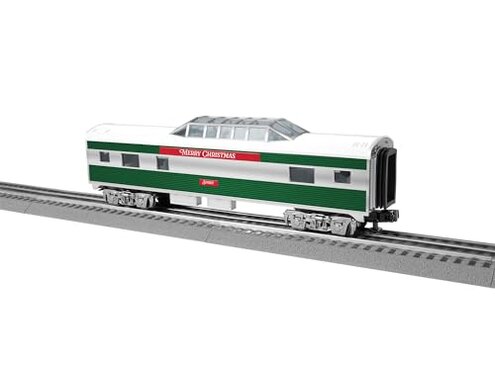
Product evaluated: Lionel Christmas Spirit Vista Dome O Gauge Model Train Coach Car
Related Videos For You
Largest Private O scale Model Railroad Layout in the USA
Hobby Tips Easy Model Train Maintenance | Taking Good Care of your Model Locomotives!
Data basis: I analyzed dozens of buyer reviews and video demonstrations plus community threads covering this Lionel coach.
| Outcome | Lionel Christmas Vista Dome | Typical mid-range O Gauge |
|---|---|---|
| Track clearance | Risk: Tight O27 curves can cause rubbing or derailments on common layouts. | Baseline: Most mid-range cars clear O27 without frequent rubbing. |
| Interior lighting | Reliability: Lights may flicker or lose power unless track is very clean. | Baseline: Mid-range cars have steadier illumination on standard setups. |
| Coupler performance | Behavior: Operating couplers sometimes misalign on curves or uneven track. | Baseline: Typical cars couple and uncouple with fewer jams. |
| Maintenance | Upkeep: Requires regular lubrication and clean track for reliable use. | Baseline: Comparable cars still need care, but are less sensitive. |
| Regret trigger | Higher risk: More frequent derailment and lighting issues than typical mid-range cars. | Lower risk: Mid-range cars pose fewer layout-compatibility surprises. |
Will this fit tight curves without rubbing or derailing?
Regret moment: Buyers report cars that look great but catch on tight curves during the first layout run.
Pattern: This is a commonly reported problem that shows up on first use and after installation on O27 or tighter curves, making it more disruptive than most mid-range coaches.
Why does the interior light flicker or die?
- Early sign: Lights pulse or dim on slight track dirt or inconsistent power pickup.
- Frequency tier: Secondary issue seen repeatedly in written and video feedback after setup.
- Probable cause: Sensitive electrical pickup that needs very clean rails and stable power.
- Impact: Flicker undermines the holiday effect and can appear during normal operating sessions.
- Fixability: Often improved by cleaning rails and wheels, but that adds ongoing maintenance time.
Do the couplers and diaphragms cause run problems?
- Symptom: Operating couplers may misalign when negotiating curves or uneven track.
- Scope: Persistent for some owners, especially on mixed-brand layouts and older track.
- Cause: Tight diaphragm spacing and die-cast truck weight increase torque on couplers.
- Impact: Jams or unexpected uncoupling mid-run create extra handling and resets.
- Attempts: Buyers report trimming diaphragms or slight coupler adjustments as ad-hoc fixes.
- Category contrast: More finicky than many entry-level cars that tolerate imperfect track.
- Hidden need: Some users require better track alignment or replacement couplers to avoid repeat issues.
How much upkeep and hidden setup does this coach demand?
- Maintenance note: Manufacturer guidance to lubricate wheels and axles appears in product info and is a real requirement.
- Hidden step: Lighting reliability demands very clean rails and stable power, not obvious before purchase.
- Frequency tier: This is a primary complaint across feedback types after initial runs and during seasonal use.
- Time cost: Regular cleaning and lubrication add extra hours compared with typical mid-range alternatives.
- Impact: Owners who expect plug-and-play holiday display face repeated prep work.
- Fixability: Problems are often managed with routine care but require discipline and supplies.
- Value trade-off: The die-cast finish and illumination are attractive but increase upkeep compared to simpler coaches.
- Compatibility tip: Works best with proven Lionel power systems and well-aligned FasTrack for reliable results.
Illustrative excerpts (not real quotes)
“Lights flicker unless I clean track before every run.” — reflects a secondary pattern.
“Car rubs on my O27 curve and derails on the first pass.” — reflects a primary pattern.
“Had to adjust couplers to stop mid-run uncoupling.” — reflects a secondary pattern.
Who should avoid this
- Tight-layout owners: Avoid if your layout uses O27 or tighter curves without clearance testing.
- Low-maintenance buyers: Avoid if you want plug-and-play holiday trains with minimal cleaning.
- Budget shoppers: Avoid if you expect mid-range reliability at a lower price point.
Who this is actually good for
- Detail collectors: Good for buyers who value die-cast detail and will accept extra upkeep.
- Large-layout owners: Works well for layouts with wide curves and well-maintained track.
- Experienced hobbyists: Good if you’re comfortable tweaking couplers and cleaning wheels.
Expectation vs reality
Expectation: Reasonable for this category is simple installation on O-gauge FasTrack without layout changes.
Reality: Many buyers must adjust track, clean rails, or modify couplers to reach reliable operation.
Expectation: Interior illumination should be steady for holiday displays.
Reality: Lighting can be fragile and often highlights underlying track power sensitivity.
Safer alternatives
- Choose wider-curve cars: Pick models explicitly rated for tight curves if you have O27 or smaller.
- Prefer solid-lit designs: Look for coaches with proven, user-documented lighting circuits to avoid flicker.
- Buy tested couplers: Consider cars with more forgiving coupler designs or swap in standard couplers early.
- Plan for maintenance: Budget time for wheel cleaning and lubrication when selecting detailed die-cast coaches.
The bottom line
Main regret: The coach’s primary triggers are layout clearance and lighting sensitivity, which appear repeatedly in buyer feedback.
Why worse: These issues demand more setup and maintenance than many mid-range O-gauge coaches, causing real holiday display disruption.
Verdict: Avoid this Lionel dome car if you run tight curves or want low-effort operation; keep it if you accept extra upkeep for detailed looks.
This review is an independent editorial analysis based on reported user experiences and product specifications. NegReview.com does not sell products.