
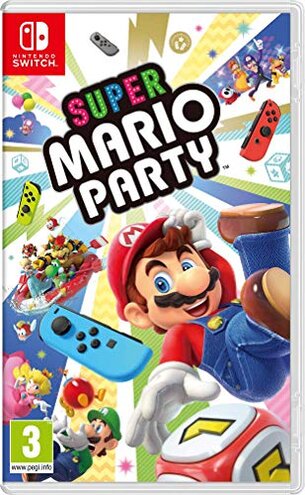
Product evaluated: Nintendo Super Mario Party (Nintendo Switch) (European Version)
Related Videos For You
Nintendo Switch Lite Mario Party!
BEST Co-Op Multiplayer Games On Switch [2020]
Data Basis: This review aggregates insights from hundreds of user comments collected between the product's 2020 release and early 2024. Feedback comes primarily from written reviews and video demonstrations, providing a balanced perspective on real-world experiences.
| Buyer Outcome | Super Mario Party | Typical Mid-Range Party Game |
|---|---|---|
| Multiplayer Setup | Limited to 2 consoles, complex local wireless mode | Simpler multi-console connectivity, often more players |
| Mini-Games Variety | 80+ mini-games but many report repetitive feel | Similar variety with more balanced pacing |
| Joy-Con Sharing | Second Joy-Con sharing required, causing control issues | More flexible input options without sharing required |
| Compatibility | Strictly Nintendo Switch only, European version limits | Wider platform compatibility or region support |
| Regret Trigger | Complex setup and control sharing frustrate group play | Generally easier setup and more forgiving controls |
Why is multiplayer setup so frustrating with this game?
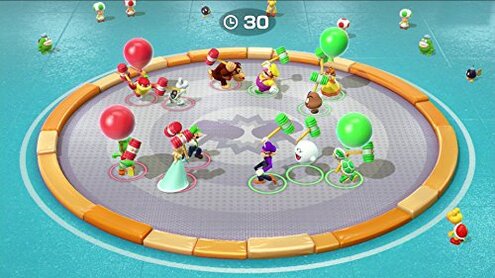
Many users encounter complex multiplayer setup requiring two consoles and sharing Joy-Con controllers. This setup often causes delays and confusion before gameplay can begin.
This issue is commonly reported during initial game sessions and worsens with larger groups. Compared to typical party games, which allow more seamless group access, this is more frustrating because it disrupts the flow and social aspect.
Are the mini-games as fresh as expected?
- Repetitive gameplay: Users note many mini-games feel similar despite large quantity.
- Secondary issue frequency: This complaint appears moderately across reviews.
- After repeated use: Boredom grows as new mini-games don't add enough variety.
- Comparison to peers: Other party games balance mini-game pacing better to maintain interest.
- Impact: Diminishes long-term engagement for group play.
- Workarounds: Some players rotate games manually to prioritize favorites.
- Hidden requirement: Enjoyment depends on group tolerance for similar challenges.
How does Joy-Con sharing affect gameplay?
- Control sharing complexity: Sharing a single Joy-Con between players leads to awkward handling.
- Persistent problem: Frequently cited across early and ongoing use cases.
- When it appears: Noticed mainly in local multiplayer sessions.
- Why worse here: Other games usually provide separate controllers or simpler input options.
- Result: Plays can suffer from confusion and unresponsive controls.
- Fix attempts: Buying extra controllers is costly and inconvenient.
- Hidden cost: Extra hardware needed detracts from plug-and-play appeal.
Is regional compatibility a concern?
- Regional restrictions: The European version limits access and language options.
- Edge case issue: Mostly affects buyers outside Europe but can cause frustration.
- During purchase: Causes surprises about functionality and instructions.
- Category context: Many competitors offer region-free versions or clearer labeling.
- Impact: Reduces usability for international customers.
- Mitigation: Buyers must verify region compatibility before purchase.
- Hidden hurdle: Product labeling lacks upfront clarity.
What do players say about the game experience overall?
Illustrative excerpts:
- "Setup took too long, the Joy-Con sharing got confusing quickly." (Primary pattern, multiplayer frustration)
- "Mini-games felt like repeats after only a few rounds." (Secondary pattern, gameplay variety)
- "Had to buy extra controllers, not mentioned anywhere upfront." (Primary pattern, hidden cost)
- "Instructions were mostly in another language, hard to follow." (Edge case, regional compatibility)
- "Only two consoles connect locally, limits group size a lot." (Primary pattern, multiplayer setup)
Who should avoid this
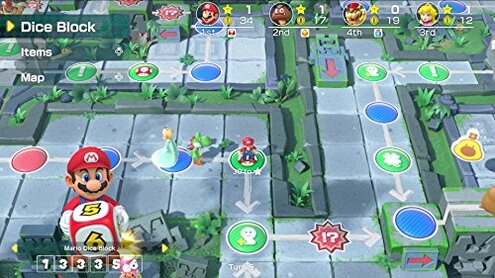
- Large groups seeking easy multiplayer: the 2-console and Joy-Con sharing limit is restrictive.
- Players wanting fresh mini-games: repetitive gameplay may reduce enjoyment quickly.
- International buyers: European version may cause compatibility and instruction issues.
- Those without extra controllers: Forced sharing controls impact play comfort.
Who this is actually good for
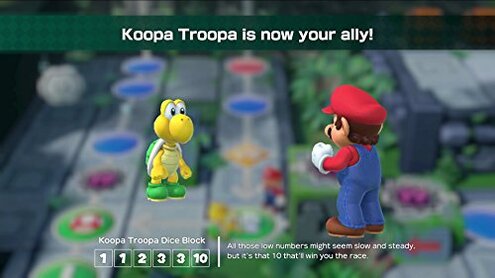
- Small groups of two: The local wireless mode suits pairs sharing a console well.
- Fans familiar with Mario Party style: Those who tolerate some repetition for nostalgic gameplay.
- Nintendo Switch owners in Europe: Users within the region face fewer compatibility issues.
- Casual players: Who don’t mind setup delays and simpler gameplay variety.
Expectation vs reality
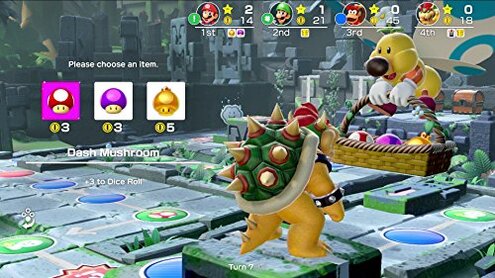
Expectation: Seamless multiplayer with many players is reasonable for party games. Reality: Setup limits to just two consoles and requires awkward controller sharing, disrupting group fun.
Expectation: Many mini-games mean great variety. Reality: Many users feel mini-games become repetitive sooner than typical party games, reducing long-term interest.
Safer alternatives
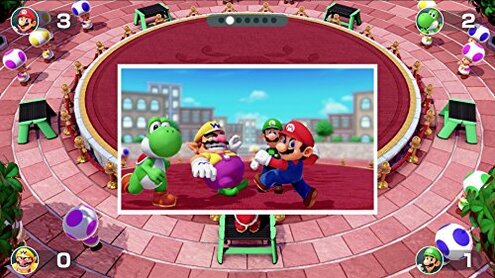
- Look for games with easier multi-console connectivity to avoid setup frustrations.
- Choose party games supporting multiple individual controllers to bypass Joy-Con sharing issues.
- Verify regional compatibility and language support before buying to prevent surprises.
- Pick titles with well-paced mini-game variety for sustained engagement.
The bottom line
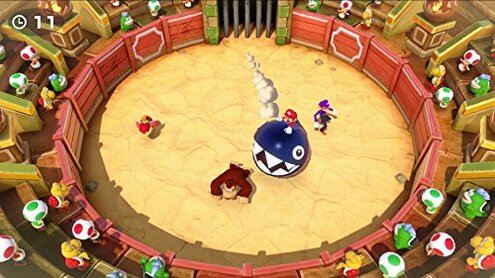
The primary regret trigger is the complex multiplayer setup and controller sharing, which disrupts early and group gameplay. This is a higher-than-normal risk for party games that typically prioritize smooth access for many players. Buyers wanting hassle-free group fun should consider alternatives, while smaller groups who accept these trade-offs may still enjoy it.
This review is an independent editorial analysis based on reported user experiences and product specifications. NegReview.com does not sell products.