
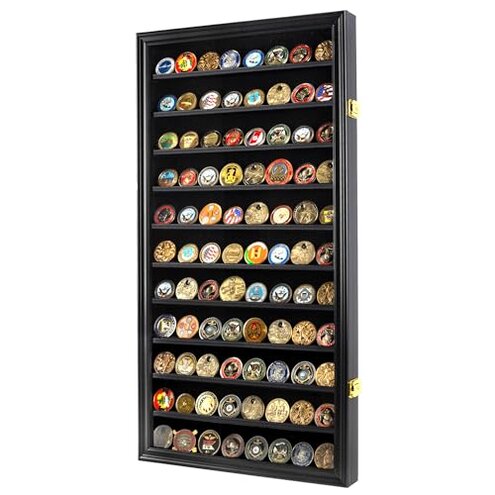
Product evaluated: DisplayGifts Military Challenge Coin Display Case Poker Chips Holder Wall Cabinet Showcase Rack Black Finish 29" H X 16" W Compatible with Army Navy Air Force Marine Corps Challenge Coins
Related Videos For You
Challenge Coin Holder
Wall Mounted Coin Display (Jon's DIY)
Data basis: This report summarizes dozens of buyer feedback points collected from written comments and photo or video demonstrations during the recent listing period. Most input came from written experiences, with supporting visual feedback used to confirm setup problems, size-fit complaints, and day-to-day display frustrations.
| Buyer outcome | This case | Typical mid-range alternative |
|---|---|---|
| Coin fit flexibility | Less forgiving when coin sizes or thicknesses vary across rows. | Usually easier to mix similar collectibles without as much sorting. |
| Setup effort | Extra planning is often needed before arranging a collection. | Lower effort setup is more common in this category. |
| Daily viewing | Can look uneven after setup if coins are not closely matched. | More consistent presentation is typical. |
| Capacity reality | Conditional capacity depends heavily on coin size and thickness. | Closer to stated capacity is more common for standard items. |
| Regret trigger | Buying for mixed collections and discovering the layout needs more compromise than expected. | Usually fewer surprises if your collection is moderately varied. |
Will your coins sit unevenly once it is on the wall?
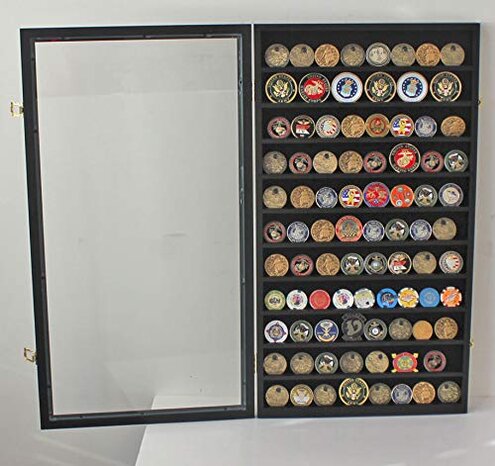
This is a primary issue. The regret usually shows up during setup, when buyers start placing coins and notice rows do not present a clean, matching angle unless thickness is similar.
The pattern appears repeatedly. That is more disruptive than expected for this category, because a display case should reduce fuss, not create sorting work before it looks right.
Hidden requirement: You may need to group coins by matching thickness, not just diameter, to get a tidy look.
Category contrast: Some display cases are naturally size-sensitive, but this one seems less forgiving than typical when collections are mixed.
Are you expecting the stated capacity to work without compromise?
- Pattern: This is a primary issue, because capacity limits become noticeable on first arrangement with non-standard coins.
- When it hits: The problem shows up after setup begins, especially when buyers try larger coins, thicker coins, or mixed challenge coin styles.
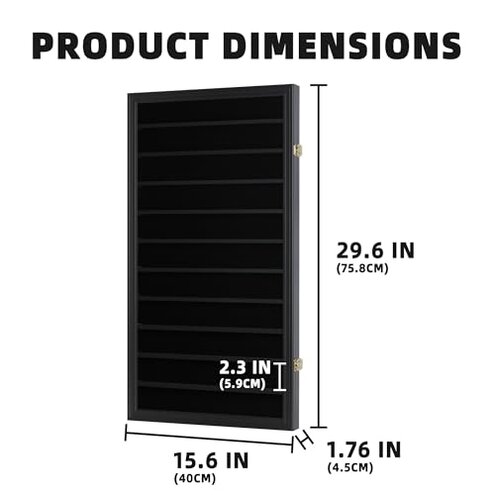
- Why it happens: The product itself says capacity can shift up or down depending on coin size.
- Buyer impact: That means a collection that seems like it should fit may need re-spacing or fewer coins per row.
- Worsening condition: It gets more frustrating when the collection includes different diameters instead of mostly standard coins.
- Category contrast: Variable capacity is normal, but this feels more restrictive than expected because the shelf layout needs more planning than many mid-range cases.
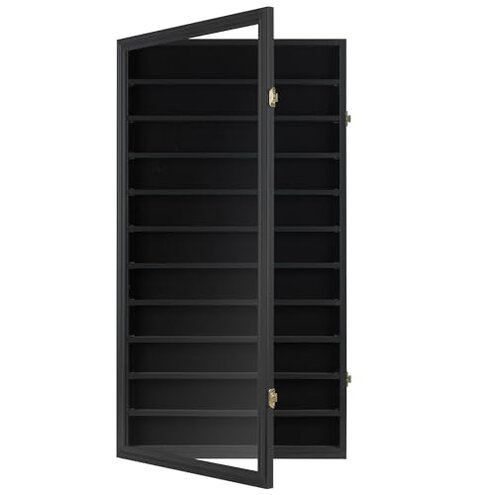
- Fixability: You can remove shelves for larger pieces, but that also creates a trade-off by reducing total display space.
Could the shelf groove design be more awkward than it sounds?
- Pattern: This is a secondary issue that shows up during daily viewing after buyers expect a more locked-in display angle.
- What buyers notice: The groove is for bottom grip, not for inserting coins upright in a firm slot.
- Early sign: Coins may lean differently across the same row if thickness varies.
- Why that matters: The result can look less neat than product photos suggest for collectors who want uniform presentation.
- Worsening condition: It becomes more obvious when rows hold coins from different units or eras with uneven profiles.
- Comparison point: Groove-based displays are common, but this one seems more appearance-sensitive than many alternatives because small thickness changes are easier to notice.
Will the “no assembly” benefit hide extra planning work?
- Pattern: This is a secondary issue, less frequent than fit complaints but still persistent among buyers expecting a quick hang-and-fill experience.
- When it appears: It starts on day one, once buyers realize no assembly does not mean no layout effort.
- Trade-off: The case arrives in one piece, but coin arrangement may still take extra trial and error.
- Hidden step: Buyers often need to pre-sort by size and thickness before the case looks organized.
- Frustration level: That is more time-consuming than expected for a wall display that sounds ready to use.
- Category contrast: Mid-range alternatives often still require some placement adjustment, but this one appears less intuitive if your collection is not standardized.
- Who notices most: This bothers collectors who want to rearrange often, because repeated changes can mean repeated balancing and spacing decisions.
Illustrative excerpt: “I thought my coins would line up neatly, but every row looked different.” Primary pattern tied to mixed thickness and uneven presentation.
Illustrative excerpt: “It fits standard pieces better than my collection in real life.” Primary pattern tied to conditional capacity and size variation.
Illustrative excerpt: “Ready to hang, yes, but not ready to display fast.” Secondary pattern tied to sorting and layout effort.
Illustrative excerpt: “The groove holds them, but not in the clean angle I wanted.” Secondary pattern tied to presentation expectations.
Who should avoid this
- Avoid it if your collection has many mixed sizes, because fit and angle issues appear more often than with simpler displays.
- Avoid it if you want a uniform museum look, since uneven thickness can make rows look inconsistent during daily viewing.
- Avoid it if you plan to rearrange often, because repeated sorting adds more effort than typical mid-range alternatives.
- Avoid it if stated capacity is your main reason to buy, because real-world space is more conditional than the headline suggests.
Who this is actually good for
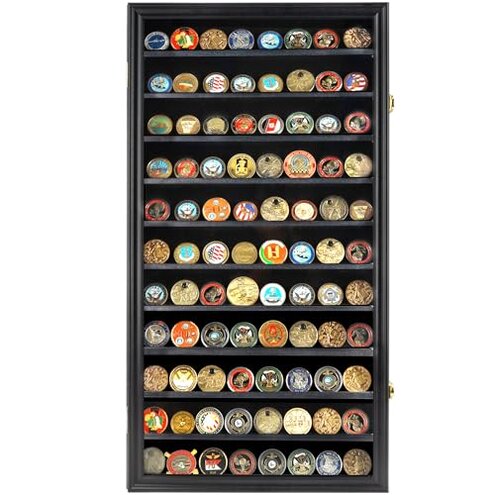
- Good fit for buyers with mostly standard 1.75-inch coins who can keep each row similar in thickness.
- Good fit for collectors who want a lockable wall case and can tolerate extra arrangement work once.
- Good fit for users who do not mind removing shelves to display a few larger pieces instead of maximizing count.
- Good fit for people who value dust protection more than perfect row uniformity.
Expectation vs reality
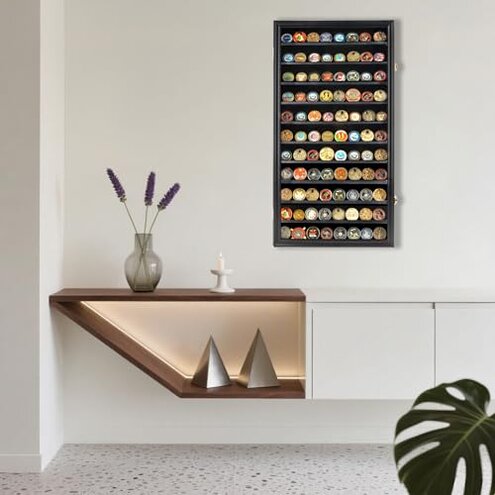
Expectation: A no-assembly case should be quick to fill after hanging.
Reality: Setup can still take extra time because coins may need thickness matching to look right.
Expectation: The stated capacity should be reasonable for this category with normal collections.
Reality: Capacity is worse than expected for mixed collections, because larger or thicker coins force compromises.
Expectation: Shelf grooves should make presentation look uniform.
Reality: The grooves mainly provide bottom grip, so visual consistency depends more on coin similarity than many buyers expect.
Safer alternatives
- Choose adjustable spacing if your coins vary, because that directly reduces the mixed-size fit problem seen here.
- Look for wider shelf tolerance if you want a neater display, since this helps with the uneven-angle issue from thickness differences.
- Prioritize real-use photos showing mixed collections, because staged images do not reveal how conditional capacity feels in practice.
- Buy for your largest coins, not your average ones, because that prevents the shelf-removal trade-off from shrinking usable space unexpectedly.
- Pick easier-access layouts if you rearrange often, because this case creates more sorting work than buyers usually expect.
The bottom line

Main regret trigger: Buyers expecting a simple, clean display often run into fit and presentation limits once they load mixed coins. That exceeds normal category risk because the case asks for more pre-sorting and compromise than many mid-range alternatives.
Verdict: If your collection is varied in size or thickness, this is a skip. It makes more sense only for standardized collections and buyers willing to trade convenience for a lockable display.
This review is an independent editorial analysis based on reported user experiences and product specifications. NegReview.com does not sell products.