
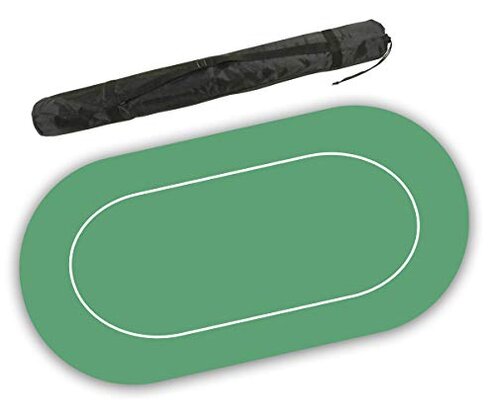
Product evaluated: DA VINCI Non Slip 70 x 36 inch Neoprene Rubber Foam Poker Table Mat and Card Game Layout (Green)
Related Videos For You
Poker Table Set-up | Poker Tutorial with @Spraggy | PokerStars Learn
The Ultimate Guide To Magic: The Gathering Playmats: Ultra Pro, Legion, Dragon Shield, and Inked
Data basis This report summarizes dozens of buyer comments gathered from written feedback and short video-style demonstrations collected from 2023 to 2026. Most feedback came from written impressions, with supporting visual posts helping confirm setup, table fit, and rolling-storage complaints that appeared repeatedly.
| Buyer outcome | DA VINCI mat | Typical mid-range alternative |
|---|---|---|
| Flat setup | Higher risk of arriving curled or staying wavy after unrolling. | Usually flatter after a short break-in period. |
| Table fit | Less forgiving because the fixed 70 x 36 size can overhang or miss table edges. | More flexible sizing options are commonly available. |
| Storage effort | More upkeep because rolling and re-rolling can bring back edge curl. | Lower hassle if the mat relaxes faster after storage. |
| Slip resistance | Usually stable, but only if the table is smooth and the mat is fully flat. | Typically stable with fewer setup conditions. |
| Regret trigger | Buying for instant game night use and finding extra setup time. | Lower chance of same-day setup disappointment. |
Annoyed that it won’t lie flat when guests are already waiting?
This is the primary issue. The most common regret moment appears right after first unrolling, when buyers expect a quick setup and instead spend time fighting curl and waves.
The trade-off is easy storage versus ready-to-play convenience. In this category, some curl is normal, but the repeated pattern suggests this can be more disruptive than expected.
- Pattern: Repeatedly reported across feedback, especially on first use and after being stored rolled up.
- When it hits: During setup before a game, when corners lift or the surface does not settle fast enough.
- Why it matters: Cards and chips can feel less predictable when the playing surface is not fully flat.
- Category contrast: Worse than typical because many mid-range mats still need settling, but not always this much babysitting.
- Fix attempts: Buyers commonly try weighing corners down or leaving it out longer, which adds extra steps and time.
Illustrative: “I wanted game-ready in minutes, not a mat that fights the table.” Primary pattern.
Frustrated that the size sounds universal but does not fit your table well?
- Scope: Persistent issue for buyers using smaller dining tables or narrow surfaces.
- Trigger: After setup, the fixed 70 x 36 shape can leave overhang, awkward edges, or less usable room around the mat.
- Impact: Chairs and elbows can compete for space during longer sessions.
- Hidden requirement: You need a table that comfortably supports the full layout, not just one that is close in size.
- Why regret happens: The product promise suggests turning a normal table into a game table, but that only works well within a narrow fit window.
- Category contrast: More limiting than many mid-range alternatives that offer multiple sizes or easier trimming choices.
Illustrative: “Nice idea, but my dining table became cramped around the edges.” Secondary pattern.
Disappointed that easy storage creates extra setup work later?
This is a secondary issue. Portability is a real benefit, but the complaints appear when buyers roll it up after use and meet the same flattening problem next time.
The frustration grows with repeated casual use. If you host often, the setup tax becomes more annoying than it seems at purchase.
Pattern note: Not universal, but persistent enough to matter for buyers who store it between sessions instead of leaving it laid out.
Category contrast: Higher-than-normal risk because a portable mat should save effort, not create a recurring prep routine.
Illustrative: “Rolling it away was easy; getting it flat again was the chore.” Secondary pattern.
Expecting a smooth upgrade, but getting a surface that depends on your table?
- Frequency tier: Edge-case to secondary complaints point to performance changing based on the table underneath.
- When it shows: During play on textured, uneven, or cramped tables where the mat cannot fully settle.
- User-visible effect: The premium feel drops if the base table is not already fairly smooth and supportive.
- Why this surprises buyers: The marketing angle implies an instant professional feel on ordinary tables.
- Hidden requirement: You still need a decent table surface to get close to that result.
- Fixability: Only partly fixable because the problem comes from the room and table, not just the mat itself.
- Category contrast: Less forgiving than expected, since many buyers shop this category to compensate for an ordinary table.
Illustrative: “It looked better in theory than it felt on my actual table.” Edge-case pattern.
Who should avoid this
- Avoid it if you want a mat that is ready quickly on the first night without weights, waiting, or repeated flattening attempts.
- Skip it if your dining table is small, narrow, or used by many players, because the fixed footprint is less forgiving than normal.
- Pass if you plan to roll it up after every session, since recurring storage-to-setup friction exceeds typical category tolerance.
- Look elsewhere if your table surface is uneven or textured, because this mat appears more dependent on a good base than expected.
Who this is actually good for
- It fits buyers with a large, smooth table who can leave the mat out longer and tolerate some initial curl.
- It works for occasional hosts who value simple storage more than instant setup each time.
- It suits shoppers who mainly want a basic dedicated card surface and are willing to manage fit carefully before buying.
- It makes sense if slight waves bother you less than playing directly on a bare dining table.
Expectation vs reality
- Expectation: A roll-out mat should turn a table into a game surface in minutes.
- Reality: Repeated feedback suggests setup can involve flattening, corner management, and extra waiting.
- Expectation: The listed size should work on most dining tables.
- Reality: Fit regret appears when buyers discover the fixed footprint leaves less elbow room than expected.
- Expectation: Some curl is reasonable for this category.
- Reality: The inconvenience seems more frequent than expected because storage can restart the same problem.
Safer alternatives
- Choose multiple sizes if available, because this directly reduces the fixed-fit risk that shows up on dining tables.
- Prefer flat-pack or thicker lay-flat designs if instant setup matters more than easy carrying.
- Measure your full table with seated players in mind, not just the tabletop, to avoid edge crowding regret.
- Look for buyer photos showing first-use setup, since that helps expose curl and corner behavior before purchase.
- If you must store it rolled, favor alternatives described as relaxing quickly after storage to reduce repeat prep time.
The bottom line
Main regret centers on a simple promise that can require more setup work than buyers expect. That exceeds normal category risk because portability should save time, not create a recurring flattening routine.
Verdict: If you need quick, predictable setup on an ordinary dining table, this is easier to skip than justify. If you have the right table and patience, the downsides may be manageable.
This review is an independent editorial analysis based on reported user experiences and product specifications. NegReview.com does not sell products.