
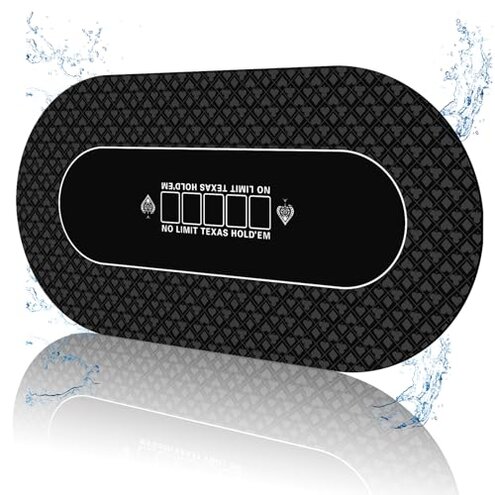
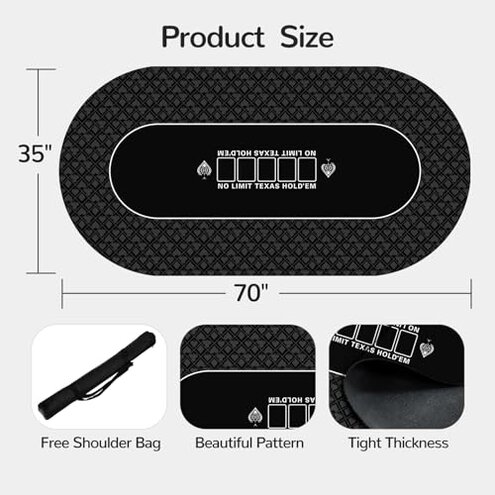
Product evaluated: FURUISEN Waterproof 70 x 35 Inch Texas Hold'em Poker Mat for Table, Portable Poker Table Top with Smooth Premium Surface, Noise Reduction, and Zipper Handbag for Professional Poker Games Casino Games
Related Videos For You
Poker Mats - Impressions
Building a Poker Table Topper
Data basis for this report comes from analyzing dozens of buyer impressions collected between 2023 and 2026. The mix includes written feedback, star-rating patterns, and photo or short clip-style demonstrations. Most detail came from longer written notes, with supporting evidence from visual uploads that show real-table use and storage outcomes.
| Buyer outcome | FURUISEN poker mat | Typical mid-range mat |
|---|---|---|
| Flatness during play | Higher risk of curl or waves after unrolling | Lower risk with stiffer lay-flat designs |
| Spill handling | Mixed results; can leave water sitting on top | Typical wipe-down; some absorb, some repel |
| Card glide feel | Inconsistent; some report “too slick” or “too draggy” zones | More uniform texture from mat to mat |
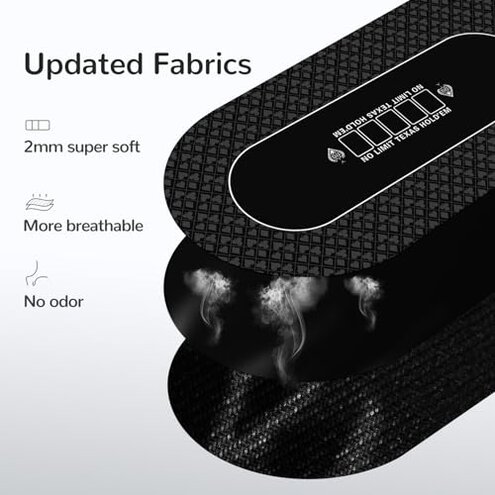
| Odor out of the bag | More complaints than expected for this category | Usually mild and fades faster |
| Regret trigger | Setup friction: rolling, flattening, airing out | Less babysitting before game night |
Top failures
“Why won’t it lay flat when guests arrive?”
The regret moment is unrolling it right before a game and seeing curled edges or shallow waves. This is among the most disruptive complaints for a poker topper because it affects every hand.
The pattern appears repeatedly, though it is not universal. It shows up first use and can return after storage, especially when it is kept tightly rolled between sessions.
Category contrast: most mid-range mats still need time to relax, but this one is described as needing extra babysitting more often than buyers expect.
- Early sign: edges lift or corners “memory curl” right after unrolling.
- Primary issue: uneven flatness can make chips wobble and cards catch at the edge.
- Worse conditions: long sessions where hands rest on the rim can reintroduce curling.
- Likely driver: tight rolling plus short setup windows before play.
- Mitigation: buyers report weighting it down or pre-unrolling earlier than planned.
- Fixability: flattening helps for some, but the “reset” can return after re-rolling.
- Hidden cost: you may need dedicated storage space to keep it less tightly rolled.
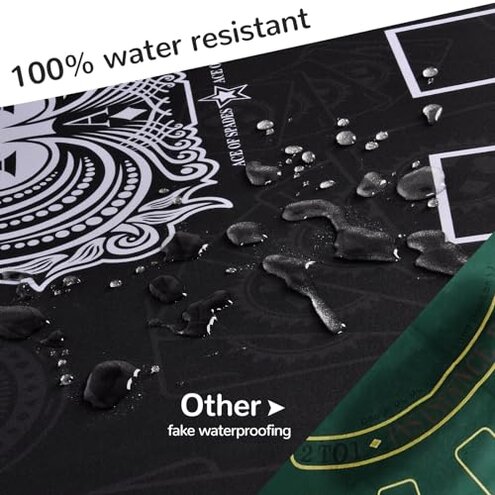
“Is it really waterproof, or will spills still ruin game night?”
- Recurring: spill behavior comes up as a secondary issue, with mixed expectations versus what buyers experience.
- When it hits: it shows up during play when cups sweat or a drink tips and liquid spreads.
- What feels worse: compared with many mid-range toppers, this can require faster reaction because liquid may pool and travel.
- User impact: pooled liquid can reach phones, cards, or chip stacks before you notice.
- Cleanup friction: wiping can smear moisture across the surface instead of absorbing it.
- Hidden requirement: you may need a dedicated towel routine and strict “no drinks near edges” rules.
- Workaround: coasters and a side table reduce the risk more than relying on the mat claim.
“Why does the surface feel off for dealing and chip handling?”
- Persistent: feel complaints show up repeatedly, but with different directions depending on buyer expectations.
- When noticed: it becomes obvious after setup once shuffling, sliding, and dealing starts.
- Category contrast: mid-range mats are usually predictably “casino-like,” but this one is described as less consistent session to session.
- Too slick: some report cards sliding farther than intended when the table gets bumped.
- Too draggy: others describe extra friction that slows down clean dealing.
- Noise expectation: while marketed for quiet play, some buyers still notice chip clack more than expected.
- Table fit: on some tabletops, the grip can feel uneven, changing the “glide” feel across the mat.
- Mitigation: testing with your exact chips and cards before a big night avoids surprises.
“What’s that smell when I open the bag?”
- Primary-tier: odor is reported as more common than many shoppers expect in this category.
- When it appears: it’s strongest right out of the package and can linger in smaller rooms.
- Why it’s worse: other mid-range mats often air out quickly, but this one is described as needing more time.
- Real impact: the smell can distract guests and make you avoid using it for casual nights.
- Worse conditions: storing it in the closed carry bag can trap odor and make it return.
- Attempted fixes: airing out helps, but it adds an extra step before spontaneous games.
- Practical tip: plan a multi-day air-out window before you host.
Illustrative excerpts
- Illustrative: “I unrolled it and the edges kept popping up all night.” Primary pattern tied to flatness issues.
- Illustrative: “Water didn’t soak in, but it spread fast before we noticed.” Secondary pattern tied to spill handling.
- Illustrative: “Cards either rocket-slide or stick, depending where you deal.” Secondary pattern tied to surface feel.
- Illustrative: “Smell was strong enough that I left it in the garage.” Primary pattern tied to odor.
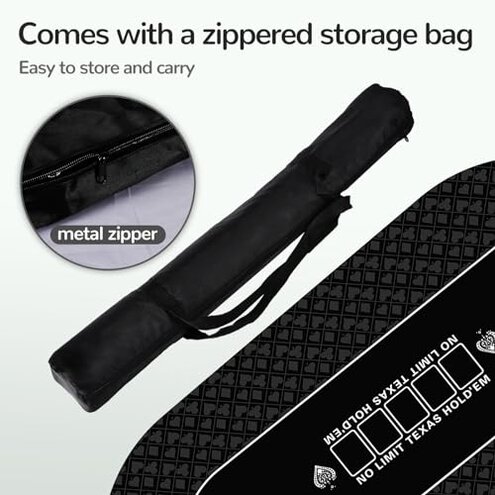
- Illustrative: “Nice bag, but the mat needs time and space to behave.” Edge-case pattern tied to setup requirements.
Who should avoid this
- Last-minute hosts who unroll right before play and need instant flatness without weights.
- Small-room players who are sensitive to lingering odor and can’t air items out for days.
- Drink-on-table groups who rely on the surface alone instead of strict spill control habits.
- Dealers who need predictable card glide across the full surface for fast, clean action.
Who this is actually good for
- Planners who can unroll early and tolerate a flattening routine to reduce curling risk.
- Garage-game setups where odor is less annoying and air-out time is easy.
- Light spill risk groups who keep drinks off the main table and mainly want easier wipe-downs.
- Casual nights where “good enough” glide is fine and speed dealing is not a priority.
Expectation vs reality
| Expectation | Reality buyers hit |
|---|---|
| Reasonable for this category: unroll and it settles fairly quickly | Worse-than-expected: repeated flattening effort after storage shows up often |
| Waterproof means spills are low-stress | Mixed: liquid may pool and travel, so reaction time still matters |
| Smooth surface means consistent dealing everywhere | Inconsistent: some report uneven glide depending on area and table pairing |
| Odour free means open-and-play | Commonly reported: airing out adds steps before it’s guest-ready |
Safer alternatives
- Choose lay-flat designs marketed around “no curl” storage to neutralize the recurring flatness complaint.
- Prefer breathable packaging and buyers’ notes about fast air-out to reduce the common odor regret.
- Pick consistent texture mats, then test with your cards and chips to avoid glide surprises.
- Use a spill plan like cup holders or side tables if you want truly low-stress drinks during play.
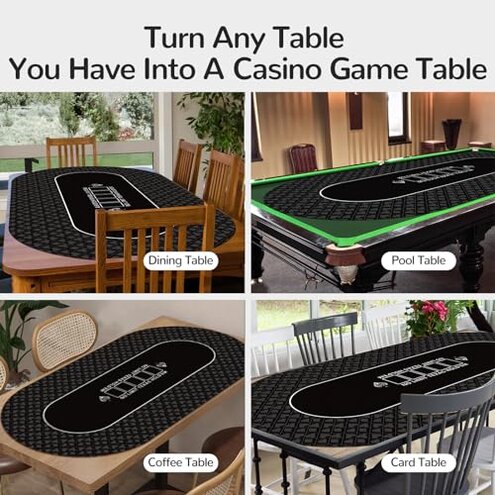
- Buy for your table shape and size so edges don’t hang and re-curl during long sessions.
The bottom line
Main regret is the extra setup work: curling, flattening, and sometimes airing out before it feels guest-ready. That burden is higher-than-normal for a mid-range poker mat because it interrupts the “unroll and deal” promise. If you want a topper that behaves instantly with minimal rules, avoid this one and choose a more reliably lay-flat alternative.
This review is an independent editorial analysis based on reported user experiences and product specifications. NegReview.com does not sell products.