
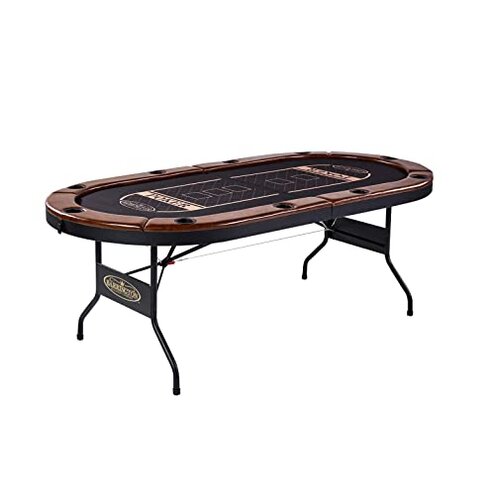
Product evaluated: Barrington Billiards 10 Player Classic Poker Table with Padded Rails and Cup Holders, Black/Blue, 84 Inches
Related Videos For You
Premium Folding Poker Tables By Triton Poker Tables
Resurfacing a poker table with 550 cord
Data basis for this report comes from analyzing dozens of buyer submissions collected from 2021 through 2026. The mix included mostly written feedback with supporting star ratings and a smaller set of photo/video show-and-tell posts. The distribution skewed toward assembly-and-first-night impressions, with fewer long-term updates, which matters because some complaints only show up after repeated folding and moving.
| Buyer outcome | This Barrington table | Typical mid-range alternative |
|---|---|---|
| Stability during play | Higher wobble risk, especially after folding and moving | More consistent once legs are set and leveled |
| Felt condition after sessions | Wear shows sooner than many expect for the price | Moderate wear is expected but often slower |
| Fold-and-store convenience | Heavier handling adds effort and scuffs risk | Simpler storage if lighter or with better carry design |
| Assembly experience | More finicky, with alignment complaints appearing repeatedly | More forgiving hardware and clearer fit-up |
| Regret trigger | Game-night interruption from wobble, cup holder issues, or surface flaws | Lower odds of issues that stop play |
Why does it feel wobbly once everyone leans in?
Regret often hits mid-hand when the table shifts as players rest their arms on the rail. This is described as more disruptive than expected because poker tables are supposed to feel planted during long sessions.
Pattern notes show this isn’t universal, but it appears repeatedly across first-use and after-moving reports. It tends to show up after setup, and can worsen when the table is folded and repositioned between game nights.
Category contrast: a typical mid-range poker table may have some movement, but buyers describe this one as less forgiving when multiple players lean in at once. That makes the instability feel like a game-night problem, not a small quirk.
- Early sign is a subtle rock when you press down on the padded edge.
- Primary issue reports show up most during long sessions with lots of leaning and chip stacking.
- Worse conditions include uneven floors, thick rugs, and frequent relocation between rooms.
- Root driver is commonly described as leg or hinge fit that feels slightly loose after folding.
- Workarounds often involve shims, furniture pads, or leaving it set up permanently.
- Fixability is mixed because tightening helps some, but others report the movement returns.
- Hidden requirement is needing a very flat floor and more careful placement than buyers expect.
Is the felt surface as durable as it looks in photos?
- Regret moment is noticing pilling, fuzz, or wear tracks after early use when you expected a smoother glide.
- Recurring pattern shows up as a secondary issue that becomes more annoying over time.
- Usage trigger is frequent shuffling, sliding chips hard, and using heavy drinkware near holders during busy tables.
- Category contrast is that mid-range felt will wear, but buyers frame this as sooner than normal for a table this size.
- Visual mismatch complaints appear repeatedly where the surface arrives with wrinkles or marks that don’t relax.
- Attempts include brushing, lint rolling, and avoiding aggressive chip slides, which adds extra steps.
- Mitigation is using a topper or dedicated speed cloth layer, which is an added cost many didn’t plan.
- Long-session impact is less smooth dealing and a table that starts to look tired quickly.
Do the cup holders actually prevent spills and mess?
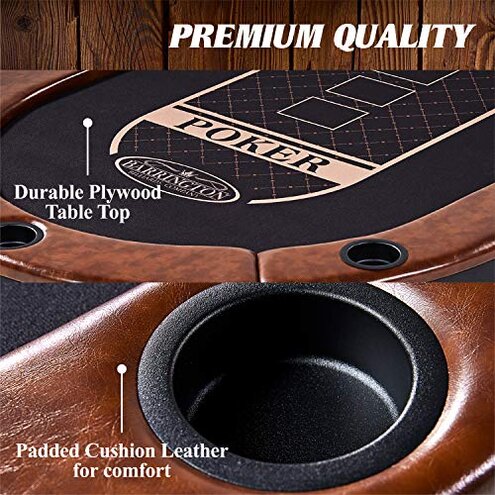
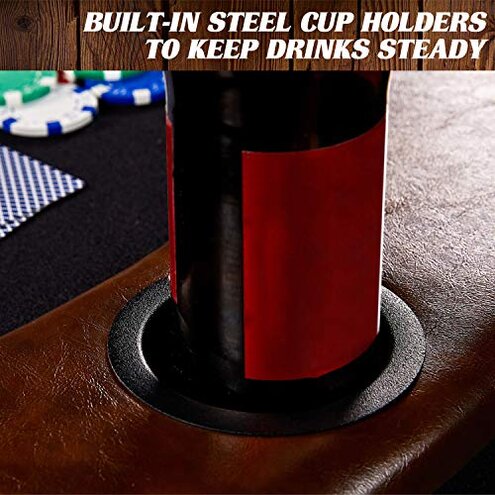
- Most common frustration is cup holders feeling shallow or awkward for some drink sizes during real play.
- When it hits is mid-game when someone reaches fast and the cup catches an edge, raising spill risk.
- Scope appears across multiple feedback types, with photos sometimes highlighting fit issues.
- Category contrast is that holders are expected to be “set and forget,” but these are described as attention-demanding.
- Secondary issue is condensation and drips still finding the felt, adding cleanup after sessions.
- Workaround is using coasters or limiting to certain cups, which creates house rules for guests.
Is the folding design really convenient for storage?
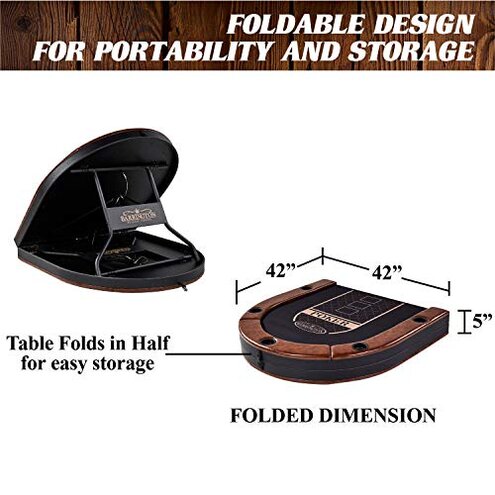
- Regret trigger is expecting easy portability, then realizing the weight and bulk make it a two-person move.
- Persistent complaint appears less often than wobble, but it is more frustrating because it affects every setup.
- When it shows is during folding, lifting, and fitting it into closets or cars after game night.
- Worse conditions include stairs, narrow doorways, and storing it where it can get scuffed.
- Category contrast is that folding tables usually trade sturdiness for convenience, but buyers report getting neither reliably.
- Hidden requirement is needing a storage spot that lets it stay protected and not rub against walls or floors.
- Mitigation is adding a cover or moving blanket, which adds more handling each time.
Illustrative excerpt: “It looked perfect, but it rocks when everyone leans in.”
Pattern tag: This reflects a primary stability complaint that appears repeatedly during real play.
Illustrative excerpt: “After a few nights, the surface started looking worn and fuzzy.”
Pattern tag: This reflects a secondary wear pattern that worsens with repeated use.
Illustrative excerpt: “Folds up, sure, but moving it is a whole project.”
Pattern tag: This reflects a secondary portability pain that impacts every session.
Illustrative excerpt: “Cup holders didn’t fit the cups we actually use.”
Pattern tag: This reflects an edge-case fit issue that still creates spill risk when it happens.
Who should avoid this
Frequent hosts should avoid it if you need a table that stays stable through long sessions with lots of leaning and chip sliding.
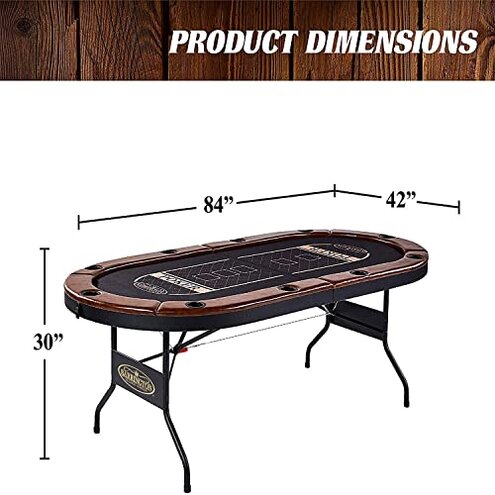
Small-space owners should avoid it if you plan to fold and move it often, because the bulk adds handling hassle.
Detail-focused buyers should avoid it if early cosmetic flaws or faster felt wear will bother you more than the function.
Drink-on-table groups should avoid it if you rely on cup holders to reduce mess without extra rules or coasters.
Who this is actually good for
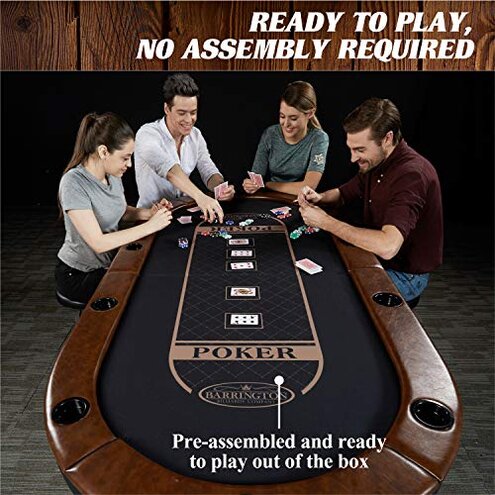
Casual game nights work if you can leave it set up and you’re willing to tolerate some stability quirks in exchange for the full-size layout.
Basement setups fit if you have a very flat floor and can add small leveling aids to reduce wobble.
Budget space fillers can accept it if you plan to use a topper and treat the felt as a consumable look layer.
Board-game groups may like it if you don’t lean hard on rails and drinks stay off the surface, reducing wear triggers.
Expectation vs reality
- Expectation: Folding should mean quick setup and easy storage.
- Reality: Moving and storing can require extra effort and protective steps.
- Expectation (reasonable for this category): Mid-range felt will wear slowly with normal play.
- Reality: Wear and cosmetic issues are reported as sooner than many mid-range buyers expect.
Expectation: Cup holders reduce spills without thinking.
Reality: Some setups require cup selection rules or coasters to avoid mess.
Safer alternatives
- Prioritize tables with stronger leg bracing if stability complaints are your top fear, because that directly reduces the lean wobble moment.
- Choose a non-folding or semi-permanent design if you’ll host often, since it avoids the hinge looseness cycle from repeated moving.
- Look for better surface cloth or a replaceable top system if early wear is a dealbreaker, since it reduces the fuzzing annoyance.
- Check cup holder depth and diameter in buyer photos before buying, because it prevents the doesn’t fit surprise with real drinkware.
- Plan for measured storage space and a cover if you must fold, because it reduces scuff damage during moves.
The bottom line
Main regret is game-night irritation from stability and surface issues that show up during first use or after folding and moving. The risk feels higher than normal for a mid-range poker table because it can interrupt play, not just look imperfect. If you need a table that stays planted and ages gracefully, this is a skip unless you can leave it set up and accept added workarounds.
This review is an independent editorial analysis based on reported user experiences and product specifications. NegReview.com does not sell products.