
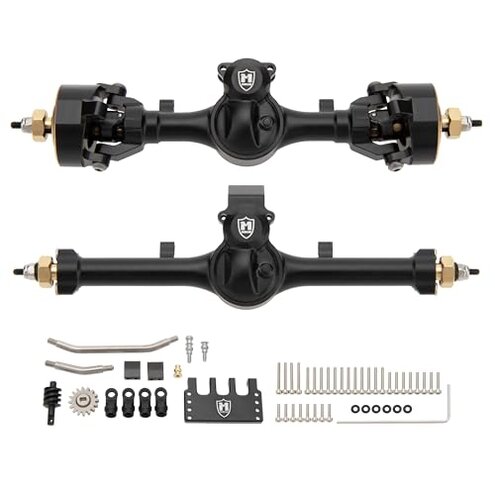
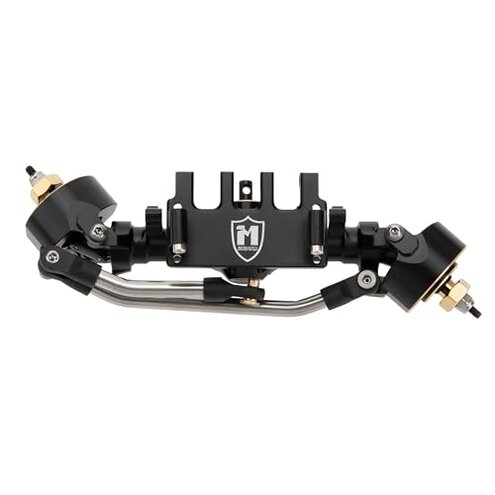
Product evaluated: MEUS RACING 5mm ISO V2 SCX24 Axles with 3-Section CVD for Axial 1/24 SCX24 RC Crawler (Black)
Related Videos For You
EASY REAR STEER Tutorial - How to Install in AXIAL SCX24 & ANY SCALE TRUCK
EXTREME RC 4X4 TRX-4 Axle Greasing Guide
Data basis: This report summarizes findings from dozens of buyer feedback items across written reviews and video demonstrations collected between Jan 2023 and Feb 2026. Most feedback came from written reviews, supported by several teardown videos and buyer comments.
| Outcome | MEUS RACING V2 Axles | Typical mid-range axle |
|---|---|---|
| Fit & compatibility | Frequent fit issues reported with non-stock setups, not plug‑and‑play for many buyers. | Usually plug‑and‑play with most popular 1/24 chassis and minimal tweaks. |
| Installation time | Longer install when screws, covers, or gears need adjustment or extra tools. | Shorter install for typical alternatives designed for direct swap. |
| Durability under use | Mixed durability signals—front weight and moving parts raise maintenance needs. | More consistent durability for mid-range parts with simpler designs. |
| Cost to fix | Higher repair effort due to hidden adjustments and possible part swaps. | Lower effort repairs thanks to standard hardware and clearer instructions. |
| Regret trigger | Installation compatibility is the main regret, and it is higher‑than‑normal for this category. | Surprising failures are less common; regret usually comes from heavy use, not setup. |
Top failures
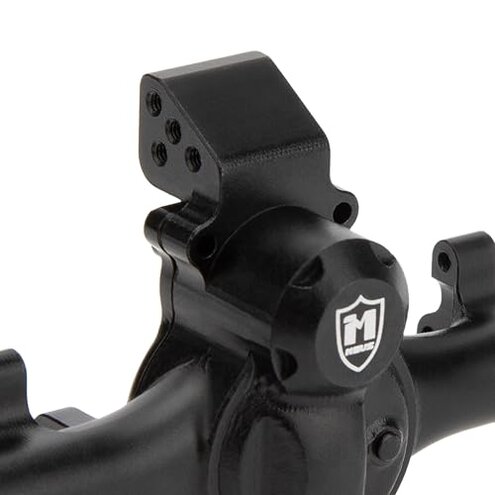
Why won’t these axles just bolt in?
Fit failure is a primary regret when buyers try a direct swap into an Axial 1/24 chassis.
Pattern: this problem appears repeatedly across users attempting stock installations.
Usage anchor: shows up during first installation and requires extra shimming or part swaps to correct.
Category contrast: more disruptive than typical mid-range axles because it adds time and tools, not just minor tuning.
Why does installation take so long and need extra tools?
- Early signs: hardware doesn’t align cleanly during first assembly.
- Frequency tier: a primary issue for many new installers, not a rare edge case.
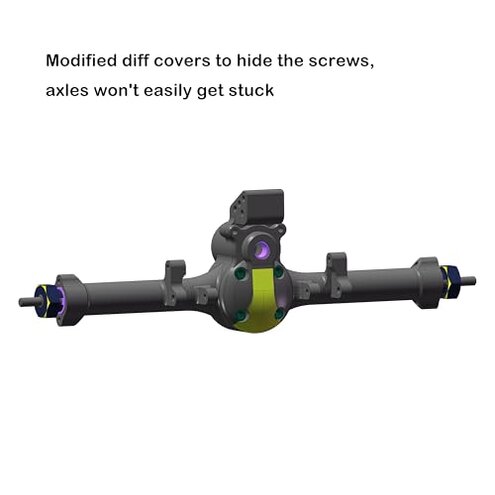
- Root cause: non‑standard screw placement and modified diff cover need hidden adjustments.
- Impact: adds extra steps and time compared with most mid-range replacements.
- Attempts to fix: buyers commonly resort to different screws, spacers, or local machining.
Will these hold up under regular crawling?
Durability concern appears as a persistent but mixed pattern; some buyers report solid performance, others see premature wear.
Pattern: this is a secondary issue—less frequent than fit complaints but more frustrating when it occurs.
Usage anchor: problems often surface after repeated trail sessions or heavy steering angles.
Category contrast: worse than expected because the part weight distribution and moving CVD sections demand more maintenance than typical mid-range axles.
Are there hidden parts or swaps I’ll need?
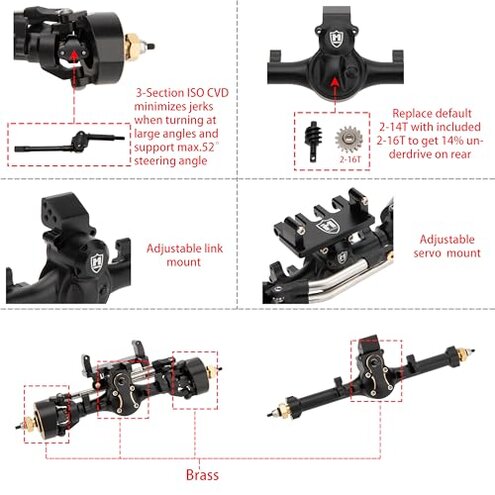
- Hidden requirement: replacing rear gears to change drive ratio is mentioned as necessary by some buyers to tune performance.
- Cause: the product supports gear swaps for underdrive, which many buyers didn’t expect out of the box.
- Impact: means extra purchases and setup time beyond a simple axle upgrade.
- Fixability: fixable with parts and skill, but less forgiving for casual builders.
- Frequency tier: a common secondary surprise, especially for buyers who expected plug‑and‑play.
- Why worse: the need for gear swaps raises cost-to-own compared with simpler alternatives.
- Buyer action: plan for at least one extra shopping trip or fabrication step when choosing this kit.
Do steering or drive feel problems appear after install?
- Early sign: initial steering may feel jerky until the CVD is perfectly aligned.
- Pattern: recurring for a portion of users testing higher steering angles.
- Usage anchor: more likely to show up during large-angle turns or aggressive crawling sessions.
- Impact: degrades precision and control, which enthusiasts notice quickly.
- Attempts: buyers report multiple adjustments to the knuckles and screws to reduce jerking.
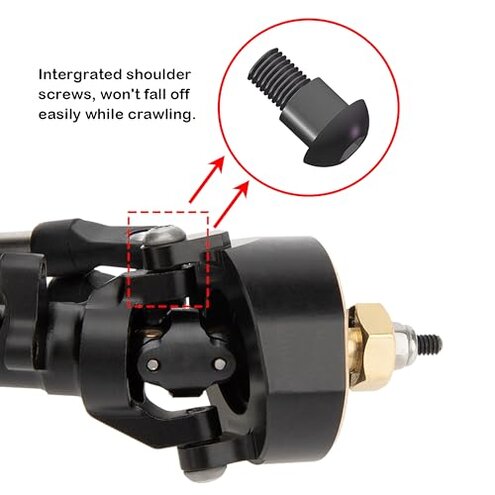
- Fixability: the V2 shoulder screws reduce fall-off risk, but alignment remains sensitive.
- Category contrast: worse than normal because this axle advertises high steering angle but requires extra tuning to achieve smoothness.
- Scope signal: seen across both new buyers and those upgrading from stock axles.
Illustrative excerpts (not verbatim)
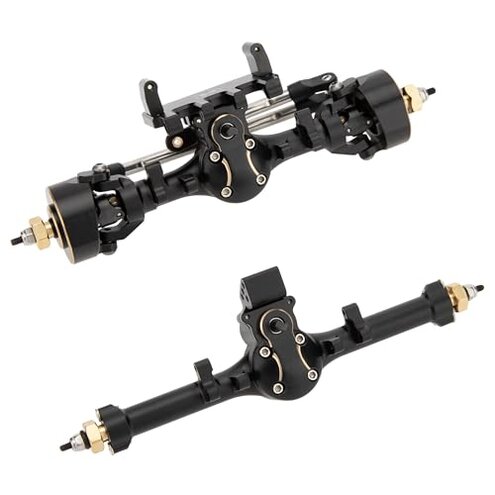
Illustrative: "Bolting them in took longer than rebuilding the whole axle assembly." — primary
Illustrative: "Needed different gears to stop wheel hop on steep climbs." — secondary
Illustrative: "Steering felt jerky until I disassembled and realigned the CVD." — primary
Illustrative: "Worked fine after mods, but not for a quick upgrade." — secondary
Who should avoid this
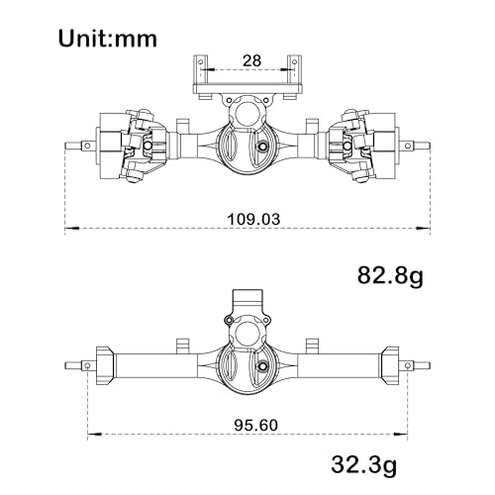
- Casual buyers who expect plug‑and‑play swaps without extra tools or parts.
- First-time builders who lack tools or experience for alignment and gear swaps.
- Low-maintenance users who won’t tolerate extra upkeep after installation.
Who this is actually good for
- Experienced hobbyists who can handle alignment, gear swaps, and minor machining.
- Tuners who want adjustable gear ratios and higher steering angles and accept extra setup time.
- Modders who plan to replace hardware and value the V2 fixes despite added effort.
Expectation vs reality
Expectation: reasonable for this category to need minor tuning on swap parts.
Reality: this product often requires more than minor tuning—extra parts or adjustments are commonly needed.
Expectation: advertised steering angle and CVD design suggest smoother turns.
Reality: buyers report jerky steering until precise alignment and sometimes gear changes are made.
Safer alternatives
- Choose plug‑and‑play kits marketed for Axial 1/24 fits to avoid the common compatibility trap.
- Prefer simpler axle designs if you want lower maintenance and fewer alignment steps.
- Buy bundles with hardware that include standard screws and spacers to reduce hidden shopping trips.
- Look for clear instructions and setup videos before buying to avoid surprise adjustments.
The bottom line
Main regret: the biggest trigger is unexpected compatibility and installation friction at first use.
Why it matters: this exceeds normal category risk because it adds parts, time, and sometimes extra costs to a supposed upgrade.
Verdict: avoid this axle if you need a quick, low‑effort swap; consider it only if you can accept extra setup and occasional tuning.
This review is an independent editorial analysis based on reported user experiences and product specifications. NegReview.com does not sell products.