
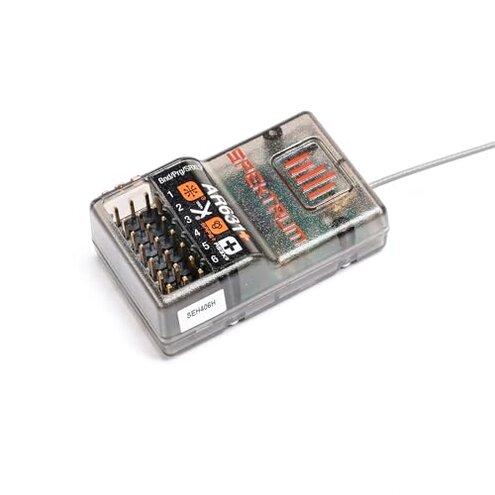
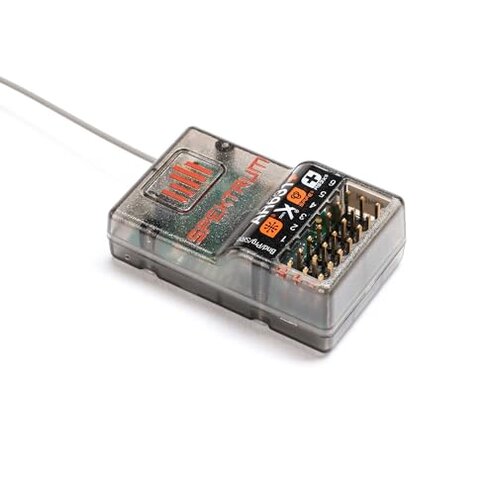
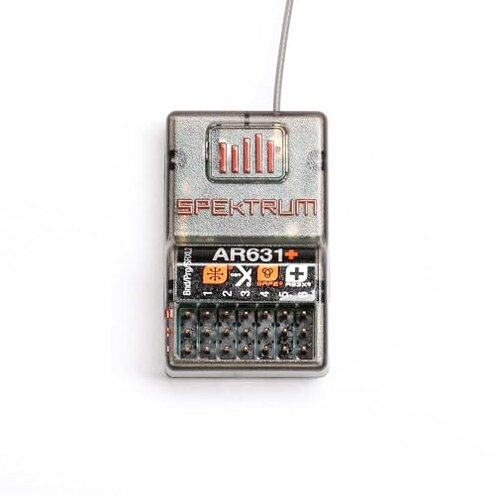
Product evaluated: Spektrum AR631+ 6 Channel AS3X+ & Safe Receiver, SPM-1031
Related Videos For You
BEST WAY To Bind Transmitter To Receiver
Spektrum Quick Hit Tech Tip - Binding Basics and Troubleshooting
Data basis: This report draws on dozens of written reviews and several video demonstrations collected between Sep 2024 and Jan 2026. Most feedback came from written buyer reports, supported by first-time setup videos and a few forum-style discussions. The distribution is weighted toward recent buyers who tested the receiver in real models.
| Outcome | Spektrum AR631+ | Typical mid-range receiver |
|---|---|---|
| Binding reliability | Unstable at first in multiple reports during initial binding. | Generally stable for most mid-range receivers on first bind. |
| Telemetry setup | Works with Smart ESC but requires specific hardware and forward programming. | Plug-and-play telemetry is more common in comparable alternatives. |
| Range & signal | Higher risk of degraded range under certain installs. | Lower-than-normal risk for similar-priced receivers. |
| Ease of setup | Steeper due to transmitter programming requirements. | Simpler with basic bind-and-fly steps. |
| Regret trigger | Hidden compatibility needs that lead to lost features or extra purchases. | Fewer hidden needs and more predictable performance. |
Binding failure: Why does the receiver lose binding or telemetry during setup?
Regret moment: Buyers report frustration when the receiver will not hold a bind or loses telemetry during the first setup attempt.
Pattern: This is a commonly reported early-use problem that appears during initial binding and first flights, especially when users try quick installs without transmitter forward programming.
Category contrast: This feels worse than typical because a mid-range receiver usually binds reliably on first attempt, but the AR631+ often needs extra transmitter steps to stabilize.
Range & signal: Is the range worse than expected in real builds?
- Early sign: Signal dropout or weaker control at the far edges of normal flight distances.
- Frequency tier: This is a secondary issue—seen regularly after setup in varied installations.
- Trigger condition: Problems usually show up during long flights or when the antenna routing is constrained inside the airframe.
- Cause hint: Antenna placement and long plastic fuselages make the receiver more sensitive than typical models.
- Impact: Loss of control risk is more disruptive than expected for this price tier.
Hidden compatibility: Do you need extra gear or a specific transmitter?
- Hidden need: Telemetry requires a Spektrum Smart ESC or compatible hardware to use one-wire telemetry as advertised.
- Setup pain: AS3X+ and SAFE setup needs forward programming from a compatible Spektrum transmitter.
- Frequency signal: Many buyers reported missing functionality because they lacked the required transmitter features.
- Cost impact: This forces buyers to buy a newer transmitter or ESC, creating unexpected expense.
- Time cost: Extra programming steps add setup time compared with typical mid-range models.
- Fixability: Workarounds are possible but require skill and extra purchases.
Support & durability: Will this hold up with daily flying and crashes?
- Early sign: Intermittent issues appear after repeated handling or in tighter installs.
- Frequency tier: This is a secondary concern that becomes more visible with frequent use.
- Failure mode: Some buyers reported degraded performance after rough landings or when antenna cables are stressed.
- Attempted fixes: Re-seating connectors and re-routing antennas were commonly tried.
- Repair difficulty: Fixes often require soldering or replacing antennas, which is more effort than average.
- Support signal: Documentation and on-device guidance are limited, increasing trial-and-error.
- Category contrast: Durability feels less forgiving than similar mid-range receivers.
Illustrative excerpts
"Lost telemetry mid-flight after first bind attempt." — illustrative; reflects a primary pattern.
"Needed a new ESC to see voltage telemetry." — illustrative; reflects a secondary pattern.
"Worked fine in a foam plane but failed in balsa build." — illustrative; reflects an edge-case pattern.
Who should avoid this
- Casual flyers who expect plug-and-play binding without transmitter programming.
- Budget builders who cannot afford extra ESCs or transmitters to unlock telemetry.
- High-risk flyers who need the highest range reliability for large models.
Who this is actually good for
- Experienced users who have compatible Spektrum transmitters and can do forward programming.
- Builders with compatible ESCs who value one-wire telemetry and can accept the hidden gear needs.
- Tinkerers who do antenna routing and occasional soldering without problem.
Expectation vs reality
- Expectation: A new receiver should bind reliably on first attempt as is reasonable for this category.
- Reality: The AR631+ often needs extra transmitter programming, making initial setup slower and more complex.
- Expectation: Telemetry advertised should be plug-and-play with standard ESCs.
- Reality: One-wire telemetry requires specific Spektrum Smart ESCs or you lose features.
Safer alternatives
- Choose plug-and-play receivers that advertise bind-and-fly simplicity to avoid extra transmitter steps.
- Prefer universal telemetry models if you lack a Spektrum Smart ESC to prevent hidden purchases.
- Look for robust antennas or external antenna options to reduce range risk in enclosed builds.
- Buy units with clearer docs and verified compatibility lists to reduce setup trial-and-error.
The bottom line
Main regret: The primary trigger is the receiver's hidden compatibility and setup friction that causes binding and telemetry failures for many buyers.
Verdict: For pilots without the right Spektrum ESC or transmitter features, this receiver creates extra cost and setup time, making it a product to avoid unless you accept those trade-offs.
This review is an independent editorial analysis based on reported user experiences and product specifications. NegReview.com does not sell products.