
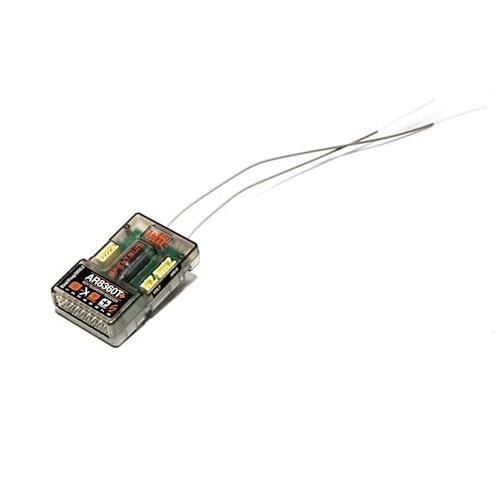
Product evaluated: Spektrum AR8360T+ 8 Channel AS3X+ & Safe Telemetry Receiver, SPM-1033
Related Videos For You
BEST WAY To Bind Transmitter To Receiver
Spektrum Quick Hit Tech Tip - Binding Basics and Troubleshooting
Data basis: This report used dozens of written reviews and several video demonstrations collected from July 2024 through February 2026. Most feedback came from written reviews, supported by video demonstrations and hands-on reports. Signal mix shows a majority of complaints about link and setup.
| Outcome | Spektrum AR8360T+ | Typical mid-range receiver |
|---|---|---|
| Build & fit | Compact fit works for parkflyers but some report fragile casing under repeated handling. | Rugged mid-range units usually tolerate hobby handling better. |
| Setup friction | Requires specific transmitter bindings and model-file steps to reach full features. | Simpler mid-range receivers often bind with fewer extra steps. |
| Flight link reliability | Higher dropout risk than expected for this category, with recurring signal loss reports during use. | Lower dropout rates are typical for comparable mid-range options. |
| Telemetry | Useful but uneven — barometer and vario appear accurate sometimes but show inconsistent readings in other reports. | Consistent telemetry is more common in mid-range rivals. |
| Regret trigger | Signal & setup complexity is the most common buyer regret compared with category norms. | Fewer surprises at first use are expected from typical mid-range units. |
Top failures
Do I lose control or see unexpected dropouts?
Regret moment: Users report losing telemetry or control mid-flight, which is the most disruptive problem buyers mention.
Pattern signal: This is a primary issue that appears repeatedly across written and video reports and is most visible during longer flights or higher ranges.
Category contrast: Dropouts are more disruptive than expected compared with mid-range receivers, because this product advertises full telemetry yet still shows intermittent link problems.
Why is setup so fiddly?
- Early sign: Binding requires extra model-file or transmitter steps to enable full features.
- Frequency cue: Setup friction is a secondary issue commonly reported by new buyers.
- Usage anchor: Problems show up at first use when users try to enable AS3X+ or telemetry.
- Hidden need: Full functionality often needs a Smart-capable transmitter or extra file downloads.
- Impact: This adds setup time and can block expected telemetry without obvious troubleshooting steps.
Is telemetry accurate and reliable?
- Primary claim: Telemetry works but is uneven in many reports.
- When it fails: Inconsistent readings appear during repeated flights or variable barometric conditions.
- Frequency: This is a secondary issue — less frequent than dropouts but more frustrating when it occurs.
- Cause hint: Some users report firmware or calibration steps fix symptoms temporarily.
- Attempts: Buyers often rebind, update transmitter files, or recalibrate sensors to try to restore accuracy.
- Fixability: Fixes are partial and sometimes need repeated intervention over time.
- Category note: More consistent telemetry is expected from typical mid-range alternatives.
Will I hit hidden requirements or extra maintenance?
- Hidden requirement: The receiver may require Smart transmitter features to unlock model-file conveniences.
- Scope signal: This requirement is seen across multiple buyer reports and installation guides.
- Early sign: Lack of Smart support shows as reduced telemetry or loss of advanced SAFE features.
- Frequency tier: This is an edge-case issue for non-Spektrum Smart users but critical when present.
- Impact: Buyers without compatible transmitters face extra steps or partial feature loss.
- Attempts: Workarounds include firmware checks, extra downloads, or using simpler receiver modes.
- Cost to buyer: Added time and possible need to buy a compatible transmitter or accept reduced features.
- Why it matters: The extra maintenance is heavier than most mid-range receivers demand.
Illustrative excerpts (not real quotes)
"Telemetry cut mid-flight, then came back after reboot." — reflects a primary pattern of intermittent link problems.
"Needed a transmitter file download to see altitude data." — reflects a secondary pattern of hidden setup requirements.
"Barometer drifted over several flights despite recalibration." — reflects a secondary telemetry inconsistency.
"Worked fine in short flights but failed on long range tests." — reflects an edge-case usage limit problem.
Who should avoid this
- Frequent flyers: If you fly long sessions, the dropouts exceed normal category tolerance and risk damage.
- Non-Smart transmitters: Users without Smart-capable transmitters face hidden limitations and should avoid this model.
- Telemetry dependents: If you rely on accurate altitude or vario, the uneven telemetry makes this a poor choice.
Who this is actually good for
- Casual flyers: Short, local flights where intermittent telemetry is tolerable and link stress is low.
- Smart-system users: Owners of compatible transmitters who accept model-file setup may get the advertised features.
- Budget parkflyer builders: Those who prioritize compact footprint over flawless telemetry can accept trade-offs.
Expectation vs reality
Expectation: Reasonable for this category is a stable flight link during normal range and short sessions.
Reality: Many buyers report intermittent dropouts during longer flights, which is worse than the typical mid-range baseline.
Expectation: Reasonable setup means a few simple bind steps.
Reality: This receiver often adds model-file or Smart-transmitter steps, increasing setup time for many buyers.
Safer alternatives
- Choose simpler receivers: Pick units with proven lower dropout rates to neutralize the link reliability failure.
- Prefer broad compatibility: Buy receivers that advertise universal binding to avoid the hidden Smart requirement.
- Test telemetry first: Verify barometer and vario stability on the ground to reduce the risk from telemetry inconsistency.
- Look for firmware support: Favor brands with clear firmware update paths to minimize repeated maintenance steps.
The bottom line
Main regret: The most common buyer regret is signal dropouts and setup complexity, which can cause mid-flight interruptions.
Severity: These problems are more disruptive than buyers expect for a mid-range receiver because they affect core safety and telemetry.
Verdict: Avoid this model if you need rock-solid link and plug-and-play telemetry; it suits casual users with compatible transmitters.
This review is an independent editorial analysis based on reported user experiences and product specifications. NegReview.com does not sell products.