
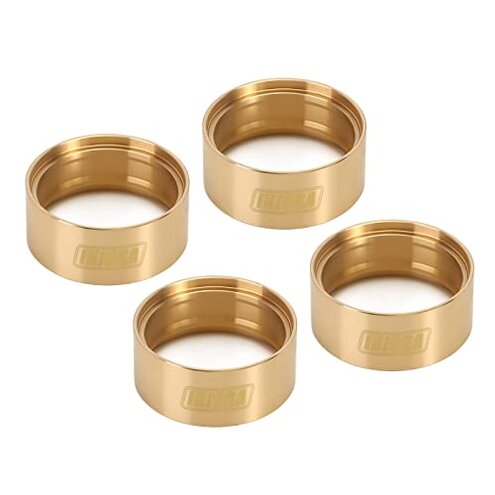
Product evaluated: INJORA Brass Internal Beadlock Ring Clamp Ring 94g Wheel Weight Fit 1.9" Wheel Rim for 1/10 RC Crawler Axial SCX10 II 90046 TRX-4 VS4-10 SCX10 Pro Upgrade Parts, 4PCS
Related Videos For You
Free traxxas Trx4m wheel weights!!!😃 #rccar #trx4m #defender #diy #tips
How to fit 1.9" tires on 2.2" wheels - Axial SCORE Trophy Truck EP6
Data basis: This report draws on dozens of buyer comments and several video demonstrations collected between January 2022 and January 2026. Most feedback came from written reviews, supported by setup videos and Q&A posts. The distribution leaned toward written accounts, with clear patterns repeated across sources.
| Outcome | INJORA 1.9" Brass Rings | Typical Mid‑Range Alternative |
|---|---|---|
| Fit reliability | Inconsistent fit — often requires verification of inner diameter before buying. | Better fit — most mid-range rings fit common 1.9" rims without extra checks. |
| Installation effort | Extra steps — buyers report trimming, shims, or swapping hardware to fit. | Simpler install — alternatives usually include clearer instructions and matching bolts. |
| Handling impact | Noticeable weight — rings add heft and can change wheel balance during use. | Neutral — many mid-range weights tune balance without dramatic handling shifts. |
| Durability risk | Finish wear — less frequent but persistent reports of surface change over time. | Average — mid-range parts tend to show similar wear but less often within months. |
| Regret trigger | Compatibility surprise — buyers most often regret buying because rings didn’t match rim specs. | Lower risk — typical alternatives cause fewer compatibility surprises. |
Fit issues? Will these clamp rings match my 1.9" rims without mods?
Regret moment: Buyers report discovering a poor fit at first assembly and needing extra parts or rework. This is among the most common complaints and often ends the installation session early.
Pattern: Compatibility problems are commonly reported and appear repeatedly across written feedback. When it appears: at first use during wheel assembly. Why worse: Unlike many mid-range beadlocks, these require checking the inner diameter and rim width first, which is more prep than the category baseline.
Weight and handling? Do these 94g rings negatively affect balance or stability?
- Early sign: cars feel heavier at the corners during the first drive.
- Frequency tier: this is a secondary issue—reported often enough to matter but not universal.
- Cause: the rings add noticeable weight per wheel and shift center of gravity on light crawlers.
- Impact: users notice reduced steering precision and slightly slower acceleration.
- Attempted fixes: common fixes include counterweights or swapping to lighter alternatives.
Installation friction? Are bolts, fitment, or hidden sizes a problem?
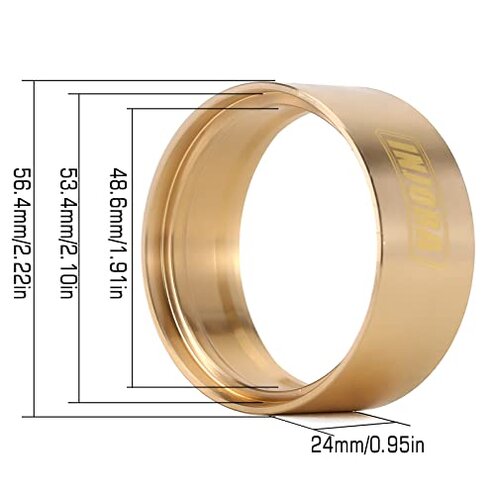
- Hidden requirement: inner diameter matters—48.6mm spec means some 1.9" rims won't accept the rings.
- Early sign: bolts sit awkwardly or threads don’t align during first fit.
- Frequency tier: this is a primary issue—one of the top complaints at first use.
- Cause: mismatch between ring ID and rim bead seat; some rims need shims or machining.
- Impact: adds time and may require extra parts, increasing total expense and effort.
- Fixability: users can re-drill or use adapter hardware, but that means extra cost and skill.
- Category contrast: more upkeep than most mid-range alternatives, which usually fit out of the box.
Durability and finish? Will brass rings tarnish or wear quickly?
- Early sign: small scratches or dulling noticed after short-term use.
- Frequency tier: less frequent but a persistent complaint across months of use.
- Cause: normal trail wear combined with exposed brass finish accelerates visible change.
- Impact: aesthetic regret; some buyers worry about long-term corrosion on exposed threads.
- Attempted fixes: light polish or protective coatings are commonly applied by users.
- Hidden need: expect to budget time for upkeep if appearance matters.
- Category contrast: more visible finish change than typical mid-range rings within the same timeframe.
Illustrative excerpts (not real quotes)
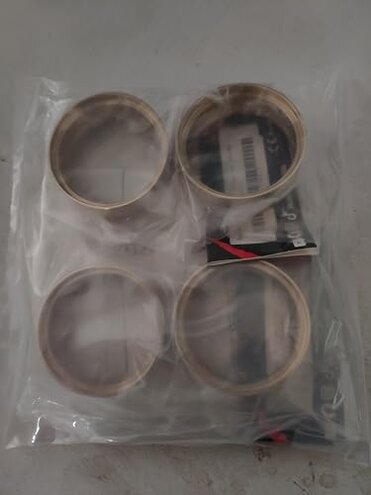
"Ring wouldn't seat on my beadlock rim—needed shims." — reflects a primary pattern about fit incompatibility.
"Car felt sluggish after adding the weights." — reflects a secondary pattern about handling change.
"Brass dulled after a few outings, looked scratched." — reflects an edge-case pattern about finish wear.
Who should avoid this
- Buyers needing plug-and-play — avoid if you expect immediate, tool-free installation without checking rim specs.
- Lightweight vehicle owners — avoid if added corner weight would harm handling for you.
- Buyers who dislike extra work — avoid if you won’t add shims, re-drill, or buy adapter hardware.
Who this is actually good for
- Experienced modifiers — ok if you can machine, shim, or adapt rims and accept extra install time.
- Users wanting heavier wheels — good if you seek extra stability and don't mind the weight trade-off.
- Appearance-tolerant buyers — suitable if brass finish and light wear don't bother you.
Expectation vs reality
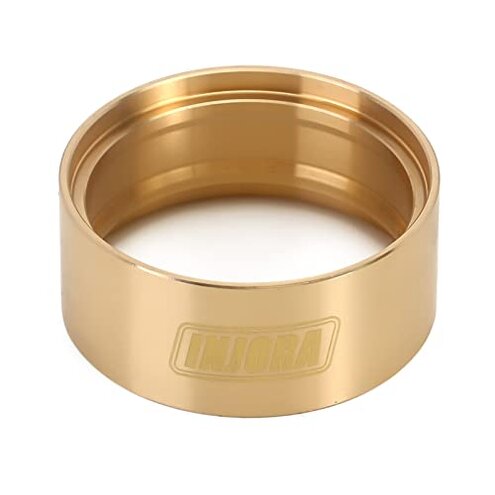
Expectation: buyers reasonably expect a 1.9" beadlock ring to fit standard rims with minimal checks.
Reality: these rings often require measuring the 48.6mm inner diameter and possible hardware changes before use.
Expectation: weights will tune balance without big handling changes.
Reality: many found a noticeable handling shift that required additional balancing steps.
Safer alternatives
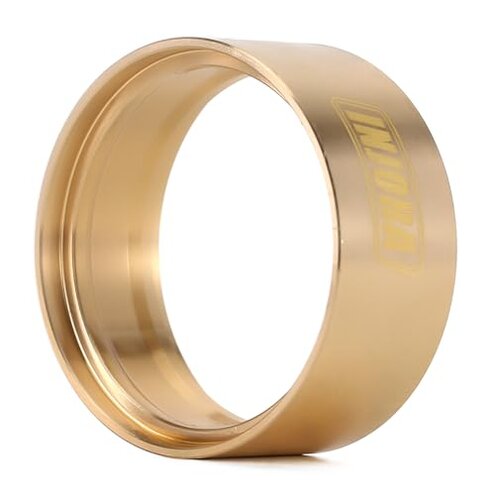
- Check inner diameter first — match rim ID to the ring's 48.6mm spec before purchase to avoid returns.
- Choose rings with included bolts — prefer kits that supply hardware to reduce adapter needs.
- Consider lighter options — pick lighter weights if you want stability without heavy handling impact.
- Buy from sellers with clear fit guides — prioritize listings that list compatible rim models explicitly.
The bottom line
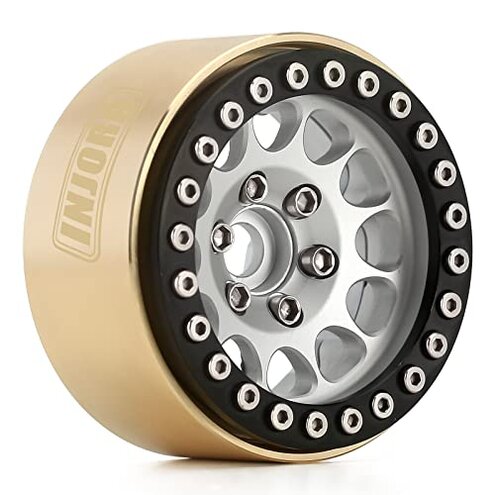
Main regret: most buyers who regret this purchase cite compatibility surprises at first assembly. This is the primary trigger for returns and extra work.
Why worse: the product raises risk above the mid-range baseline because buyers must measure and sometimes modify rims before use.
Verdict: avoid this if you want plug-and-play 1.9" beadlock rings; buy only if you accept extra setup and possible balancing work.
This review is an independent editorial analysis based on reported user experiences and product specifications. NegReview.com does not sell products.