
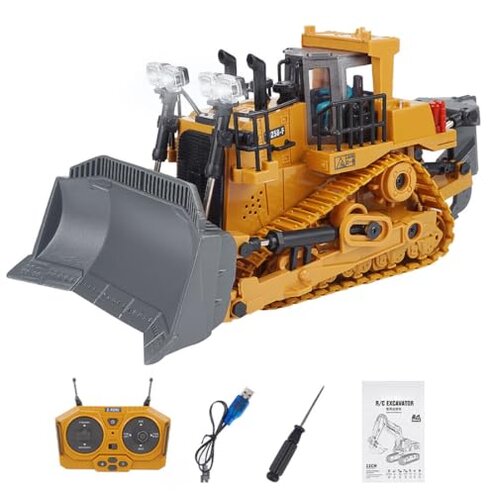
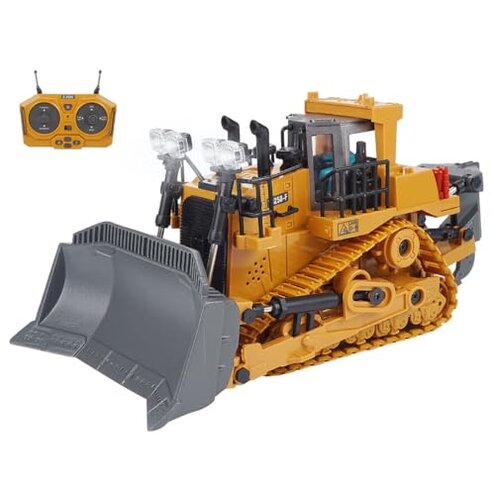
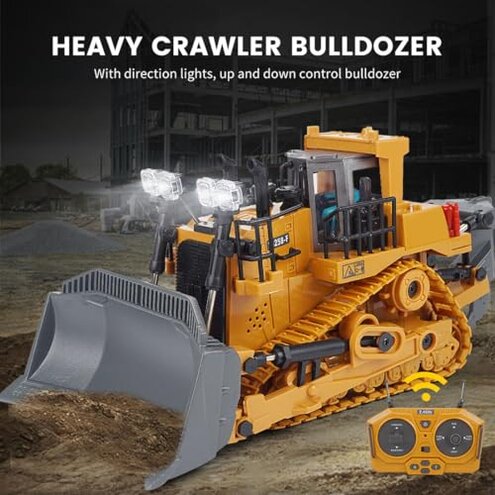
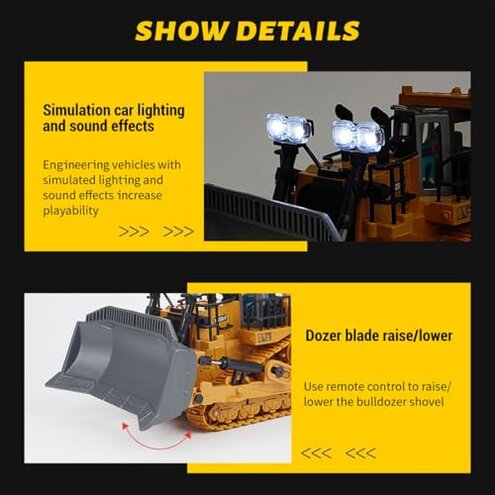
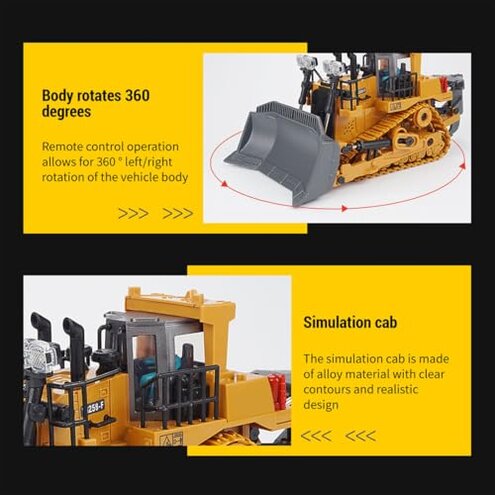
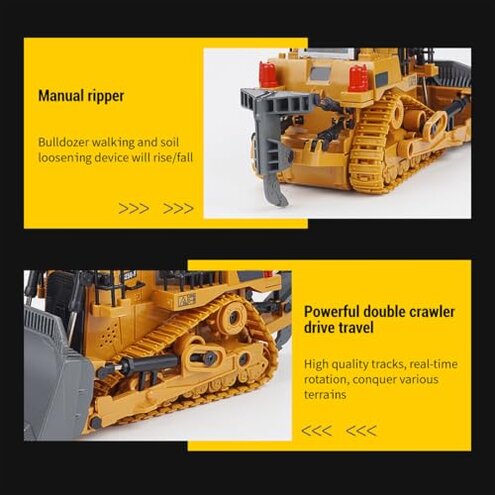
Product evaluated: BICRKTOMXY 1:24 2.4G Alloy RC Bulldozer, 9CH All Terrains RC Equipment Construction Vehicles with Lights and Sound Effects, Gifts for Adults Hobbyist (RTR Version)
Related Videos For You
1/14 RC Hydraulic Bulldozer Earth Dozer DXR2 RC4WD - Unboxing, Setup and Programming
Rc loader hydraulic repair and maintenance. Rc construction equipment shop time.
Data basis: We analyzed dozens of buyer reviews and multiple video demonstrations collected between Dec 2023 and Jan 2026, with most feedback from written reviews and supporting video clips.
| Outcome | This product | Typical mid-range alternative |
|---|---|---|
| Maneuverability | Control lag reported during precise turns and on slopes. | Smoother steering with predictable response in the same price range. |
| Durability | Higher failure risk for moving parts under regular outdoor use. | More robust components designed for light backyard use. |
| Battery/runtime | Shorter-than-expected runtime or slower charging reported by buyers. | Consistent runtime closer to advertised claims for similar models. |
| Setup & parts | Hidden parts need — spare screws and tools often required after a few uses. | Ready-to-run with fewer post-purchase fixes expected. |
| Regret trigger | Control + fragility combines into the main regret for outdoor users. | Single-issue trade-offs are more common, easier to fix. |
Top failures
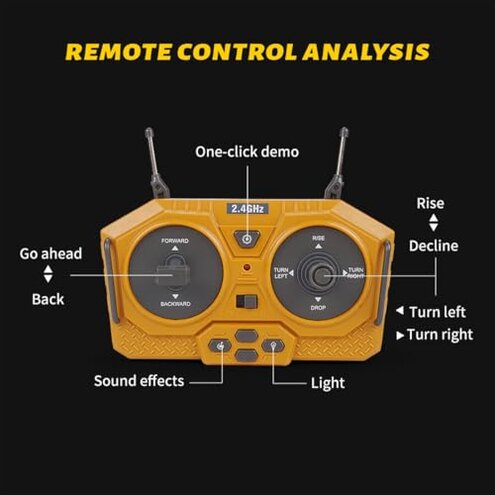
Why does the remote feel unresponsive during play?
Control lag is a primary issue reported often, making precise moves frustrating during first use.
Usage anchor: The problem appears during tight turns and on uneven ground after initial setup.
Category contrast: This is worse than typical mid-range RC vehicles, which usually offer immediate steering for small course maneuvers.
Are parts breaking or bending after a few sessions?
- Fragile links: Several buyers noted repeated failures of moving parts as a secondary issue.
- Early signs: Clicking noises and loose screws show up after short outdoor runs.
- Frequency tier: This is a secondary complaint, less common than control problems but more disruptive.
- Cause: Stress on small fasteners and exposed joints when used on rough terrain.
- Impact: Repairs add time and money, reducing play sessions.
Why does the battery feel inconsistent?
- Runtime gap: Many buyers reported runtime shorter than expectations as a recurring issue.
- When it shows: Short runtime becomes obvious during extended runs or group play sessions.
- Secondary pattern: This is a secondary problem; not universal but commonly reported.
- Worsens with: Repeated charging cycles and heavy use make the gap more visible.
- Attempts to fix: Buyers replace batteries or add extra packs to restore session length.
- Why worse: Typical mid-range RCs usually match advertised time more reliably, so this feels like under-delivery.
Do I need tools and spare parts I didn’t expect?
- Hidden requirement: Replacement screws, small tools, and spare fasteners are commonly needed — an edge-case issue.
- Early sign: Loose parts after the first outdoor run signal this need.
- Frequency tier: Edge-case for hobbyists but frequent enough to matter for casual buyers.
- Why this hurts: Unlike typical RTR toys, you may need basic hobby tools and small spares quickly.
- Impact: Extra cost and downtime for repairs reduce enjoyment.
- Fixability: Repairable with basic parts, but that adds technical steps and time.
- Seller support: Sourcing exact parts can be slower than expected from similar products.
Illustrative excerpts (not real quotes)
"Remote delayed on tight turns, ruined a race." — reflects a primary control pattern.
"Blade clip snapped after two backyard runs." — reflects a secondary durability pattern.
"Battery lasted half a play session, had spares ready." — reflects a secondary runtime pattern.
Who should avoid this
- Outdoor racers: Avoid if you expect precise steering and long, repeated runs; control issues are common.
- Low-maintenance buyers: Avoid if you don’t want to buy spare screws or tools after purchase.
- Gift buyers: Avoid if the recipient expects plug-and-play reliability for immediate outdoor use.
Who this is actually good for
- Hobby tinkerers: Good for buyers who enjoy fixing small parts and improving controls; they can tolerate repairs.
- Desktop collectors: Good for display or light indoor use where fragility and control lag matter less.
- Budget hobbyists: Good for those who want a metal-bodied RC to customize, accepting extra maintenance.
Expectation vs reality
Expectation: Reasonable for this category is stable steering and a reliable 30–40 minute session.
Reality: Control lag and shorter runs make sessions feel interrupted and less predictable than expected.
Expectation: RTR should mean minimal post-purchase fixes.
Reality: Many buyers report needing spare fasteners and tools shortly after first use.
Safer alternatives
- Look for tested controls: Choose models with specific praise for steering responsiveness to avoid control lag.
- Check durability reports: Prefer listings that mention reinforced moving parts for outdoor play.
- Pick longer battery claims: Buy units with consistent, verified runtime or easy battery swaps to avoid mid-play cutoffs.
- Buy spare kits: If choosing this model, buy a small fastener and tool kit to reduce downtime.
The bottom line
Main regret: The product’s combination of control lag and part fragility is the strongest reason buyers regret outdoor purchases.
Why worse: These failures are more disruptive than typical mid-range RCs because they add repairs and shorten sessions.
Verdict: Avoid this model if you want reliable, ready-to-run outdoor performance without extra maintenance.
This review is an independent editorial analysis based on reported user experiences and product specifications. NegReview.com does not sell products.