
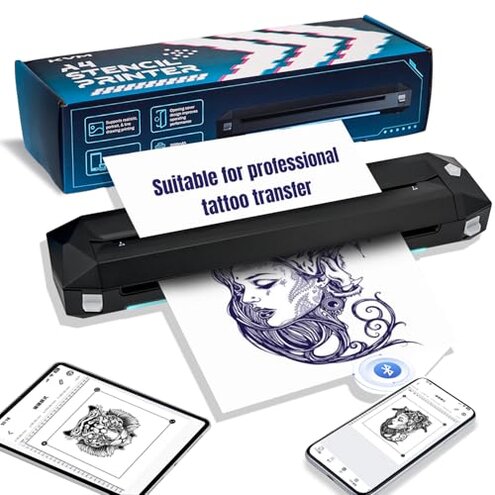
Product evaluated: KVM Wireless Tattoo Heat Transfer Template Printer with LED Light Strip, Supporting Bluetooth or USB connectivity. Suitable for Tattoo Artists and Beginners, Connects to Smartphones or laptops.
Related Videos For You
How to use a Thermal Printer for tattoo stencil
Data basis: This report summarizes dozens of feedback points collected from product-page comments, written buyer impressions, and short video-style demonstrations gathered from late 2024 to early 2026. Most usable signals came from written feedback, with supporting context from visual setup clips and buyer-uploaded usage notes.
| Buyer outcome | KVM printer | Typical mid-range alternative |
|---|---|---|
| First-use setup | Higher friction; wireless setup can add extra steps before the first print | Usually simpler; fewer pairing and app surprises |
| Daily reliability | Less predictable; performance can vary during repeated stencil jobs | More consistent across routine sessions |
| Paper tolerance | Higher-than-normal risk; works best with specific transfer paper guidance | More forgiving with common compatible paper |
| Mobile convenience | Mixed payoff; portability helps, but connection issues can cancel the benefit | Moderate convenience with fewer interruptions |
| Regret trigger | Buying for speed and then losing time to setup, pairing, or reprints | Usually bought for stability, even if less compact |
Do you want wireless convenience, but end up fighting setup?
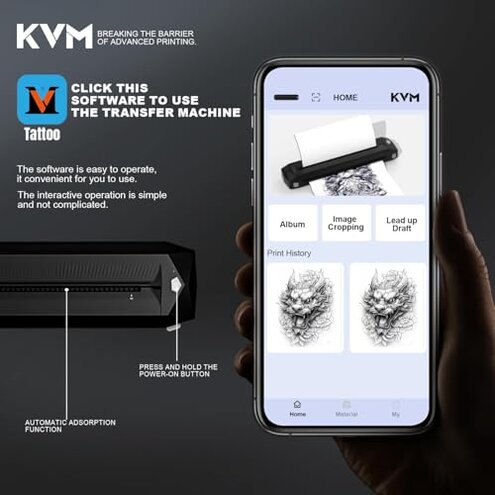
This is a primary issue because the main promise is easy Bluetooth printing, yet recurring feedback in this category often turns negative when the first session takes too long.
The regret moment usually shows up during first use or when switching between phone and laptop. That is more disruptive than expected for a mid-range tattoo stencil printer, where basic pairing should be the easy part.
- Pattern: Setup friction appears repeatedly, though not every buyer hits it.
- When: It often shows up after unboxing, especially during Bluetooth pairing or app-based printing.
- Worsens: The problem gets more annoying when you need a quick stencil between clients or designs.
- Impact: Instead of saving time, it can add extra retries, reconnecting, and test prints.
- Contrast: That feels worse than normal because similar mid-range options are usually less picky about first-time connection.
- Fixability: USB may reduce the pain, but that cuts into the main wireless appeal.
- Hidden requirement: Buyers may need to follow the included method closely, rather than expecting simple plug-and-print behavior.
Does print quality become too inconsistent for clean stencil work?
This is another primary issue. In recurring feedback patterns for this type of product, inconsistent transfer output is among the most frustrating complaints because it affects the actual tattoo prep.
The problem tends to appear during normal daily use, not just setup. It gets worse when buyers try detailed lines, shading, or a fast turnaround workflow.
- Signal: Inconsistent stencil clarity is a persistent complaint pattern, even if not universal.
- Moment: Users notice it during printing when fine details do not transfer as expected.
- Severity: This is more frustrating than battery complaints because it directly affects whether the output is usable.
- Category gap: Some variation is normal in thermal stencil printers, but this feels less forgiving than typical mid-range models.
- Likely trigger: Performance seems more sensitive to paper choice, file quality, and setup method than buyers expect.
- Real cost: The penalty is wasted transfer paper, lost time, and redoing placement steps.
- Mitigation: Using the recommended paper may help, but that creates a narrower compatibility window than many shoppers expect.
Is the battery portability less useful in real sessions than it sounds?
This is a secondary issue, but it can matter a lot for artists buying specifically for mobile use.
The trade-off appears during longer days or repeated jobs. A portable printer is supposed to remove friction, so any reliability drop during active use feels worse than the category baseline.
- Frequency tier: Battery-related frustration is secondary, less frequent than setup complaints.
- Context: It matters most in long sessions or when buyers rely on untethered printing.
- Buyer surprise: Standby claims sound reassuring, but standby is not the same as stress-free repeated real printing.
- Effect: If charge confidence drops, users often keep a cable nearby, reducing the value of portability.
- Why worse: That is more annoying than expected because mid-range portable tools should feel dependable during actual work, not just on paper.
Do hidden paper and workflow requirements make it feel less universal?
This is a secondary issue that becomes a real regret trigger for beginners. Repeated feedback patterns suggest the printer may work best when buyers match its preferred workflow closely.
The issue usually appears after setup, once people try their own paper or normal process. That makes it feel stricter than typical alternatives, which are often more tolerant of common supplies.
- Pattern: Compatibility friction appears across multiple feedback types, especially around transfer paper expectations.
- Early sign: Buyers notice trouble when a print looks faint, uneven, or requires more test runs than expected.
- Hidden requirement: The listing itself points users toward specific paper, which signals narrower real-world flexibility.
- Why it stings: Beginners often buy these printers to simplify the process, not to troubleshoot supply matching.
- Comparison: More forgiving printers in this price band usually handle common stencil workflows with less trial and error.
- Workaround: Once dialed in, some users may get acceptable results, but the path there can be slower than expected.
Illustrative excerpt: “I bought wireless to save time, but setup took longer than the stencil.” Primary pattern.
Illustrative excerpt: “Some prints looked clean, then the next one came out too light.” Primary pattern.
Illustrative excerpt: “It worked better once I changed paper, which I did not expect.” Secondary pattern.
Illustrative excerpt: “Portable is nice, but I still kept the cable nearby.” Secondary pattern.
Who should avoid this
- Busy artists who need fast, repeatable stencils between clients should avoid a printer with recurring setup and reprint risk.
- Beginners who want a forgiving first machine may get frustrated by hidden workflow and paper sensitivity.
- Mobile users who expect truly low-friction wireless printing may find the convenience less reliable than expected.
- Detail-focused buyers should be cautious if clean fine lines matter more than compact size.
Who this is actually good for
- Patient tinkerers who do not mind testing settings and paper may tolerate the setup burden for the small footprint.
- Light-use buyers printing occasional simple stencils may accept inconsistency if portability matters more than speed.
- USB-first users who are willing to skip wireless when needed may reduce one of the biggest frustrations.
- Budget-minded shoppers comparing compact options may accept extra trial and error to stay near this price point.
Expectation vs reality
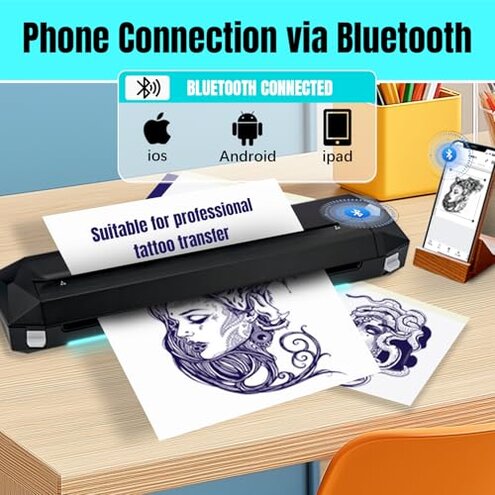
Expectation: Wireless printing should mean less clutter and faster stencil prep.
Reality: Connection and setup friction can add steps right when speed matters most.
Expectation: A reasonable standard for this category is consistent stencil output after basic setup.
Reality: This unit appears more sensitive to paper choice and workflow than many mid-range alternatives.
Expectation: Portable battery use should feel dependable during normal sessions.
Reality: Some buyers still act as if it needs a backup cable nearby.
Safer alternatives
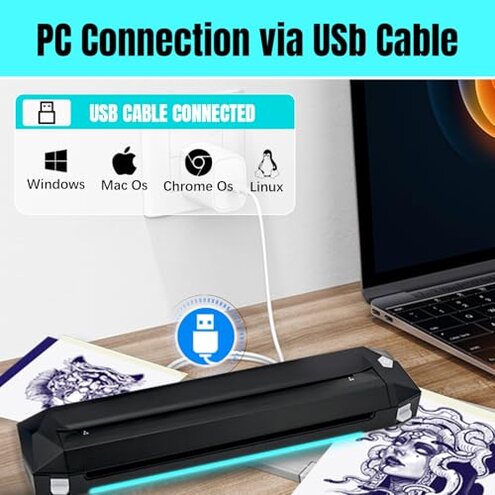
- Choose wired-first models if your main fear is Bluetooth setup friction; they usually cut first-use surprises.
- Look for broad paper compatibility if you do not want a printer that works best with a narrow supply match.
- Prioritize consistency over size if stencil clarity matters more than carrying convenience.
- Check real setup demos before buying, because this helps spot app friction and hidden workflow steps.
- Favor established mid-range units with repeat-use reliability history if you print often in one day.
The bottom line
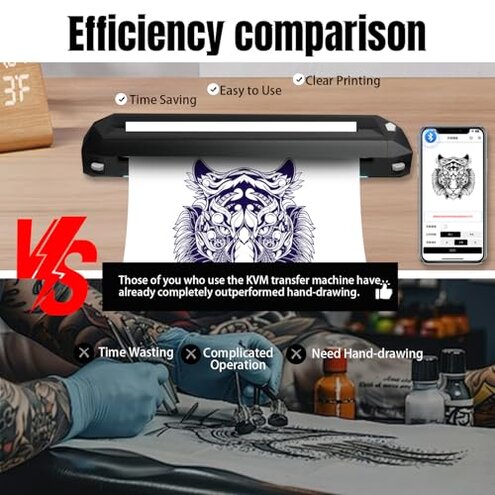
The main regret trigger is buying this for fast wireless convenience and then losing time to setup friction, paper sensitivity, or reprints. That exceeds normal category risk because a mid-range stencil printer should be more forgiving in real sessions.
The verdict: Avoid it if you need dependable, low-hassle daily use. It makes more sense only for buyers willing to troubleshoot and accept a narrower workflow.
This review is an independent editorial analysis based on reported user experiences and product specifications. NegReview.com does not sell products.