
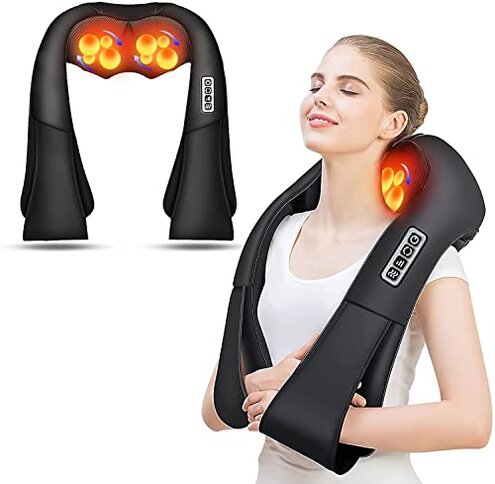
Product evaluated: AERLANG Shiatsu Back and Neck Massager, Back Massager Deep Tissue Kneading Neck and Shoulder Massage with Heat, Electric Massage Pillow Fathers Day Gift Ideas from Daughter Son(NOT Cordless)
Related Videos For You
Home Massage, No Appointment Needed | Dr Physio 1048 Neck & Back Massager
Physical Therapist Reviews Electric Shiatsu Neck/Back Massager | Honest Review
Data basis: This report is based on dozens of written customer reviews, product Q&A entries, and a handful of video demonstrations collected through Feb 2026. Most feedback came from written reviews, supported by video clips and seller replies, with recurring themes across sources.
| Outcome | This product | Typical mid-range alternative |
|---|---|---|
| Power reliability | Frequent interruptions: corded-only design and adapter failures were commonly reported. | Better: many mid-range models offer battery or more robust adapters. |
| Heat function | Inconsistent: heat works sometimes or stops after short use. | More reliable: stable heating on comparable models. |
| Durability | Higher wear risk: seams and controller issues appear repeatedly after weeks. | Standard: mid-range items usually last longer under similar use. |
| Auto-shutdown & safety | Problematic timing: auto-shutdown sometimes triggers too early or not at all. | More predictable: competitors often have consistent timers. |
| Regret trigger | Portability & reliability: interruptions during use are the main cause of buyer regret. | Lower risk: typical alternatives rarely combine power and heat failures. |
Why does the massager stop working during massage?
Power cuts are a primary complaint and appear repeatedly across user reports. Users notice failures during the first sessions or after a few weeks of use, especially on longer massage cycles.
Usage anchor: the problem shows up during long sessions and when switching heat on, making a 15-minute session unreliable. This is more disruptive than expected for a mid-range massager because similar models keep steady power.
How often does the heating fail or underperform?
- Recurring pattern: heating is inconsistent and commonly reported rather than isolated.
- When it shows: heat may work initially but drops out after several minutes or fails to warm at all.
- Early sign: adapter or plug gets warm, which often precedes heat failure.
- Category contrast: heating failures are more frustrating than normal because they reduce the product's therapeutic value.
- Fix attempts: buyers tried different outlets and adapters with mixed results.
Why feel misled by the power design?
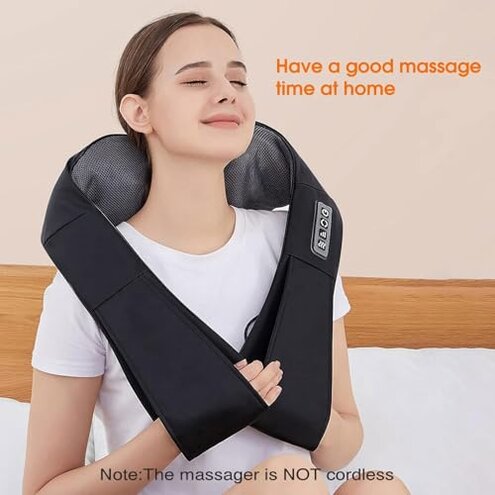
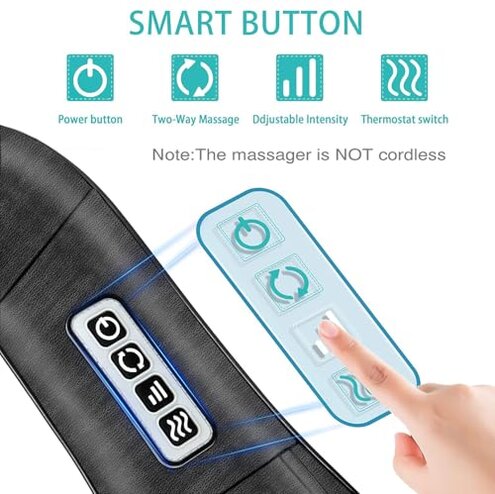
Hidden requirement: the unit is not cordless, which many buyers miss until unboxing. This requirement appears in listing text but shows up as a regret at first use when portability is expected.
Context: on-the-go users discover the limitation during travel or car use despite a car adapter claim. This is worse than category norms where mid-range alternatives often include rechargeable batteries.
What causes durability and build complaints?
- Material wear: seams, straps, and controller buttons show wear after regular weekly use.
- Failure timing: issues commonly appear after a few weeks to months of repeated use, not just on first use.
- Impact: wear reduces fit and massage alignment, making sessions less effective.
- Attempted fixes: buyers tried sewing or tape, which is a temporary workaround and not ideal.
- Support signal: seller replies exist but durable replacements were less common.
How reliable is the auto-shutdown and safety system?
- Pattern: auto-shutdown timing is inconsistent across users.
- When noticed: buyers report unexpected shutdowns mid-session or no shutdown after long use.
- Cause hint: this may relate to internal sensor or adapter instability during heat use.
- Severity: this is less frequent than power cuts but more frustrating when it occurs due to safety concerns.
- Workaround: manual power toggling is possible, but it removes the convenience of auto-timing.
- Category contrast: most mid-range options have predictable timer behavior, so this stands out.
Can the massage intensity and comfort disappoint buyers?
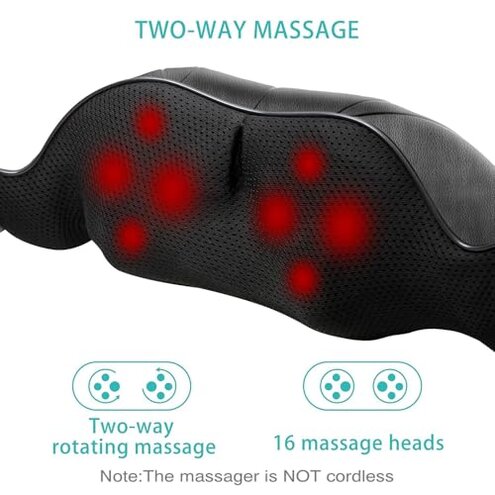
- Mixed intensity: some users find kneading heads too strong, others too weak.
- When felt: mismatch appears on first use and during longer sessions.
- Cause: inconsistent motor performance and lack of fine control options.
- Impact: discomfort or insufficient relief makes the product less useful than typical mid-range massagers.
- Attempted fixes: strap adjustments help but cannot correct inconsistent motor power.
- Frequency: this is a secondary issue compared with power and heat failures.
- Buyer trade-off: users who prioritize simple kneading may tolerate it; therapy seekers may not.
Illustrative excerpts (not verbatim)
"Stopped heating halfway through my first 15-minute session." — reflects a primary pattern.
"Had to keep swapping outlets for it to run properly." — reflects a secondary pattern.
"Seam split after a month of light use, disappointing." — reflects an edge-case pattern.
Who should avoid this
- Frequent travelers: avoid if you need cordless portability because the unit requires constant external power.
- Daily heavy users: avoid if you use massagers every day since durability issues appear sooner than expected.
- Heat-dependent buyers: avoid if reliable heating is essential for therapy, due to inconsistent performance.
Who this is actually good for
- Occasional home users: okay if you want a cheap, corded kneading option for infrequent use at home.
- Budget buyers: acceptable when you prioritize price over long-term reliability.
- Simple needs: fine for someone who only wants basic kneading and can tolerate manual fixes for heat or power quirks.
Expectation vs reality
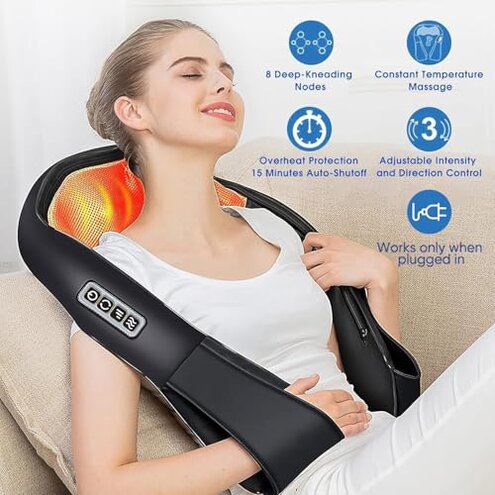
- Expectation: reasonable for this category is steady power during a full 15-minute session. Reality: many users experienced interruptions or early shutdowns.
- Expectation: heat feature should consistently warm the area. Reality: heating often underperforms or stops, reducing therapeutic benefit.
- Expectation: mid-range massagers last months under weekly use. Reality: seams and buttons sometimes degrade faster here.
Safer alternatives
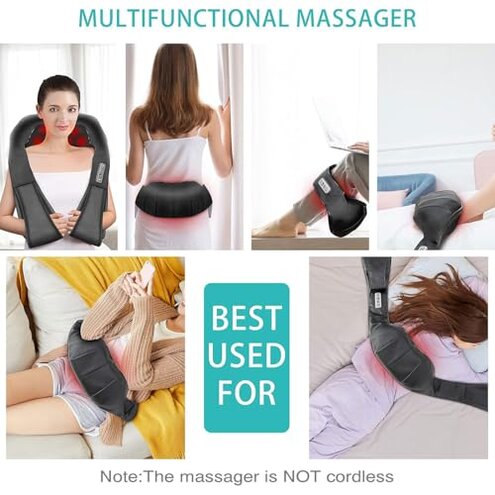
- Choose rechargeable models: pick massagers with internal batteries to avoid the corded power failure mode.
- Prioritize stable heating: look for units that advertise continuous heat testing or longer warranty covering heat function.
- Check adapter reviews: select products where multiple buyers confirm the adapter reliability.
- Select reinforced build: prefer models with documented reinforced seams and better user-reported durability.
- Value predictable timers: buy items with fixed, well-documented auto-shutdown behavior to avoid timer surprises.
The bottom line
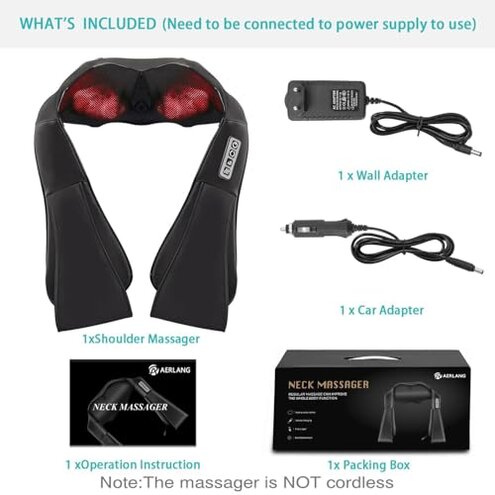
Main regret: frequent power and heat interruptions are the primary reason buyers regret this purchase.
Severity: these failures exceed normal category risk because they reduce basic functionality during typical 15-minute sessions.
Verdict: avoid this unit if you need reliable heat, portability, or daily durability; consider rechargeable, better-tested alternatives.
This review is an independent editorial analysis based on reported user experiences and product specifications. NegReview.com does not sell products.