
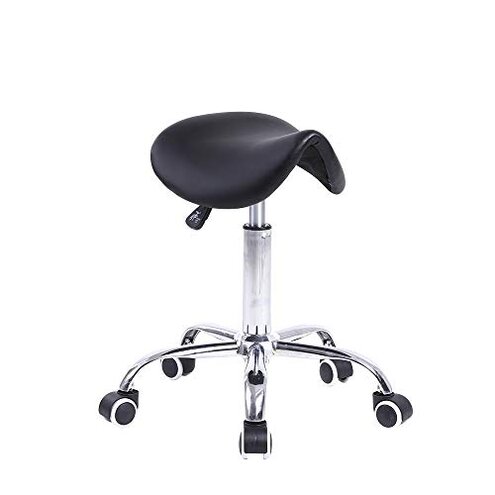
Product evaluated: KKTONER Rolling Saddle Stool PU Leather Swivel Adjustable Rolling Stool with Wheels Salon Chair Black
Related Videos For You
Rolling Saddle Stool with Back Support - Spa Luxe
Foldable Shampoo Chair - Safe & Comfortable Hair Washing Stool Durable Plastic #temu
Data basis: This report is built from dozens of written reviews and user-shared photos plus several video demonstrations collected through Jan 2026. Most feedback came from written reviews, supported by visual evidence and seller notes. The patterns below reflect aggregated buyer signals, not isolated posts.
| Outcome | KKTONER Stool | Typical Mid-range Stool |
|---|---|---|
| Stability on wheels | Higher risk — recurring reports of wobble or tilt after short use. | Moderate — many alternatives use wider bases for steadier rolling. |
| Hydraulic reliability | Less reliable — sinking or failed lift appears repeatedly. | More reliable — mid-range lifts tend to hold over months. |
| Comfort durability | Shorter-lived — seat padding flattens faster under daily use. | Typical — denser foam keeps shape longer in this class. |
| Assembly & hidden steps | Hidden requirement — a protective sleeve must be removed before installation. | Clearer — most competitors include straightforward, visible setup steps. |
| Regret trigger | High — instability plus sinking is the most common cause of returns. | Lower — regret usually limited to comfort, not safety. |
Top failures
Stability? Why the stool can feel unsafe or wobbly during normal use
Regret moment: Users report a sudden wobble while leaning or reaching, creating a jarring feel.
Pattern: This is among the most common complaints and appears repeatedly in early use and after a few weeks.
Usage anchor: Shows up during routine tasks like moving around a salon or bending forward while seated.
Category contrast: Worse than typical mid-range stools because the base and wheel behavior seem less forgiving, increasing the chance of slips or near-falls.
Hydraulic sinking? Does the height fail over time or under weight?
- Recurring pattern: Sinking after setup is commonly reported, not universal but frequent among buyers.
- When it appears: Often within days to weeks of regular use, or after heavy users sit repeatedly.
- Worsens with: Daily use and heavier loads; capacity is 300 LB but reliability drops under continual use.
- Cause signal: Buyers describe loss of lift pressure and gradual descent while seated.
- Impact: Makes the stool unreliable for tasks that need a steady seated height like treatments or long sessions.
Seat comfort? Will the saddle pad stay comfortable for long sessions?
- Primary pattern: Padding softens and flattens faster than expected among daily users.
- Signs: Early impressions may be fine but comfort drops after repeated daily sessions.
- Frequency tier: Secondary issue — common for frequent users but less reported by occasional users.
- Cause: Thin foam or lower density padding that compresses over weeks.
- Impact: Long sessions become uncomfortable and increase the need to replace or add cushions.
- Fix attempts: Users add aftermarket cushions or pads, which reduces mobility and defeats the saddle shape.
- Hidden cost: Extra cushioning adds expense and changes the seat height and balance.
Assembly surprises? Are there hidden steps or parts that block proper setup?
- Hidden requirement: The product listing itself notes a black plastic sleeve must be removed before installation.
- Pattern: This appears repeatedly as a cause of frustration during first assembly.
- When it matters: If not removed, the pneumatic rod won't seat properly and the chair can be unstable immediately.
- Worsens with: Quick, unplanned setups and buyers who skip the tip or don't inspect parts closely.
- Impact: Leads to extra disassembly, returns, or early failure if the sleeve blocks the mechanism.
- Fixability: Simple to fix if you know to check — removing the sleeve usually resolves the issue.
- Why worse here: Many mid-range stools either omit such hidden parts or flag them more prominently in instructions.
- Buyer burden: Requires patience, tools, or a return if the buyer assumes it is broken.
Illustrative excerpts
Illustrative: "Seat sank after a week; I had to prop it with a book." — primary
Illustrative: "Wobbled when I leaned forward during treatments." — primary
Illustrative: "Instructions mention a sleeve to remove, I missed it and struggled." — secondary
Illustrative: "Padding flattened after two months of daily use." — secondary
Who should avoid this
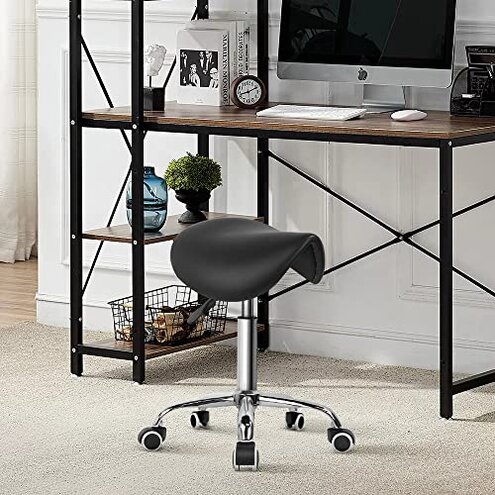
- Heavier daily users: Avoid if you need a reliable lift and steady seat for long daily shifts.
- Safety-sensitive tasks: Avoid for work where sudden tilt would create risk or interrupt delicate tasks.
- Low-maintenance buyers: Avoid if you don’t want to add cushions or perform quick fixes.
Who this is actually good for
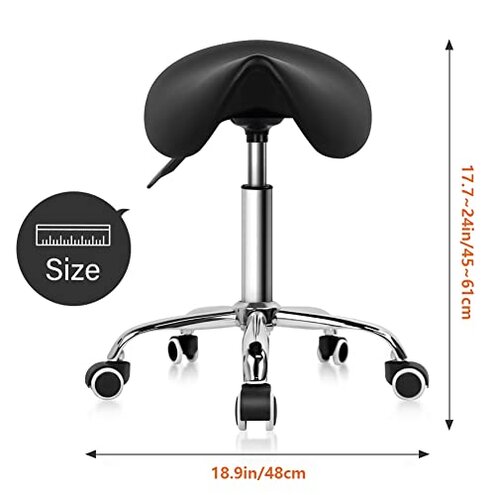
- Light occasional users: Good for home tasks or short sessions where wobble and sinking are less likely to appear.
- Budget buyers: Acceptable if you want mobility and saddle style at low cost and can tolerate future fixes.
- DIY fixers: Good if you can remove the protective sleeve and add cushioning to extend life.
Expectation vs reality
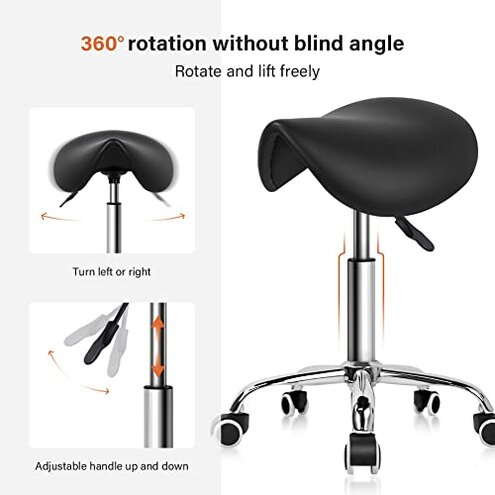
Expectation: Reasonable for this category — a rolling salon stool should hold height during a full shift.
Reality: The stool commonly loses height or wobbles in daily use, which is worse than typical mid-range performance.
Expectation: Assembly should be fast and obvious for a simple stool.
Reality: A hidden protective sleeve creates an extra step and early failures if overlooked.
Safer alternatives
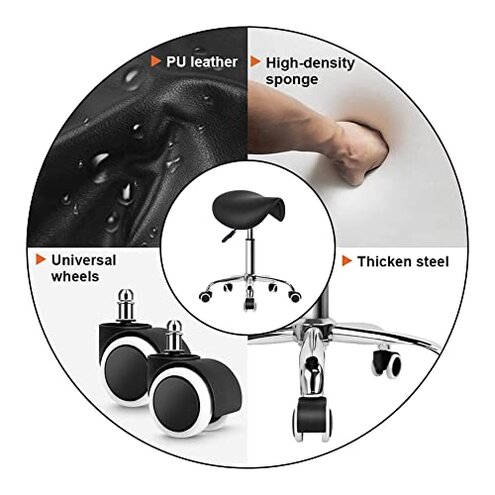
- Choose a wider base: Look for stools with a broader, five-star base to reduce wobble and improve balance.
- Prefer tested gas lifts: Seek listings that explicitly state lift warranty or longer-term reliability for less sinking risk.
- Check padding specs: Favor denser foam or replaceable cushions to avoid rapid flattening.
- Read instructions first: Verify there are no hidden sleeves or placeholders before you assemble.
- Consider pro-grade models: For heavy daily use, spend a bit more on chairs marketed for salon or clinic use.
The bottom line
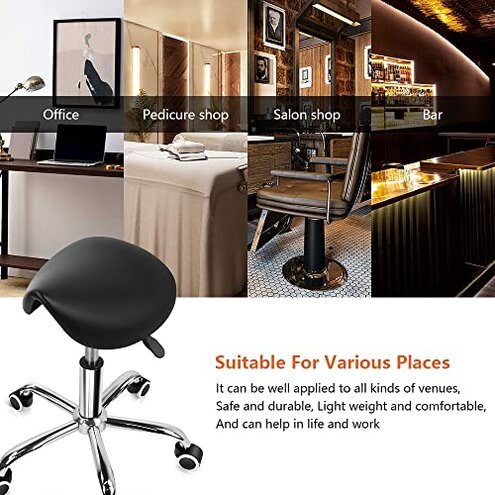
Main regret: The primary triggers are instability and hydraulic sinking, which appear repeatedly in early use.
Why worse: These failures create safety and usability issues beyond normal cosmetic or comfort complaints for the price class.
Verdict: Avoid this stool if you need steady, daily-use seating; it is better suited for occasional light-duty use or buyers willing to perform fixes.
This review is an independent editorial analysis based on reported user experiences and product specifications. NegReview.com does not sell products.