
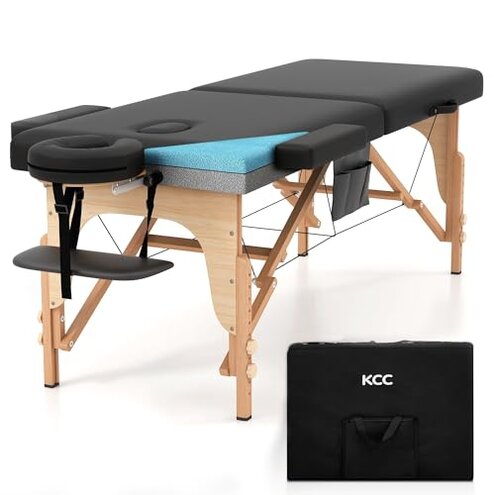
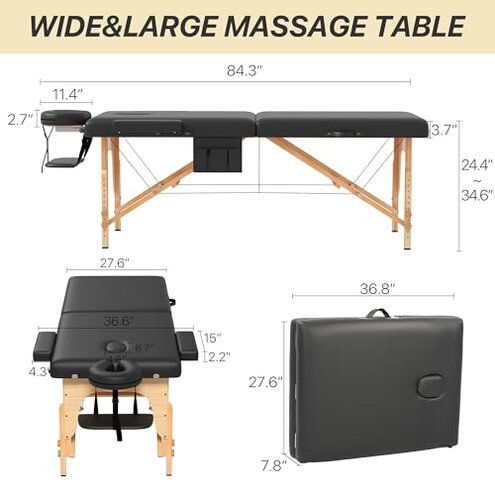
Product evaluated: KCC Memory Foam Massage Table Premium Portable Foldable Massage Bed Height Adjustable, 84 Inches Long 28 Inchs Wide Home Salon Spa Bed Tattoo Table with Accessories &Carrying Case, Easy Set Up
Related Videos For You
Cheap $75 Portable Massage Table by BestMassage | Is it Worth It? (How to Assemble & Pack Up)
Stronglite Portable Shasta Massage Table Review After 2 Years
Data basis: This report draws on dozens of written reviews and multiple video demonstrations collected between 2022 and 2025. Most feedback came from written buyer reviews, supported by video setup clips and seller Q&A. The sample skews toward recent purchasers and at-home users.
| Outcome | KCC massage table | Typical mid-range table |
|---|---|---|
| Stability | Wobbly reports often appear during use and under side pressure, higher wobble than normal. | Stable design usually handles side loads for routine massage sessions without tipping or creak. |
| Comfort | Soft initially due to memory foam but commonly compresses faster with repeated use. | Balanced foam on mid-range tables keeps comfort longer under regular client rotations. |
| Height hardware | Loose knobs and misaligned pins are a recurring complaint after first adjustments. | Secure locking mechanisms on mid-range models generally need less frequent retightening. |
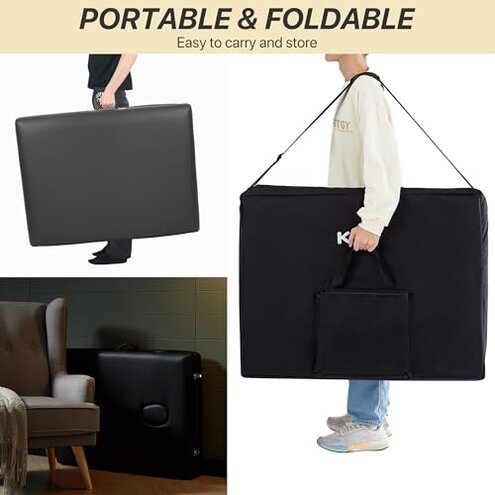
| Portability | Light but fragile carrying case and accessories; easy to move but with durability trade-offs. | Rugged cases on competitors protect gear for frequent transport and professional use. |
| Regret trigger | Higher-than-normal risk of wobble and hardware loosening during regular sessions, causing session interruptions. | Lower risk of interruptions with more robust leg bracing and hardware. |
Top failures
Is the table wobbling and unsafe under pressure?
Regret moment: Wobble often appears during the first few sessions when a client shifts weight or a therapist leans in for deep work.
Pattern: This is a commonly reported issue and appears repeatedly across buyer feedback.
Context: The problem shows up during use and worsens under heavier side loads or long sessions. It feels worse than expected for a mid-range table because similar-priced alternatives more often include stronger leg bracing.
Does the foam lose support quickly?
- Early sign: Foam feels plush at first then flattens after repeated client sessions.
- Frequency tier: This is a secondary complaint; commonly reported by buyers who use the table weekly.
- Likely cause: Memory foam top layer over thinner base foam reduces long-term resilience compared with thicker multi-density padding.
- Impact: Comfort loss affects clients on long appointments and increases need for added cushions or pads.
- Fixability: Users often add aftermarket bolsters or replacement toppers to restore support.
Are the height knobs and leg hardware reliable?
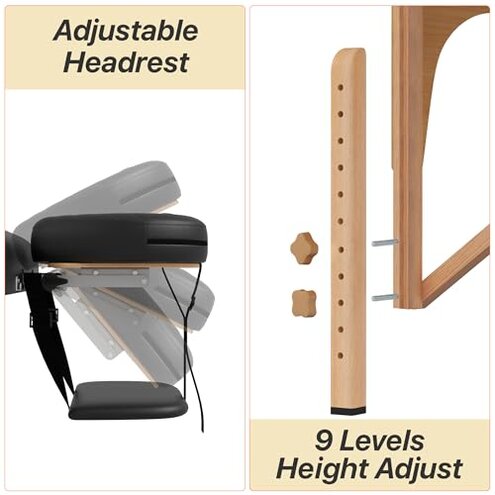
- Warning sign: Knobs can feel tight but then loosen after adjustments and repeated transport.
- Pattern: Persistent reports show this as a primary mechanical complaint among buyers.
- When it appears: Problems surface immediately after setup and worsen with frequent height changes.
- Cause: Adjustment design requires precise alignment; misalignments lead to play in the legs.
- Impact: Loose hardware increases wobble and forces session pauses to retighten knobs.
- Hidden need: Many buyers discover they must carry simple tools or replace knobs for secure long-term use.
- Repair effort: Fixes add extra time and cost compared with the typical mid-range table.
Are the accessories and carrying case durable?
- Initial impression: The included case and headrest look complete but feel flimsy in handling tests.
- Scope: This is a secondary pattern seen across multiple buyer reports and setup videos.
- When it matters: Damage appears after repeated travel or when the bag is overloaded with oil bottles and tools.
- Practical impact: A torn bag or loose accessories complicate transport and increase replacement costs.
- Attempts to fix: Buyers often buy a sturdier aftermarket case or reinforce straps to avoid damage.
- Cost trade-off: Added purchases reduce the original value proposition of a ready-to-use portable table.
- Edge cases: Frequent mobile therapists report this as a more serious ongoing expense than occasional home users.
Illustrative excerpts
Illustrative: "Table tilted when client moved side-to-side during a deep-tissue session." — primary pattern
Illustrative: "Padding felt fine for two weeks, then noticeably thin on pressure points." — secondary pattern
Illustrative: "Knobs loosened after a few transports; needed tools to fix." — primary pattern
Illustrative: "Carrying case strap tore after three trips." — secondary pattern
Illustrative: "Worked for light home use but not for daily clients." — edge-case pattern
Who should avoid this
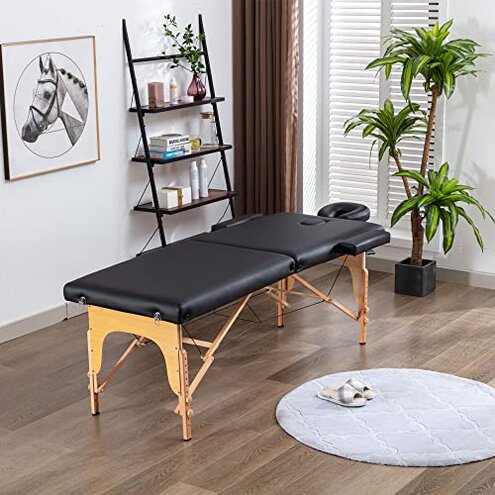
- Mobile therapists who transport gear daily should avoid it because wobble and bag wear are more frequent under heavy transport.
- Clinics with heavy rotation should skip it because foam compression and hardware wear occur faster than typical mid-range tables.
- Users needing rock-solid stability for therapeutic techniques should avoid it due to the higher-than-normal wobble risk.
Who this is actually good for
- Occasional home users who give infrequent massages can tolerate padding compression and light wobble for the price advantage.
- Low-weight clients and gentle use scenarios where deep pressure and side loads are rare.
- Budget-conscious buyers willing to add aftermarket toppers or a better case to fix the main flaws.
Expectation vs reality
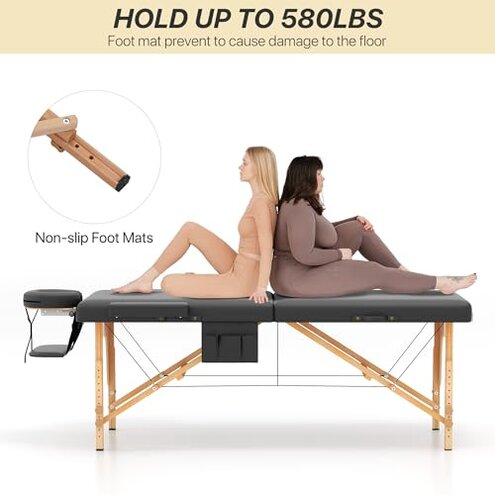
- Expectation (reasonable for category): Portable tables trade some ruggedness for light weight.
- Reality: This model shows more frequent wobble and hardware loosening than is typical for mid-range portable tables, causing session interruptions.
- Expectation: Included accessories should support transport and setup.
- Reality: The carrying case and knobs often need upgrades, adding time and cost.
Safer alternatives
- Prioritize bracing — choose tables with cross-braced legs to neutralize the wobble failure.
- Check hardware — prefer models with published locking ratings or metal pins to avoid knob loosening.
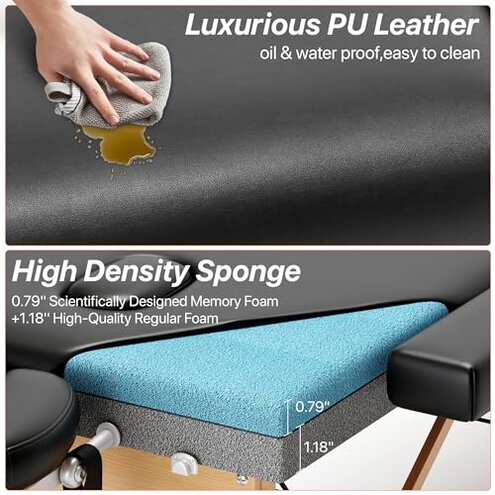
- Buy firmer padding — look for multi-density foam or replaceable toppers to prevent early compression.
- Upgrade the bag — if you must buy this model, plan to buy a reinforced carrying case and strap protectors.
The bottom line
Main regret: The primary trigger is wobble and loosening hardware during real sessions, leading to interruptions and extra fixes.
Why it matters: These failures occur more often than is normal in this category and add time, cost, and safety concerns for frequent users.
Verdict: Avoid for professional or heavy use unless you are willing to invest in upgrades; it can work for light home use with caveats.
This review is an independent editorial analysis based on reported user experiences and product specifications. NegReview.com does not sell products.